 Bird Album
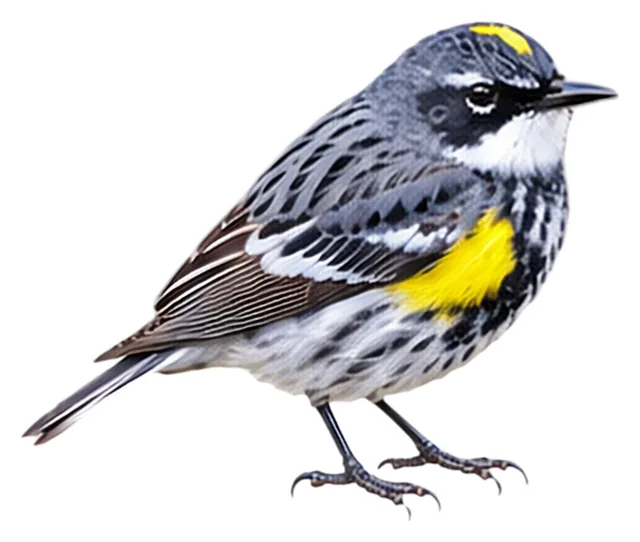
Myrtle Warbler
Setophaga coronata (Linnaeus, 1766)
14 cmLength12 gWeight
The yellow-rumped warbler (Setophaga coronata) is a North American bird species that can be commonly observed all across the continent.
Busiest months: May · Most records: United States, Canada, Mexico
Where and when it's recorded
Busiest months: May · Most records: United States, Canada, Mexico

Myrtle Warbler has been recorded at 1,201 of the 8,276 birding hotspots we track, in 38 countries and regions.
Records by month Northern Hemisphere
Where it's recorded most
- Magee Marsh – BoardwalkUnited States26,569 records
- Sweetwater WetlandsUnited States23,030 records
- Riparian Preserve at Gilbert Water RanchUnited States18,136 records
More places
- Prospect ParkUnited States17,231 records
- Montrose Point Bird Sanctuary, Lincoln Park, ChicagoUnited States16,510 records
- Point Pelee National ParkCanada16,151 records
- Paton Center for HummingbirdsUnited States13,608 records
- Cape Island – Cape May Point SPUnited States13,450 records
- Central ParkUnited States13,171 records
- Mount Auburn CemeteryUnited States12,584 records
Countries and regions with the most records
eBird records via GBIF up to 2024-12-31. A record means someone listed it; more records partly mean more birders, not more birds.
About
The yellow-rumped warbler (Setophaga coronata) is a North American bird species that can be commonly observed all across the continent. Its extensive range connects both the Pacific and Atlantic coasts of the U.S. as well as Canada and Central America, with the population concentrated in the continent's northern reaches during the breeding season and migrating southwards to southern North and Central America in the winter.
Excerpt from Wikipedia, CC BY-SA 4.0 · authors · Read more on Wikipedia
Questions
How big is the Myrtle Warbler?
The Myrtle Warbler is about 14 cm long and weighs around 12 g.
Where does the Myrtle Warbler live?
Its breeding range: North America: Alaska, northwestern, south-central, southeastern Canada and north-central, northeastern USA. It is most often recorded in United States, Canada and Mexico.
When is the best time to see the Myrtle Warbler?
At the hotspots we track, it is recorded most in May (Northern Hemisphere).
Is the Myrtle Warbler endangered?
The IUCN Red List classifies the Myrtle Warbler as Least Concern.
What does the Myrtle Warbler eat?
Main food: Insects & other invertebrates.
What family is the Myrtle Warbler in?
It belongs to the family New World Warblers (Parulidae), order Passerines (Passeriformes).
At a glance
- Length
- 14 cm
- Weight
- 12 g
- Habitat
- Forest
- Diet
- Insects & other invertebrates
- Lifestyle
- Perches in trees
- Migration
- Migratory
- Conservation
- Least Concern
More measurements
- Wing
- 74 mm
- Tail
- 56 mm
- Bill
- 13 mm
- Tarsus
- 19 mm
Averages from the AVONET dataset; length from field guides where available.
Range
North America: Alaska, northwestern, south-central, southeastern Canada and north-central, northeastern USA
Breeding range, IOC World Bird List 15.2
Classification
- Order
- Passerines Passeriformes
- Family
- New World Warblers Parulidae
- Genus
- Setophaga
Other birds in the genus Setophaga
 Plumbeous WarblerSetophaga plumbea
 Elfin Woods WarblerSetophaga angelae
 Arrowhead WarblerSetophaga pharetra
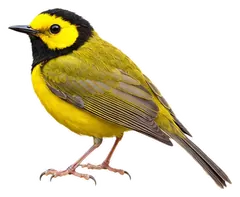 Hooded WarblerSetophaga citrina
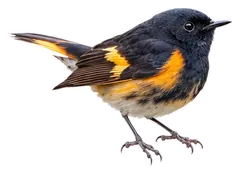 American RedstartSetophaga ruticilla
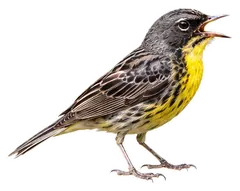 Kirtland's WarblerSetophaga kirtlandii
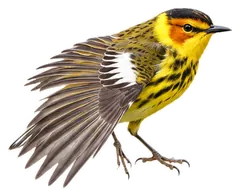 Cape May WarblerSetophaga tigrina
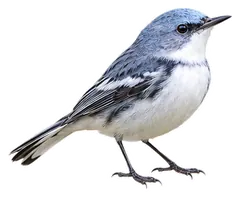 Cerulean WarblerSetophaga cerulea
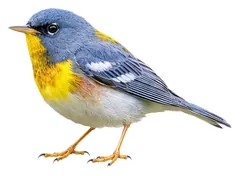 Northern ParulaSetophaga americana
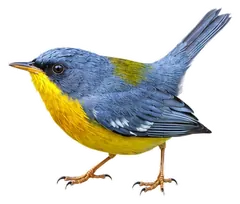 Tropical ParulaSetophaga pitiayumi
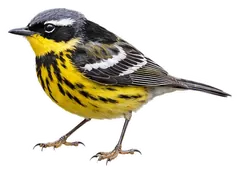 Magnolia WarblerSetophaga magnolia
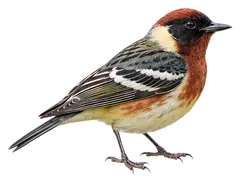 Bay-breasted WarblerSetophaga castanea
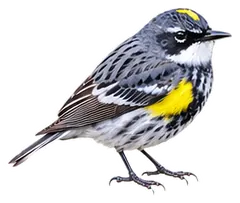
Download illustration
Free to use with credit: “Illustration: Bird Album (birdalbum.com)”. Drawn by AI from a reference photo by Ed Harper. ↗
Heard it but can't see it? Mingji identifies birds by sound and photo, on your phone.