 Bird Album
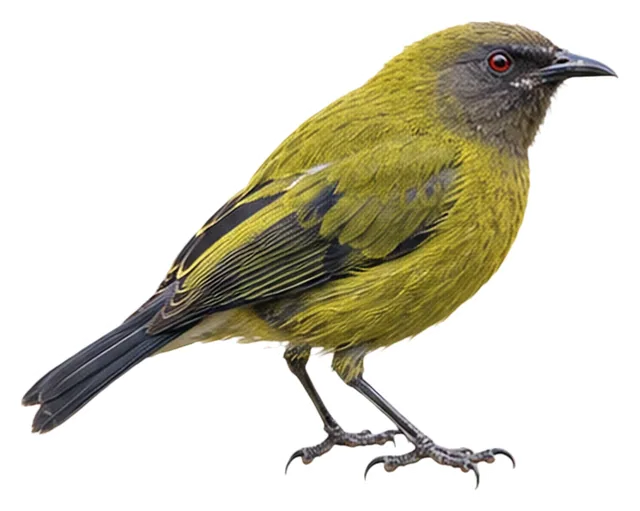
New Zealand Bellbird
Anthornis melanura (Sparrman, 1786)
27 gWeight
The New Zealand bellbird (Anthornis melanura), also known by its Māori language names korimako, makomako and kōmako, is a medium-sized species of honeyeater endemic to New Zealand.
Busiest months: November · Most records: New Zealand
Where and when it's recorded

New Zealand Bellbird has been recorded at 86 of the 8,171 birding hotspots we track, in 1 country or region.
Records by month Southern Hemisphere
Where it's recorded most
- Tiritiri MatangiNew Zealand1,645 records
- Rakiura NP – Ulva IslandNew Zealand1,386 records
- Zealandia Te Mara a Tane Wildlife SanctuaryNew Zealand1,095 records
More places
- Tawharanui Regional ParkNew Zealand788 records
- Massey University CampusNew Zealand772 records
- Orokonui EcosanctuaryNew Zealand733 records
- Tiritiri Matangi – Wattle TrackNew Zealand589 records
- Blumine Island | OruawairuaNew Zealand572 records
- Stewart Island – Oban & Halfmoon BayNew Zealand426 records
- Fiordland NP – Lake Gunn Nature WalkNew Zealand400 records
Countries and regions with the most records
eBird records via GBIF up to 2024-12-31. A record means someone listed it; more records partly mean more birders, not more birds.
About
The New Zealand bellbird (Anthornis melanura), also known by its Māori language names korimako, makomako and kōmako, is a medium-sized species of honeyeater endemic to New Zealand. It has been the only living member of the genus Anthornis since the Chatham Islands bellbird went extinct in the early 20th century. The bellbird's closest living relative is the only other New Zealand honeyeater, the tūī (Prosthemadera novaeseelandiae).
Excerpt from Wikipedia, CC BY-SA 4.0 · authors · Read more on Wikipedia
Questions
How big is the New Zealand Bellbird?
The New Zealand Bellbird weighs around 27 g.
Where does the New Zealand Bellbird live?
Its breeding range: Australasia: North, South, Stewart islands and satellites and Auckland Islands (south of South Island; New Zealand). It is most often recorded in New Zealand.
When is the best time to see the New Zealand Bellbird?
At the hotspots we track, it is recorded most in November (Southern Hemisphere).
Is the New Zealand Bellbird endangered?
The IUCN Red List classifies the New Zealand Bellbird as Least Concern.
What does the New Zealand Bellbird eat?
Main food: Nectar.
What family is the New Zealand Bellbird in?
It belongs to the family Honeyeaters (Meliphagidae), order Passerines (Passeriformes).
At a glance
- Weight
- 27 g
- Habitat
- Forest
- Diet
- Nectar
- Lifestyle
- Perches in trees
- Migration
- Resident (barely migrates)
- Conservation
- Least Concern
More measurements
- Wing
- 86 mm
- Tail
- 80 mm
- Bill
- 20 mm
- Tarsus
- 26 mm
Averages from the AVONET dataset; length from field guides where available.
Range
Australasia: North, South, Stewart islands and satellites and Auckland Islands (south of South Island; New Zealand)
Breeding range, IOC World Bird List 15.2
Classification
- Order
- Passerines Passeriformes
- Family
- Honeyeaters Meliphagidae
- Genus
- Anthornis
More from the family Honeyeaters
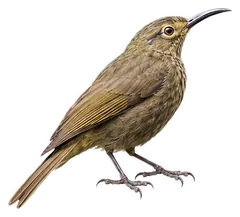 Dark-eared MyzaMyza celebensis
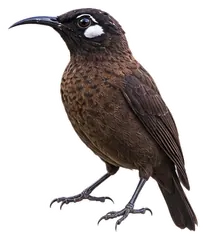 White-eared MyzaMyza sarasinorum
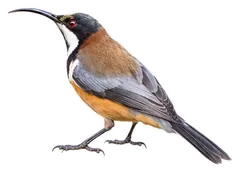 Eastern SpinebillAcanthorhynchus tenuirostris
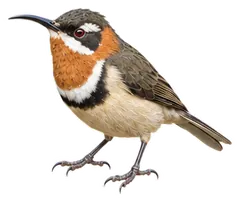 Western SpinebillAcanthorhynchus superciliosus
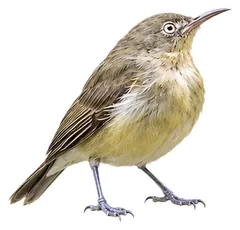 Green-backed HoneyeaterGlycichaera fallax
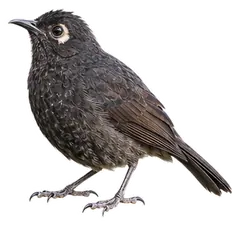 Sooty HoneyeaterMelionyx fuscus
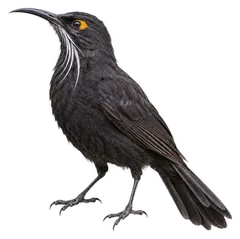 Long-bearded HoneyeaterMelionyx princeps
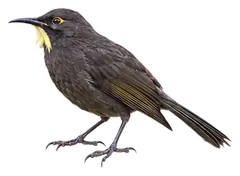 Short-bearded HoneyeaterMelionyx nouhuysi
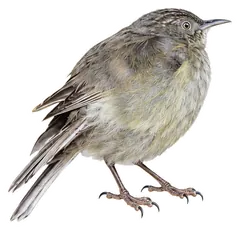 Leaden HoneyeaterPtiloprora plumbea
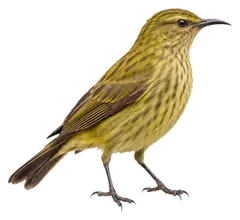 Yellowish-streaked HoneyeaterPtiloprora meekiana
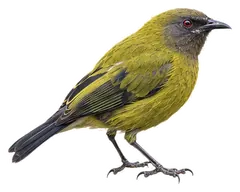
Download illustration
Free to use with credit: “Illustration: Bird Album (birdalbum.com)”. Drawn by AI from a reference photo by Sam Moynan. ↗
Heard it but can't see it? Mingji identifies birds by sound and photo, on your phone.
In other languages
- EnglishNew Zealand Bellbird
- 简体中文新西兰吸蜜鸟
- 繁體中文鐘吸蜜鳥
- 日本語ニュージーランドミツスイ
- DeutschMaorihonigfresser
- FrançaisMéliphage carillonneur
- EspañolMielero maorí
- Portuguêssininho-maori
- ItalianoCampanaro di Nuova Zelanda
- NederlandsMaoribelhoningvogel
- РусскийКоримако
- Svenskakorimako
- DanskNewzealandsk Bjældefugl
- Polskiszmaragdowiec (zwyczajny)