 Bird Album
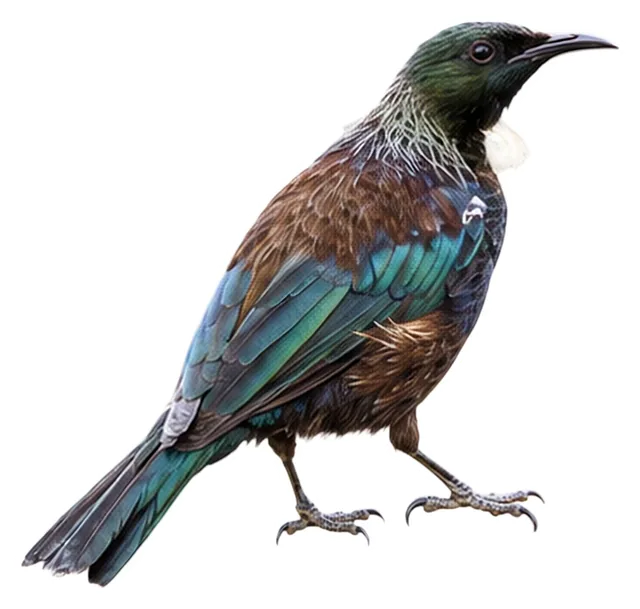
Tui
Prosthemadera novaeseelandiae (Gmelin, JF, 1788)
32 cmLength106 gWeight
The tūī (Prosthemadera novaeseelandiae) is a medium-sized bird native to New Zealand.
Busiest months: November · Most records: New Zealand
Where and when it's recorded

Tui has been recorded at 94 of the 8,171 birding hotspots we track, in 1 country or region.
Records by month Southern Hemisphere
Where it's recorded most
- Zealandia Te Mara a Tane Wildlife SanctuaryNew Zealand1,659 records
- Tiritiri MatangiNew Zealand1,652 records
- Massey University CampusNew Zealand1,331 records
More places
- Rakiura NP – Ulva IslandNew Zealand1,271 records
- Tawharanui Regional ParkNew Zealand1,010 records
- Stewart Island – Oban & Halfmoon BayNew Zealand863 records
- Orokonui EcosanctuaryNew Zealand696 records
- Tiritiri Matangi – Wattle TrackNew Zealand573 records
- Blumine Island | OruawairuaNew Zealand482 records
- Western Springs Lakeside ParkNew Zealand389 records
Countries and regions with the most records
eBird records via GBIF up to 2024-12-31. A record means someone listed it; more records partly mean more birders, not more birds.
About
The tūī (Prosthemadera novaeseelandiae) is a medium-sized bird native to New Zealand. It is blue, green, and bronze coloured with a distinctive white throat tuft (poi). It is an endemic passerine bird of New Zealand, and the only species in the genus Prosthemadera.
Excerpt from Wikipedia, CC BY-SA 4.0 · authors · Read more on Wikipedia
Questions
How big is the Tui?
The Tui is about 32 cm long and weighs around 106 g.
Where does the Tui live?
Its breeding range: Australasia: North, South, Stewart, Kermadec, Chatham and Auckland islands (New Zealand). It is most often recorded in New Zealand.
When is the best time to see the Tui?
At the hotspots we track, it is recorded most in November (Southern Hemisphere).
Is the Tui endangered?
The IUCN Red List classifies the Tui as Least Concern.
What does the Tui eat?
Main food: Nectar.
What family is the Tui in?
It belongs to the family Honeyeaters (Meliphagidae), order Passerines (Passeriformes).
At a glance
- Length
- 32 cm
- Weight
- 106 g
- Habitat
- Forest
- Diet
- Nectar
- Lifestyle
- Perches in trees
- Migration
- Resident (barely migrates)
- Conservation
- Least Concern
More measurements
- Wing
- 148 mm
- Tail
- 119 mm
- Bill
- 31 mm
- Tarsus
- 36 mm
Averages from the AVONET dataset; length from field guides where available.
Range
Australasia: North, South, Stewart, Kermadec, Chatham and Auckland islands (New Zealand)
Breeding range, IOC World Bird List 15.2
Classification
- Order
- Passerines Passeriformes
- Family
- Honeyeaters Meliphagidae
- Genus
- Prosthemadera
More from the family Honeyeaters
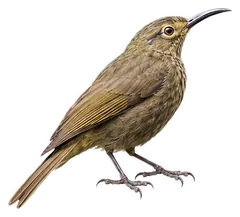 Dark-eared MyzaMyza celebensis
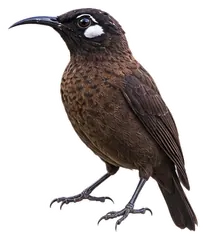 White-eared MyzaMyza sarasinorum
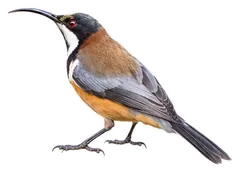 Eastern SpinebillAcanthorhynchus tenuirostris
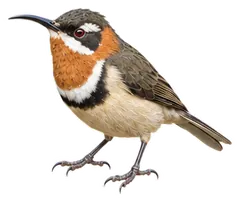 Western SpinebillAcanthorhynchus superciliosus
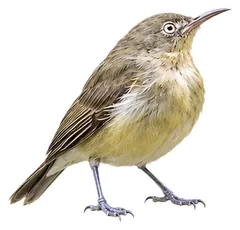 Green-backed HoneyeaterGlycichaera fallax
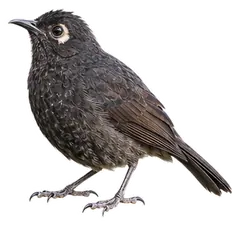 Sooty HoneyeaterMelionyx fuscus
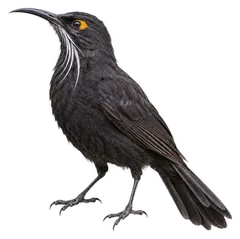 Long-bearded HoneyeaterMelionyx princeps
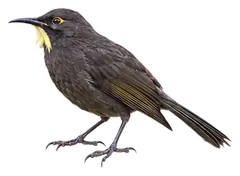 Short-bearded HoneyeaterMelionyx nouhuysi
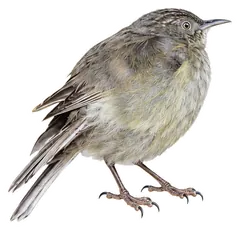 Leaden HoneyeaterPtiloprora plumbea
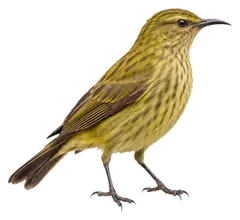 Yellowish-streaked HoneyeaterPtiloprora meekiana
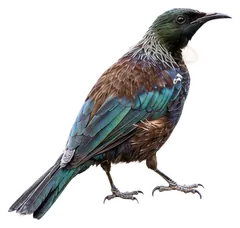
Download illustration
Free to use with credit: “Illustration: Bird Album (birdalbum.com)”. Drawn by AI from reference photos. ↗
Heard it but can't see it? Mingji identifies birds by sound and photo, on your phone.