 Bird Album
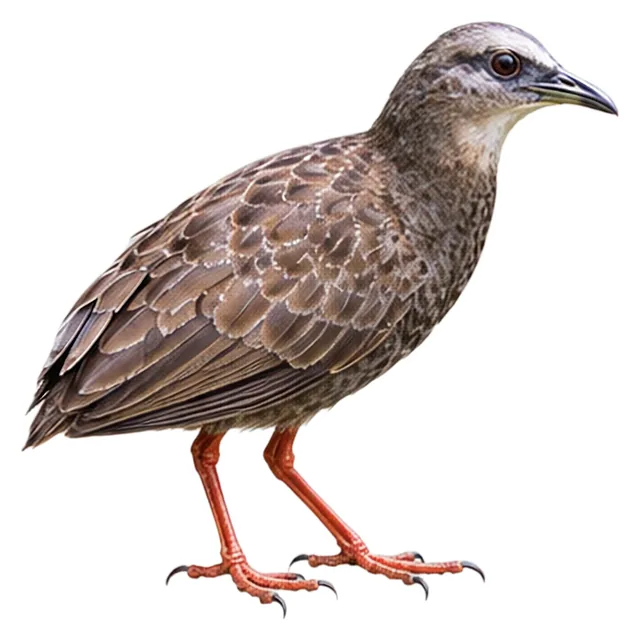
Nkulengu Rail
Himantornis haematopus Hartlaub, 1855
586 gWeight
The Nkulengu rail (Himantornis haematopus) is a species of bird in the family Rallidae.
Busiest months: March and November · Most records: Ghana, Côte d’Ivoire, Sierra Leone
Where and when it's recorded
Busiest months: March and November · Most records: Ghana, Côte d’Ivoire, Sierra Leone

Nkulengu Rail has been recorded at 29 of the 8,276 birding hotspots we track, in 10 countries and regions.
Records by month Northern Hemisphere
Where it's recorded most
- Ankasa NPGhana225 records
- Ankasa NP – entrance vicinityGhana111 records
- Taï National ParkCôte d’Ivoire21 records
More places
- Korup NP – Rengo Rock Camp AreaCameroon11 records
- Tiwai Island Wildlife SanctuarySierra Leone10 records
- Kakum National ParkGhana10 records
- Bobiri Butterfly SanctuaryGhana10 records
- Semuliki NPUganda9 records
- Ebekawopa (Abrafo) – 'farm scrub' habitatGhana8 records
- Ebekawopa (Abrafo) Forest ReserveGhana7 records
Countries and regions with the most records
eBird records via GBIF up to 2024-12-31. A record means someone listed it; more records partly mean more birders, not more birds.
About
The Nkulengu rail (Himantornis haematopus) is a species of bird in the family Rallidae. It belongs to the monotypic genus Himantornis.
Excerpt from Wikipedia, CC BY-SA 4.0 · authors · Read more on Wikipedia
Questions
How big is the Nkulengu Rail?
The Nkulengu Rail weighs around 586 g.
Where does the Nkulengu Rail live?
Its breeding range: Africa: Sierra Leone to Uganda and central DR Congo. It is most often recorded in Ghana, Côte d’Ivoire and Sierra Leone.
When is the best time to see the Nkulengu Rail?
At the hotspots we track, it is recorded most in March and November (Northern Hemisphere).
Is the Nkulengu Rail endangered?
The IUCN Red List classifies the Nkulengu Rail as Least Concern.
What does the Nkulengu Rail eat?
Main food: Omnivore.
What family is the Nkulengu Rail in?
It belongs to the family Rails, Crakes & Coots (Rallidae), order Gruiformes.
At a glance
- Weight
- 586 g
- Habitat
- Forest
- Diet
- Omnivore
- Lifestyle
- Active on the ground
- Migration
- Resident (barely migrates)
- Conservation
- Least Concern
More measurements
- Wing
- 208 mm
- Tail
- 83 mm
- Bill
- 40 mm
- Tarsus
- 77 mm
Averages from the AVONET dataset; length from field guides where available.
Range
Africa: Sierra Leone to Uganda and central DR Congo
Breeding range, IOC World Bird List 15.2
Classification
- Order
- Gruiformes
- Family
- Rails, Crakes & Coots Rallidae
- Genus
- Himantornis
More from the family Rails, Crakes & Coots
 Grey-throated RailCanirallus oculeus
 Chestnut-headed CrakeAnurolimnas castaneiceps
 Spotted RailPardirallus maculatus
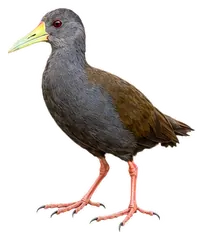 Blackish RailPardirallus nigricans
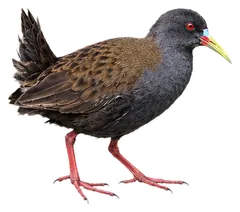 Plumbeous RailPardirallus sanguinolentus
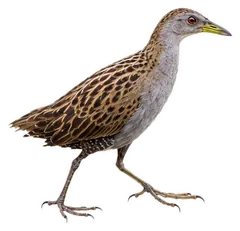 Ash-throated CrakeMustelirallus albicollis
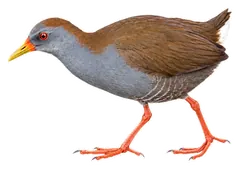 Zapata RailMustelirallus cerverai
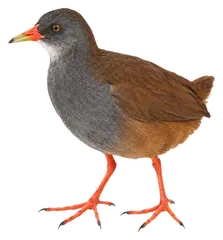 Colombian CrakeMustelirallus colombianus
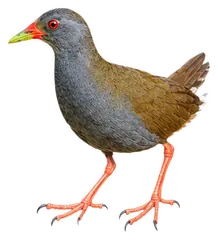 Paint-billed CrakeMustelirallus erythrops
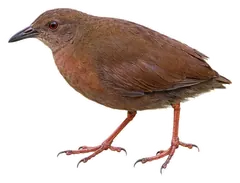 Uniform CrakeAmaurolimnas concolor
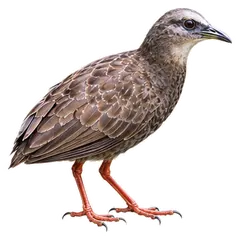
Download illustration
Free to use with credit: “Illustration: Bird Album (birdalbum.com)”. Drawn by AI from a reference photo by Mathias D'haen. ↗
Heard it but can't see it? Mingji identifies birds by sound and photo, on your phone.