 Bird Album
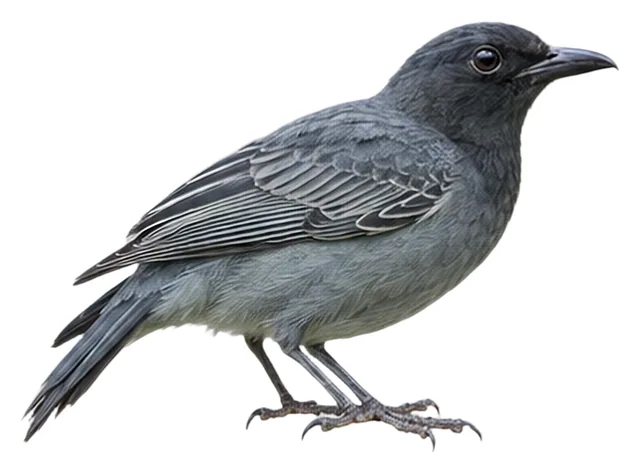
North Moluccan Cicadabird
Edolisoma grayi Salvadori, 1879
61 gWeight
The north Moluccan cicadabird (Edolisoma grayi) is a passerine bird in the family Campephagidae that is found on Halmahera, the Bacan Islands, the Tukangbesi Islands and the island of Morotai in the northern Moluccas Islands of Indonesia.
Busiest months: November–January · Most records: Australia, Indonesia, Papua New Guinea
Where and when it's recorded

North Moluccan Cicadabird has been recorded at 138 of the 8,171 birding hotspots we track, in 4 countries and regions.
Records by month Southern Hemisphere
Where it's recorded most
- Lake Samsonvale – Golds Scrub LaneAustralia1,026 records
- Gold Creek ReservoirAustralia678 records
- Nature Refuge Hawkesbury RoadAustralia564 records
More places
- Tinchi Tamba Wetlands ReserveAustralia497 records
- Keatings Lagoon Conservation ParkAustralia466 records
- Kumbartcho SanctuaryAustralia435 records
- Cairns Botanical Gardens and Centenary LakesAustralia411 records
- Lake Samsonvale – Postmans TrackAustralia409 records
- Anstead Bushland ReserveAustralia379 records
- Daintree Village Boat CruiseAustralia365 records
Countries and regions with the most records
eBird records via GBIF up to 2024-12-31. A record means someone listed it; more records partly mean more birders, not more birds.
About
The north Moluccan cicadabird (Edolisoma grayi) is a passerine bird in the family Campephagidae that is found on Halmahera, the Bacan Islands, the Tukangbesi Islands and the island of Morotai in the northern Moluccas Islands of Indonesia. The species was formerly considered to be conspecific with the common cicadabird, now renamed the Sahul cicadabird.
Excerpt from Wikipedia, CC BY-SA 4.0 · authors · Read more on Wikipedia
Questions
How big is the North Moluccan Cicadabird?
The North Moluccan Cicadabird weighs around 61 g.
Where does the North Moluccan Cicadabird live?
Its breeding range: Australasia: Tukangbesi Islands (southeast of southeastern Sulawesi), Morotai and Halmahera to Bacan (northern Moluccas),. It is most often recorded in Australia, Indonesia and Papua New Guinea.
When is the best time to see the North Moluccan Cicadabird?
At the hotspots we track, it is recorded most in January, November and December (Southern Hemisphere).
Is the North Moluccan Cicadabird endangered?
The IUCN Red List classifies the North Moluccan Cicadabird as Least Concern.
What does the North Moluccan Cicadabird eat?
Main food: Insects & other invertebrates.
What family is the North Moluccan Cicadabird in?
It belongs to the family Cuckooshrikes (Campephagidae), order Passerines (Passeriformes).
At a glance
- Weight
- 61 g
- Habitat
- Shrubland
- Diet
- Insects & other invertebrates
- Lifestyle
- Perches in trees
- Migration
- Resident (barely migrates)
- Conservation
- Least Concern
More measurements
- Wing
- 128 mm
- Tail
- 93 mm
- Bill
- 27 mm
- Tarsus
- 25 mm
Averages from the AVONET dataset; length from field guides where available.
Range
Australasia: Tukangbesi Islands (southeast of southeastern Sulawesi), Morotai and Halmahera to Bacan (northern Moluccas),
Breeding range, IOC World Bird List 15.2
Classification
- Order
- Passerines Passeriformes
- Family
- Cuckooshrikes Campephagidae
- Genus
- Edolisoma
Other birds in the genus Edolisoma
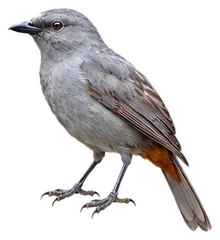 New Caledonian CuckooshrikeEdolisoma anale
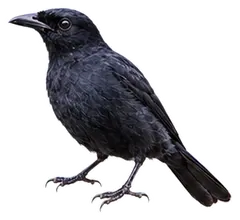 Blackish CuckooshrikeEdolisoma coerulescens
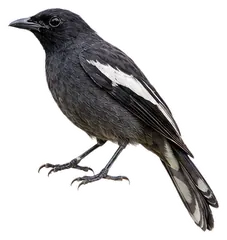 White-winged CuckooshrikeEdolisoma ostentum
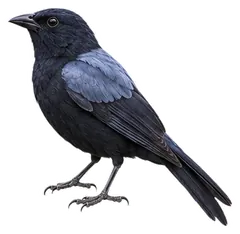 Black-bellied CuckooshrikeEdolisoma montanum
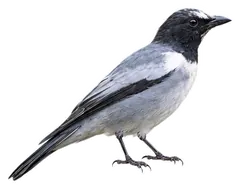 Pale-shouldered CicadabirdEdolisoma dohertyi
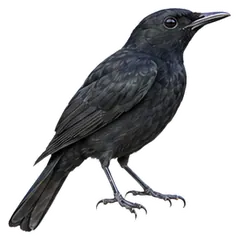 Kai CicadabirdEdolisoma dispar
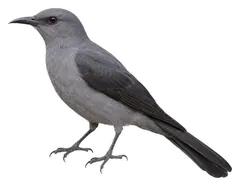 Timor CicadabirdEdolisoma timoriense
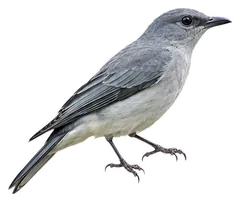 Pale CicadabirdEdolisoma ceramense
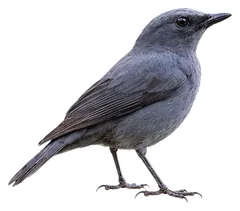 Pohnpei CicadabirdEdolisoma insperatum
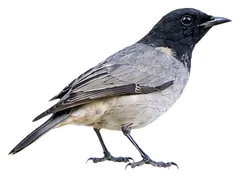 Black-bibbed CicadabirdEdolisoma mindanense
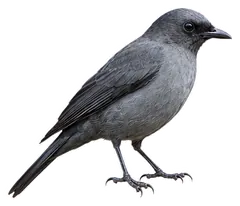 Grey-headed CuckooshrikeEdolisoma schisticeps
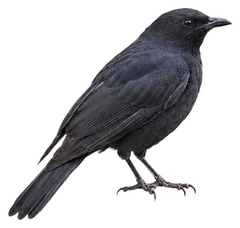 Black CicadabirdEdolisoma melas
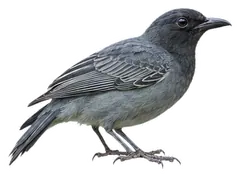
Download illustration
Free to use with credit: “Illustration: Bird Album (birdalbum.com)”. Drawn by AI from a reference photo by Jason Alexander. ↗

Heard it but can't see it? Mingji identifies birds by sound and photo, on your phone.