 Bird Album
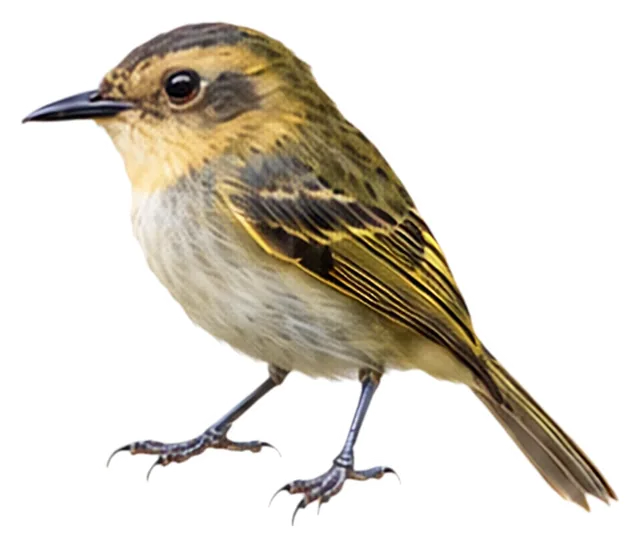
Ochre-faced Tody-Flycatcher
Poecilotriccus plumbeiceps (Lafresnaye, 1846)
9–10 cmLength5.7 gWeight
The ochre-faced tody-flycatcher (Poecilotriccus plumbeiceps) is a species of bird in the family Tyrannidae, the tyrant flycatchers.
Busiest months: October · Most records: Brazil, Argentina, Uruguay
Where and when it's recorded

Ochre-faced Tody-Flycatcher has been recorded at 100 of the 8,171 birding hotspots we track, in 6 countries and regions.
Records by month Southern Hemisphere
Where it's recorded most
- PE IntervalesBrazil865 records
- Salesópolis – Sítio MacuquinhoBrazil569 records
- Santo André – Campo Grande e estrada do Rio ClaroBrazil412 records
More places
- PP Urugua-í – Seccional UruzúArgentina393 records
- Tapiraí – Trilha dos Tucanos LodgeBrazil388 records
- Sítio Espinheiro NegroBrazil335 records
- PE Intervales – Pousadas e arredoresBrazil328 records
- Nova Friburgo – Ecolodge ItororóBrazil307 records
- Paso Centurión – ÁreaUruguay291 records
- PE da Lapa GrandeBrazil266 records
Countries and regions with the most records
eBird records via GBIF up to 2024-12-31. A record means someone listed it; more records partly mean more birders, not more birds.
About
The ochre-faced tody-flycatcher (Poecilotriccus plumbeiceps) is a species of bird in the family Tyrannidae, the tyrant flycatchers. It is found in Argentina, Bolivia, Brazil, Paraguay, Peru, and Uruguay.
Excerpt from Wikipedia, CC BY-SA 4.0 · authors · Read more on Wikipedia
Questions
How big is the Ochre-faced Tody-Flycatcher?
The Ochre-faced Tody-Flycatcher is about 9–10 cm long and weighs around 5.7 g.
Where does the Ochre-faced Tody-Flycatcher live?
Its breeding range: South America: Peru to northern Argentina. It is most often recorded in Brazil, Argentina and Uruguay.
When is the best time to see the Ochre-faced Tody-Flycatcher?
At the hotspots we track, it is recorded most in October (Southern Hemisphere).
Is the Ochre-faced Tody-Flycatcher endangered?
The IUCN Red List classifies the Ochre-faced Tody-Flycatcher as Least Concern.
What does the Ochre-faced Tody-Flycatcher eat?
Main food: Insects & other invertebrates.
What family is the Ochre-faced Tody-Flycatcher in?
It belongs to the family Tyrant Flycatchers, Calyptura (Tyrannidae), order Passerines (Passeriformes).
At a glance
- Length
- 9–10 cm
- Weight
- 5.7 g
- Habitat
- Forest
- Diet
- Insects & other invertebrates
- Lifestyle
- Perches in trees
- Migration
- Resident (barely migrates)
- Conservation
- Least Concern
More measurements
- Wing
- 42 mm
- Tail
- 36 mm
- Bill
- 14 mm
- Tarsus
- 18 mm
Averages from the AVONET dataset; length from field guides where available.
Range
South America: Peru to northern Argentina
Breeding range, IOC World Bird List 15.2
Classification
- Order
- Passerines Passeriformes
- Family
- Tyrant Flycatchers, Calyptura Tyrannidae
- Genus
- Poecilotriccus
Other birds in the genus Poecilotriccus
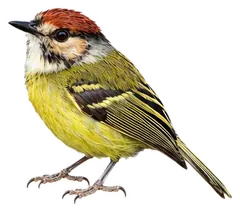 Rufous-crowned Tody-FlycatcherPoecilotriccus ruficeps
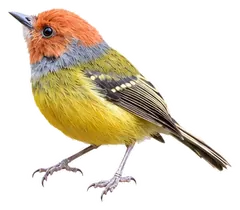 Lulu's Tody-FlycatcherPoecilotriccus luluae
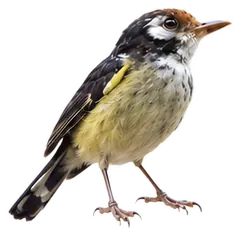 White-cheeked Tody-FlycatcherPoecilotriccus albifacies
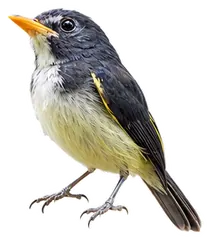 Black-and-white Tody-FlycatcherPoecilotriccus capitalis
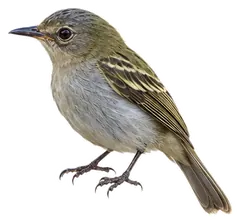 Buff-cheeked Tody-FlycatcherPoecilotriccus senex
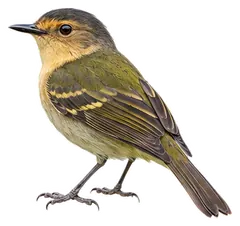 Ruddy Tody-FlycatcherPoecilotriccus russatus
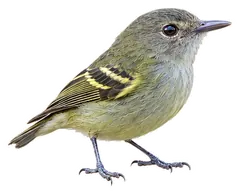 Smoky-fronted Tody-FlycatcherPoecilotriccus fumifrons
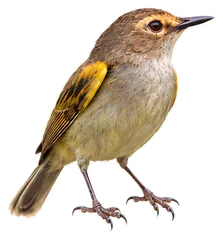 Rusty-fronted Tody-FlycatcherPoecilotriccus latirostris
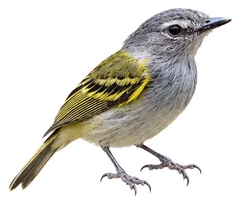 Slaty-headed Tody-FlycatcherPoecilotriccus sylvia
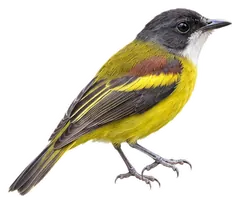 Golden-winged Tody-FlycatcherPoecilotriccus calopterus
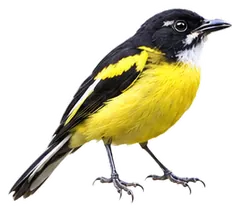 Black-backed Tody-FlycatcherPoecilotriccus pulchellus
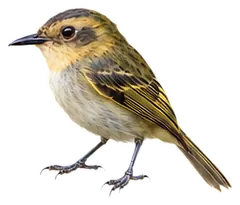
Download illustration
Free to use with credit: “Illustration: Bird Album (birdalbum.com)”. Drawn by AI from a reference photo by Luciano Bernardes. ↗
Heard it but can't see it? Mingji identifies birds by sound and photo, on your phone.
In other languages
- EnglishOchre-faced Tody-Flycatcher
- 简体中文赭脸哑霸鹟
- 繁體中文赭臉啞霸鶲
- 日本語キガオハシナガタイランチョウ
- DeutschOckergesicht-Todityrann
- FrançaisTodirostre gorgeret
- EspañolTitirijí cabecicanela
- Portuguêstororó
- ItalianoPigliamosche todo facciaocra
- NederlandsBruinkeelschoffelsnavel
- РусскийРумяный тоди-мухолов
- Svenskablykronad todityrann
- DanskGråhættet Todityran
- Polskicienkodziobek rudolicy