 Bird Album
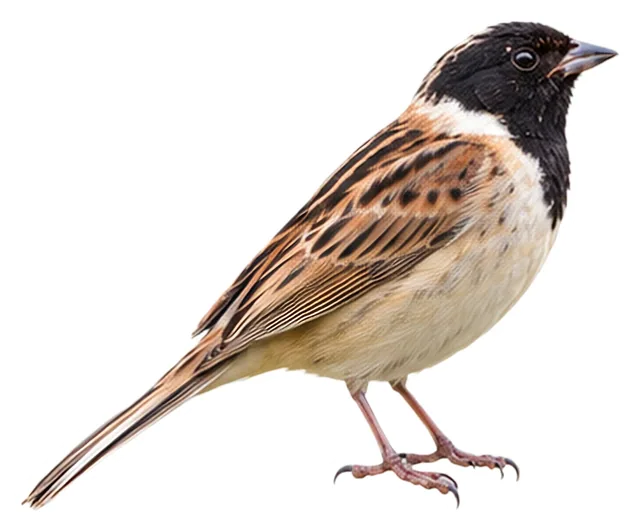
Ochre-rumped Bunting
Emberiza yessoensis (Swinhoe, 1874)
≈13 cmLength14 gWeight
This is usually the most richly colored reed bunting, with the pinkest bill, legs and feet in winter.
Busiest months: May · Most records: China, Russia, Japan
How to identify
Field marks
- Male: back dark, upperparts chestnut
- Male: breast and sides with alternating black and buff stripes
- Male: nape brown, side of neck whitish
- Bill, legs and feet pinkish in winter
Male, female and young
The female has a buff cheek stripe and throat, with a black malar stripe; the juvenile has a pale gray-brown median crown-stripe and a yellowish-brown rump.
Voice
Calls are transcribed as “sur-swee-ik” and “tik”.
Where and when it's recorded

Ochre-rumped Bunting has been recorded at 156 of the 8,171 birding hotspots we track, in 5 countries and regions.
Records by month Northern Hemisphere
Where it's recorded most
- Muravyevka ParkRussia336 records
- Inashiki – Kasumigaura – Ukishima Marsh and Myoginohana Bird BlindJapan104 records
- Beidaihe [General Area]China81 records
More places
- Beihu MarshlandChina78 records
- Nanhui DongtanChina71 records
- Lanyang River Estuary IBA – Eastern RiverbedTaiwan (China)69 records
- Shahe ReservoirChina61 records
- Happy IslandChina56 records
- Dashi RiverChina52 records
- Tashgai Lake, Dornod, MNMongolia48 records
Countries and regions with the most records
eBird records via GBIF up to 2024-12-31. A record means someone listed it; more records partly mean more birders, not more birds.
About
The ochre-rumped bunting (Schoeniclus yessoensis), also known as the Japanese reed bunting, is a bird in the family Emberizidae. It is found in Manchuria, Korea and Japan. Its natural habitats are temperate grassland and swamps.
Excerpt from Wikipedia, CC BY-SA 4.0 · authors · Read more on Wikipedia
Questions
How big is the Ochre-rumped Bunting?
The Ochre-rumped Bunting is about ≈13 cm long and weighs around 14 g.
Where does the Ochre-rumped Bunting live?
Its breeding range: Palearctic: far east-central Palearctic marshes: patchily in far eastern Mongolia, Heilongjiang (northeastern China), far southeastern Ussuriland (southeastern Russia) and Honshu to Kyushu (central to southern Japan). It is most often recorded in China, Russia and Japan.
When is the best time to see the Ochre-rumped Bunting?
At the hotspots we track, it is recorded most in May (Northern Hemisphere).
Is the Ochre-rumped Bunting endangered?
The IUCN Red List classifies the Ochre-rumped Bunting as Near Threatened.
What does the Ochre-rumped Bunting eat?
Main food: Seeds.
What family is the Ochre-rumped Bunting in?
It belongs to the family Buntings (Emberizidae), order Passerines (Passeriformes).
At a glance
- Length
- ≈13 cm
- Weight
- 14 g
- Habitat
- Wetland
- Diet
- Seeds
- Lifestyle
- Active on the ground
- Migration
- Migratory
- Conservation
- Near Threatened
More measurements
- Wing
- 67 mm
- Tail
- 60 mm
- Bill
- 11 mm
- Tarsus
- 19 mm
Averages from the AVONET dataset; length from field guides where available.
Range
Palearctic: far east-central Palearctic marshes: patchily in far eastern Mongolia, Heilongjiang (northeastern China), far southeastern Ussuriland (southeastern Russia) and Honshu to Kyushu (central to southern Japan)
Breeding range, IOC World Bird List 15.2
Subspecies · 1
- Emberiza yessoensis continentalis se Siberia, far e Mongolia and ne China | non-breeding: coastal ec China
Classification
- Order
- Passerines Passeriformes
- Family
- Buntings Emberizidae
- Genus
- Emberiza
Other birds in the genus Emberiza
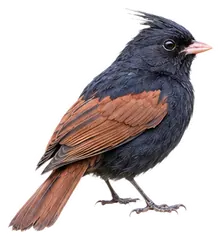 Crested BuntingEmberiza lathami
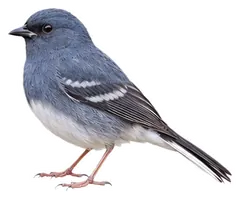 Slaty BuntingEmberiza siemsseni
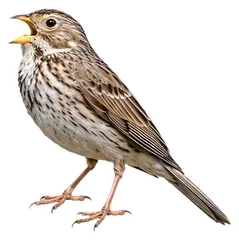 Corn BuntingEmberiza calandra
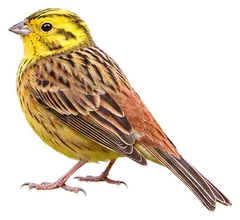 YellowhammerEmberiza citrinella
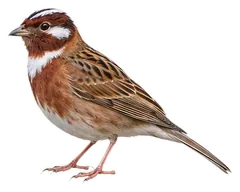 Pine BuntingEmberiza leucocephalos
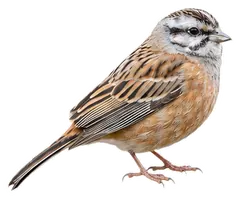 Rock BuntingEmberiza cia
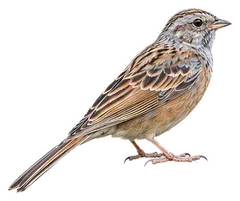 Godlewski's BuntingEmberiza godlewskii
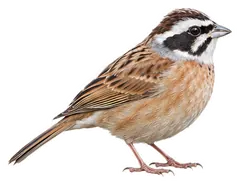 Meadow BuntingEmberiza cioides
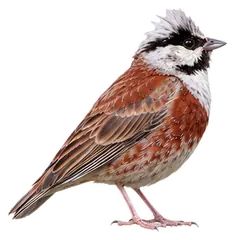 White-capped BuntingEmberiza stewarti
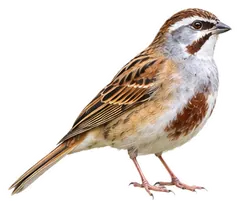 Jankowski's BuntingEmberiza jankowskii
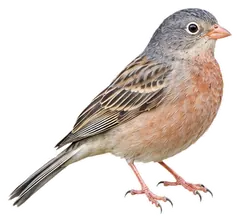 Grey-necked BuntingEmberiza buchanani
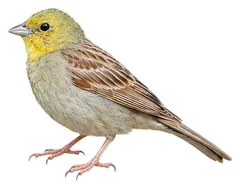 Cinereous BuntingEmberiza cineracea
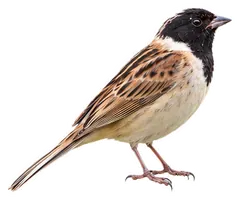
Download illustration
Free to use with credit: “Illustration: Bird Album (birdalbum.com)”. Drawn by AI from a reference photo by Kisswaynow. ↗

Heard it but can't see it? Mingji identifies birds by sound and photo, on your phone.
In other languages
- EnglishOchre-rumped Bunting
- 简体中文红颈苇鹀
- 繁體中文紅頸葦鵐
- 日本語コジュリン
- 한국어쇠검은머리쑥새
- DeutschMandschurenammer
- FrançaisBruant de Yéso
- EspañolEscribano culiocre
- Portuguêsescrevedeira-de-sobre-ocre
- ItalianoZigolo groppaocra
- NederlandsOkerstuitrietgors
- РусскийРыжешейная овсянка
- Svenskaamursävsparv
- DanskJapansk Rørspurv
- Polskitrznadel mandżurski