 Bird Album
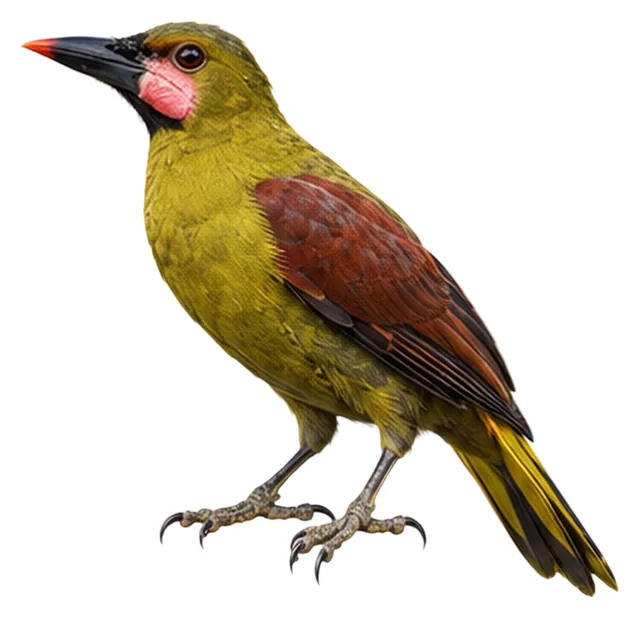
Olive Oropendola
Psarocolius bifasciatus (Spix, 1824)
47–53 cmLength336 gWeight
The olive oropendola (Psarocolius bifasciatus) is a species of bird in the family Icteridae, the oropendolas, New World orioles, and New World blackbirds.
Busiest months: July–August · Most records: Peru, Colombia, Brazil
Where and when it's recorded

Olive Oropendola has been recorded at 88 of the 8,171 birding hotspots we track, in 6 countries and regions.
Records by month Southern Hemisphere
Where it's recorded most
- Rio Cristalino – listas históricasBrazil584 records
- Los Amigos Biological StationPeru361 records
- Pantiacolla LodgePeru287 records
More places
- Tambopata Research CenterPeru284 records
- Reserva Natural La Isla EscondidaColombia284 records
- Manu BiolodgePeru218 records
- Secret Forest LodgePeru217 records
- Estación Biológica de Cocha CashuPeru212 records
- Amazonía LodgePeru191 records
- Senda BocatomaColombia177 records
Countries and regions with the most records
eBird records via GBIF up to 2024-12-31. A record means someone listed it; more records partly mean more birders, not more birds.
About
The olive oropendola (Psarocolius bifasciatus) is a species of bird in the family Icteridae, the oropendolas, New World orioles, and New World blackbirds. It is found in Brazil, Bolivia, Colombia, Ecuador, Peru, and Venezuela. It is a "spectacularly large oropendola".
Excerpt from Wikipedia, CC BY-SA 4.0 · authors · Read more on Wikipedia
Questions
How big is the Olive Oropendola?
The Olive Oropendola is about 47–53 cm long and weighs around 336 g.
Where does the Olive Oropendola live?
Its breeding range: South America: Amazonia from eastern Colombia, eastern Ecuador and southern Venezuela to central Bolivia and south-central Brazil. It is most often recorded in Peru, Colombia and Brazil.
When is the best time to see the Olive Oropendola?
At the hotspots we track, it is recorded most in July and August (Southern Hemisphere).
Is the Olive Oropendola endangered?
The IUCN Red List classifies the Olive Oropendola as Least Concern.
What does the Olive Oropendola eat?
Main food: Omnivore.
What family is the Olive Oropendola in?
It belongs to the family Oropendolas, New World Orioles, Blackbirds (Icteridae), order Passerines (Passeriformes).
At a glance
- Length
- 47–53 cm
- Weight
- 336 g
- Habitat
- Forest
- Diet
- Omnivore
- Lifestyle
- Perches in trees
- Migration
- Resident (barely migrates)
- Conservation
- Least Concern
More measurements
- Wing
- 232 mm
- Tail
- 166 mm
- Bill
- 64 mm
- Tarsus
- 51 mm
Averages from the AVONET dataset; length from field guides where available.
Range
South America: Amazonia from eastern Colombia, eastern Ecuador and southern Venezuela to central Bolivia and south-central Brazil
Breeding range, IOC World Bird List 15.2
Classification
- Order
- Passerines Passeriformes
- Family
- Oropendolas, New World Orioles, Blackbirds Icteridae
- Genus
- Psarocolius
Other birds in the genus Psarocolius
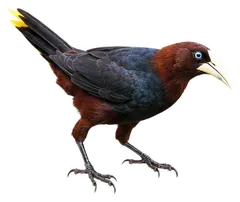 Chestnut-headed OropendolaPsarocolius wagleri
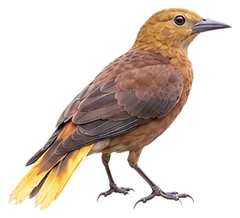 Russet-backed OropendolaPsarocolius angustifrons
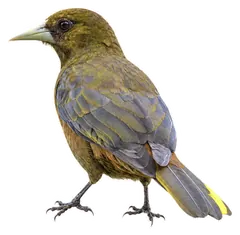 Dusky-green OropendolaPsarocolius atrovirens
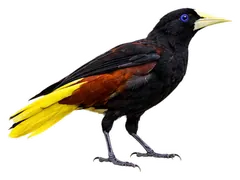 Crested OropendolaPsarocolius decumanus
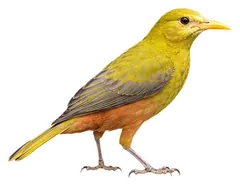 Green OropendolaPsarocolius viridis
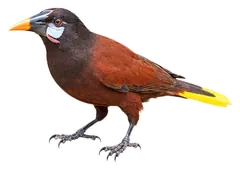 Montezuma OropendolaPsarocolius montezuma
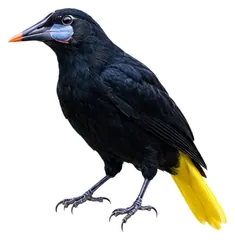 Black OropendolaPsarocolius guatimozinus
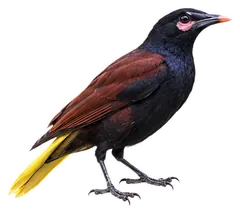 Baudo OropendolaPsarocolius cassini
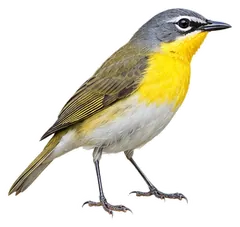 Yellow-breasted ChatIcteria virens
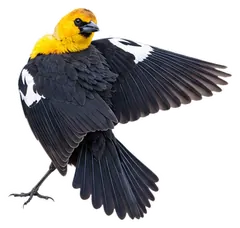 Yellow-headed BlackbirdXanthocephalus xanthocephalus
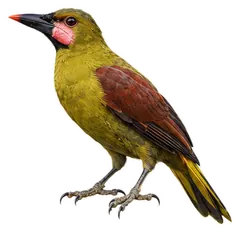
Download illustration
Free to use with credit: “Illustration: Bird Album (birdalbum.com)”. Drawn by AI from a reference photo by Aisse Gaertner. ↗
Heard it but can't see it? Mingji identifies birds by sound and photo, on your phone.