 Bird Album
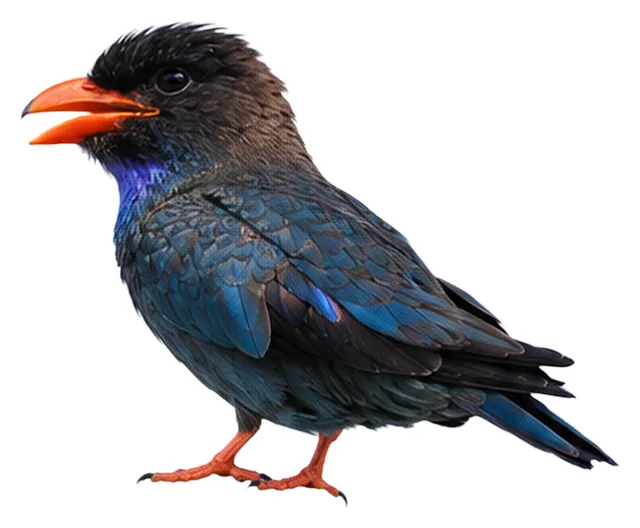
Oriental Dollarbird
Eurystomus orientalis (Linnaeus, 1766)
30 cmLength143 gWeight
It has a single pale blue-white wing patch that is conspicuous in flight, and often perches on high branches to catch insects.
Most records: Australia, Singapore, Malaysia
How to identify
Field marks
- Pale blue patch on outer wing, conspicuous in flight
- Bill short and broad; adult bill orange-red with black tip
- Dark brown overall; back and wing coverts with blue-green metallic gloss
- Throat bright blue
Male, female and young
Female is slightly duller than male; juvenile is much duller, lacks blue on the throat, and has a bill, legs, and feet ranging from blackish-gray to rufous.
Where and when it's recorded

Oriental Dollarbird has been recorded at 1,156 of the 8,171 birding hotspots we track, in 24 countries and regions.
Records by month Northern Hemisphere
Where it's recorded most
- Kranji MarshSingapore886 records
- Kinabatangan River – SukauMalaysia875 records
- Townsville Town Common Conservation ParkAustralia848 records
More places
- Sepilok – Rainforest Discovery CenterMalaysia840 records
- Cat Tien NPVietnam828 records
- Coachwood ParkAustralia810 records
- Jerrabomberra Wetlands Nature ReserveAustralia805 records
- Thattekkad Bird SanctuaryIndia783 records
- Dairy Farm Nature ParkSingapore777 records
- Kaeng Krachan NPThailand697 records
Countries and regions with the most records
eBird records via GBIF up to 2024-12-31. A record means someone listed it; more records partly mean more birders, not more birds.
About
The Oriental dollarbird (Eurystomus orientalis) is a bird of the roller family, so named because of the distinctive pale blue or white, coin-shaped spots on its wings. It can be found from Australia to Korea, Japan and India.
Excerpt from Wikipedia, CC BY-SA 4.0 · authors · Read more on Wikipedia
Questions
How big is the Oriental Dollarbird?
The Oriental Dollarbird is about 30 cm long and weighs around 143 g.
Where does the Oriental Dollarbird live?
Its breeding range: Palearctic, Oriental, Australasia: Himalayas through China to Northeast Asia, Sri Lanka, Philippines, New Guinea, Australia, Bismarck Archipelago and Solomon Islands. It is most often recorded in Australia, Singapore and Malaysia.
Is the Oriental Dollarbird endangered?
The IUCN Red List classifies the Oriental Dollarbird as Least Concern.
What does the Oriental Dollarbird eat?
Main food: Insects & other invertebrates.
What family is the Oriental Dollarbird in?
It belongs to the family Rollers (Coraciidae), order Coraciiformes.
At a glance
- Length
- 30 cm
- Weight
- 143 g
- Habitat
- Woodland
- Diet
- Insects & other invertebrates
- Lifestyle
- Feeds in the air
- Migration
- Migratory
- Conservation
- Least Concern
More measurements
- Wing
- 186 mm
- Tail
- 98 mm
- Bill
- 32 mm
- Tarsus
- 17 mm
Averages from the AVONET dataset; length from field guides where available.
Range
Palearctic, Oriental, Australasia: Himalayas through China to Northeast Asia, Sri Lanka, Philippines, New Guinea, Australia, Bismarck Archipelago and Solomon Islands
Breeding range, IOC World Bird List 15.2
Subspecies · 1
- Eurystomus orientalis cyanocollis Himalayas through China to se Siberia, Korean Pen. and Japan | non-breeding: to se Asia and the Greater Sundas
Classification
- Order
- Coraciiformes
- Family
- Rollers Coraciidae
- Genus
- Eurystomus
Other birds in the genus Eurystomus
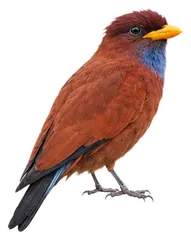 Blue-throated RollerEurystomus gularis
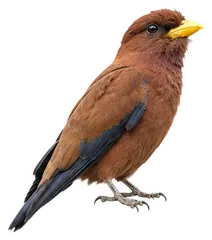 Broad-billed RollerEurystomus glaucurus
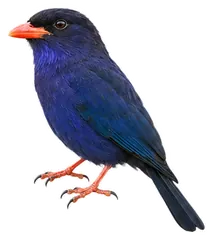 Azure DollarbirdEurystomus azureus
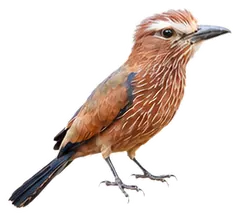 Purple RollerCoracias naevius
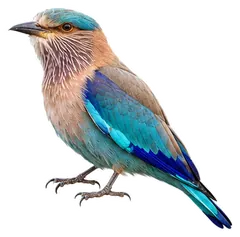 Indian RollerCoracias benghalensis
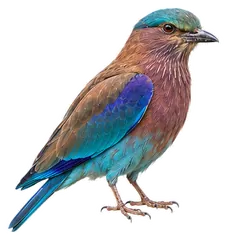 Indochinese RollerCoracias affinis
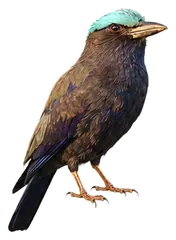 Purple-winged RollerCoracias temminckii
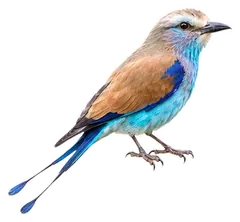 Racket-tailed RollerCoracias spatulatus
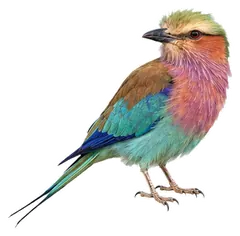 Lilac-breasted RollerCoracias caudatus
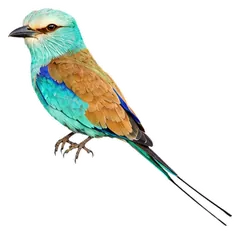 Abyssinian RollerCoracias abyssinicus
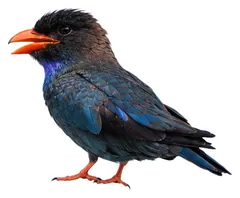
Download illustration
Free to use with credit: “Illustration: Bird Album (birdalbum.com)”. Drawn by AI from a reference photo by anukma. ↗

Heard it but can't see it? Mingji identifies birds by sound and photo, on your phone.