 Bird Album
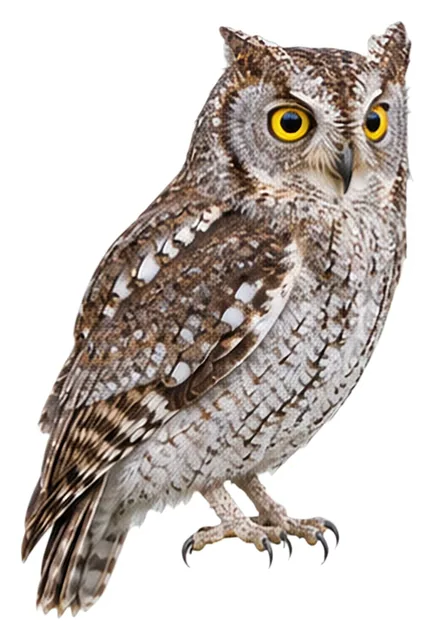
Oriental Scops Owl
Otus sunia (Hodgson, 1836)
≈22 cmLength48 cmWingspan78 gWeight
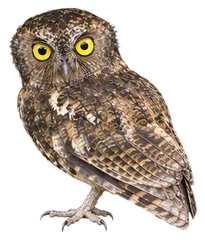
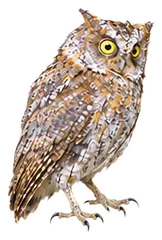
This small, yellow-eyed owl may freeze with its eyes half-closed when alarmed.
Busiest months: January–February and May · Most records: India, China, Cambodia
Looks like Collared Scops Owl
How to identify
Field marks
- Eyes yellow
- Ear tufts not always raised
- A single whitish stripe on the scapulars
- Underparts clearly marked, with no pale collar
Male, female and young
No obvious differences in plumage between the sexes.
Voice
A clear, repeatedly given “tuk tok torok”.
Similar species
Where and when it's recorded
Busiest months: January–February and May · Most records: India, China, Cambodia

Oriental Scops Owl has been recorded at 433 of the 8,276 birding hotspots we track, in 18 countries and regions.
Records by month Northern Hemisphere
Where it's recorded most
- Chidyatapu Biological ParkIndia469 records
- Kanha Tiger Reserve – Mukki GateIndia292 records
- TmatboeyCambodia283 records
More places
- Phutthamonthon ParkThailand157 records
- Bharatpur – Keoladeo Ghana NPIndia140 records
- Thattekkad Bird SanctuaryIndia139 records
- Nanhui DongtanChina129 records
- Bondla Wildlife SanctuaryIndia123 records
- Veal Krous Vulture RestaurantCambodia112 records
- Maguri BeelIndia112 records
Countries and regions with the most records
eBird records via GBIF up to 2024-12-31. A record means someone listed it; more records partly mean more birders, not more birds.
Questions
How big is the Oriental Scops Owl?
The Oriental Scops Owl is about ≈22 cm long, with a wingspan of 48 cm and weighs around 78 g.
Where does the Oriental Scops Owl live?
Its breeding range: Palearctic, Oriental: widespread, also East Asia. It is most often recorded in India, China and Cambodia.
When is the best time to see the Oriental Scops Owl?
At the hotspots we track, it is recorded most in January, February and May (Northern Hemisphere).
Is the Oriental Scops Owl endangered?
The IUCN Red List classifies the Oriental Scops Owl as Least Concern.
What does the Oriental Scops Owl eat?
Main food: Insects & other invertebrates.
What family is the Oriental Scops Owl in?
It belongs to the family Owls (Strigidae), order Strigiformes.
At a glance
- Length
- ≈22 cm
- Wingspan
- 48 cm
- Weight
- 78 g
- Habitat
- Forest
- Diet
- Insects & other invertebrates
- Lifestyle
- Perches in trees
- Migration
- Resident (barely migrates)
- Conservation
- Least Concern
More measurements
- Wing
- 142 mm
- Tail
- 62 mm
- Bill
- 18 mm
- Tarsus
- 24 mm
Averages from the AVONET dataset; length from field guides where available.
Range
Palearctic, Oriental: widespread, also East Asia
Breeding range, IOC World Bird List 15.2
Subspecies · 2
- Otus sunia stictonotus se Siberia, ne China and Korean Pen.
- Otus sunia malayanus s China
Classification
- Order
- Strigiformes
- Family
- Owls Strigidae
- Genus
- Otus
Other birds in the genus Otus
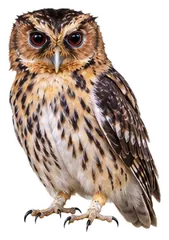 Giant Scops OwlOtus gurneyi
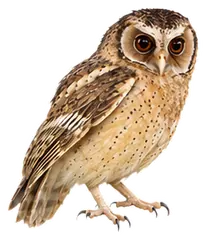 White-fronted Scops OwlOtus sagittatus
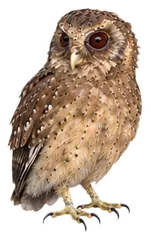 Reddish Scops OwlOtus rufescens
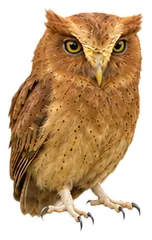 Serendib Scops OwlOtus thilohoffmanni
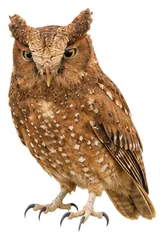 Sandy Scops OwlOtus icterorhynchus
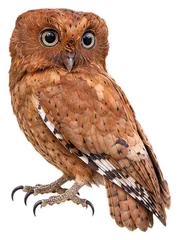 Sokoke Scops OwlOtus ireneae
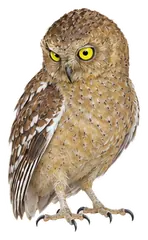 Andaman Scops OwlOtus balli
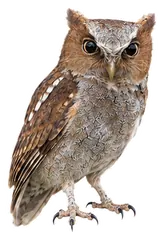 Flores Scops OwlOtus alfredi
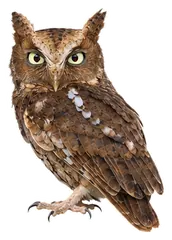 Mountain Scops OwlOtus spilocephalus
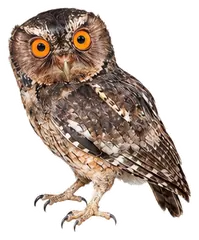 Javan Scops OwlOtus angelinae
 Mindanao Scops OwlOtus mirus
 Luzon Scops OwlOtus longicornis
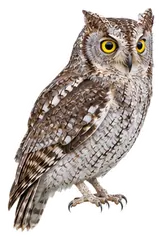
Download illustration
Free to use with credit: “Illustration: Bird Album (birdalbum.com)”. Drawn by AI from a reference photo by JJ Harrison. ↗

Heard it but can't see it? Mingji identifies birds by sound and photo, on your phone.
In other languages
- EnglishOriental Scops Owl
- 简体中文红角鸮
- 繁體中文東方角鴞
- 日本語コノハズク
- 한국어소쩍새
- DeutschOrient-Zwergohreule
- FrançaisPetit-duc d’Orient
- EspañolAutillo oriental
- Portuguêsmocho-de-orelhas-oriental
- ItalianoAssiolo orientale
- NederlandsOosterse Dwergooruil
- РусскийВосточная сплюшка
- Svenskaorientdvärguv
- DanskLys Dværghornugle
- Polskisyczek indyjski