 Bird Album
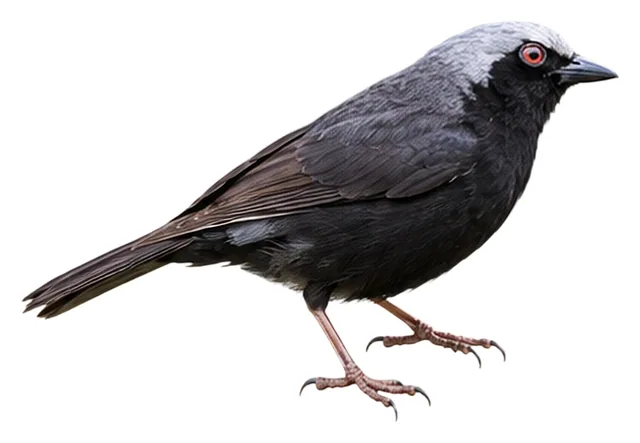
Pale-fronted Nigrita
Nigrita luteifrons Verreaux, J & Verreaux, É, 1851
13 gWeight
The pale-fronted nigrita (Nigrita luteifrons) is a common species of estrildid finch found in Africa.
Busiest months: January and March · Most records: Cameroon, Equatorial Guinea, Uganda
Where and when it's recorded

Pale-fronted Nigrita has been recorded at 35 of the 8,171 birding hotspots we track, in 9 countries and regions.
Records by month Northern Hemisphere
Where it's recorded most
- Limbe Botanical GardenCameroon33 records
- Mt. KupeCameroon18 records
- Semuliki NPUganda17 records
More places
- American University of Central AfricaEquatorial Guinea15 records
- RC de la Caldera de Luba – North (American) CampEquatorial Guinea9 records
- Mt. Kupe – Max's trailCameroon9 records
- Ipassa Makokou Nature ReserveGabon7 records
- Sangha LodgeCentral African Republic5 records
- Libreville – Résidence de FranceGabon5 records
- Lesio-Louna Reserve – Iboubikro and track to MahCongo - Brazzaville4 records
Countries and regions with the most records
eBird records via GBIF up to 2024-12-31. A record means someone listed it; more records partly mean more birders, not more birds.
About
The pale-fronted nigrita (Nigrita luteifrons) is a common species of estrildid finch found in Africa. It has an estimated global extent of occurrence of 2,500,000 km2.
Excerpt from Wikipedia, CC BY-SA 4.0 · authors · Read more on Wikipedia
Questions
How big is the Pale-fronted Nigrita?
The Pale-fronted Nigrita weighs around 13 g.
Where does the Pale-fronted Nigrita live?
Its breeding range: Africa: central. It is most often recorded in Cameroon, Equatorial Guinea and Uganda.
When is the best time to see the Pale-fronted Nigrita?
At the hotspots we track, it is recorded most in January and March (Northern Hemisphere).
Is the Pale-fronted Nigrita endangered?
The IUCN Red List classifies the Pale-fronted Nigrita as Least Concern.
What does the Pale-fronted Nigrita eat?
Main food: Insects & other invertebrates.
What family is the Pale-fronted Nigrita in?
It belongs to the family Waxbills, Munias & Allies (Estrildidae), order Passerines (Passeriformes).
At a glance
- Weight
- 13 g
- Habitat
- Forest
- Diet
- Insects & other invertebrates
- Lifestyle
- Perches in trees
- Migration
- Resident (barely migrates)
- Conservation
- Least Concern
More measurements
- Wing
- 58 mm
- Tail
- 38 mm
- Bill
- 11 mm
- Tarsus
- 15 mm
Averages from the AVONET dataset; length from field guides where available.
Range
Africa: central
Breeding range, IOC World Bird List 15.2
Classification
- Order
- Passerines Passeriformes
- Family
- Waxbills, Munias & Allies Estrildidae
- Genus
- Nigrita
Other birds in the genus Nigrita
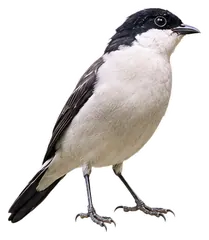 White-breasted NigritaNigrita fusconotus
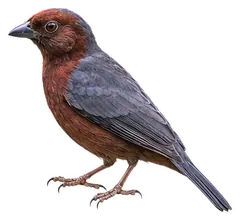 Chestnut-breasted NigritaNigrita bicolor
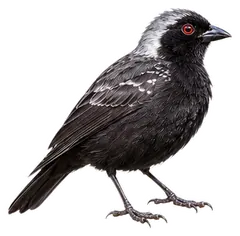 Grey-headed NigritaNigrita canicapillus
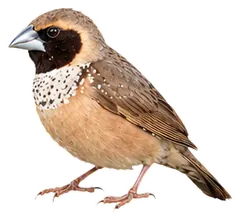 Pictorella MannikinHeteromunia pectoralis
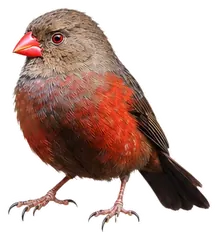 Mountain FiretailOreostruthus fuliginosus
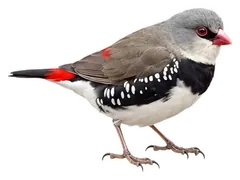 Diamond FiretailStagonopleura guttata
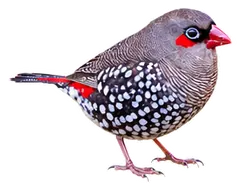 Red-eared FiretailStagonopleura oculata
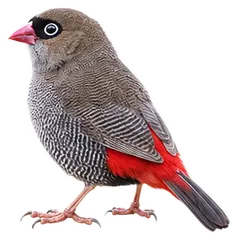 Beautiful FiretailStagonopleura bella
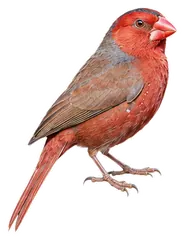 Crimson FinchNeochmia phaeton
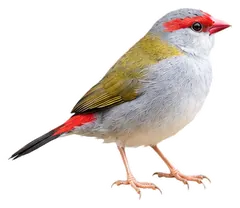 Red-browed FinchNeochmia temporalis
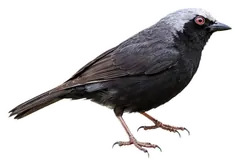
Download illustration
Free to use with credit: “Illustration: Bird Album (birdalbum.com)”. Drawn by AI from a reference photo by Rogério Ferreira. ↗
Heard it but can't see it? Mingji identifies birds by sound and photo, on your phone.
In other languages
- EnglishPale-fronted Nigrita
- 简体中文淡额黑雀
- 繁體中文淡額黑梅花雀
- 日本語シロビタイクロキンパラ
- DeutschBlassstirnschwärzling
- FrançaisNigrette à front jaune
- EspañolNegrita frentigualda
- Portuguêsnigrita-de-fronte-clara
- ItalianoNigrita frontechiara
- NederlandsBleekkopnigrita
- РусскийЖелтолобая нигрита
- Svenskabeigepannad nigrita
- DanskGulpandet Skovastrild
- Polskinigrita jasnoczelna