 Bird Album
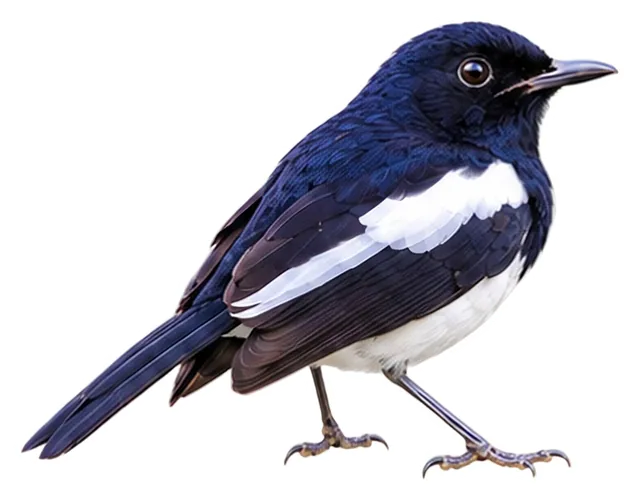
Philippine Magpie-Robin
Copsychus mindanensis (Boddaert, 1783)
33 gWeight
The Philippine magpie-robin (Copsychus mindanensis) is a species of bird in the family Muscicapidae.
Busiest months: February–March · Most records: Philippines
Where and when it's recorded
Busiest months: February–March · Most records: Philippines

Philippine Magpie-Robin has been recorded at 39 of the 8,276 birding hotspots we track, in 1 country or region.
Records by month Northern Hemisphere
Where it's recorded most
- La Mesa Eco Park, Quezon CityPhilippines330 records
- Victoria Valley - Valley Golf, AntipoloPhilippines262 records
- Victoria Valley Subdivision, AntipoloPhilippines191 records
More places
- Palo Alto, BarasPhilippines143 records
- Ateneo de Manila UniversityPhilippines140 records
- Caylabne Bay Resort, TernatePhilippines103 records
- Tabunan, Cebu CityPhilippines90 records
- UP Diliman – CampusPhilippines81 records
- Bislig lowlands – PICOP Roads 1-4Philippines68 records
- Las Pinas-Paranaque Critical Habitat and Ecotourism AreaPhilippines63 records
Countries and regions with the most records
eBird records via GBIF up to 2024-12-31. A record means someone listed it; more records partly mean more birders, not more birds.
About
The Philippine magpie-robin (Copsychus mindanensis) is a species of bird in the family Muscicapidae.
Excerpt from Wikipedia, CC BY-SA 4.0 · authors · Read more on Wikipedia
Questions
How big is the Philippine Magpie-Robin?
The Philippine Magpie-Robin weighs around 33 g.
Where does the Philippine Magpie-Robin live?
Its breeding range: Oriental: Philippines (except Palawan group). It is most often recorded in Philippines.
When is the best time to see the Philippine Magpie-Robin?
At the hotspots we track, it is recorded most in February and March (Northern Hemisphere).
Is the Philippine Magpie-Robin endangered?
The IUCN Red List classifies the Philippine Magpie-Robin as Least Concern.
What does the Philippine Magpie-Robin eat?
Main food: Insects & other invertebrates.
What family is the Philippine Magpie-Robin in?
It belongs to the family Chats, Old World Flycatchers (Muscicapidae), order Passerines (Passeriformes).
At a glance
- Weight
- 33 g
- Habitat
- Woodland
- Diet
- Insects & other invertebrates
- Lifestyle
- Active on the ground
- Migration
- Resident (barely migrates)
- Conservation
- Least Concern
More measurements
- Wing
- 98 mm
- Tail
- 84 mm
- Bill
- 23 mm
- Tarsus
- 30 mm
Averages from the AVONET dataset; length from field guides where available.
Range
Oriental: Philippines (except Palawan group)
Breeding range, IOC World Bird List 15.2
Classification
- Order
- Passerines Passeriformes
- Family
- Chats, Old World Flycatchers Muscicapidae
- Genus
- Copsychus
Other birds in the genus Copsychus
 Oriental Magpie-RobinCopsychus saularis
 Seychelles Magpie-RobinCopsychus sechellarum
 Madagascar Magpie-RobinCopsychus albospecularis
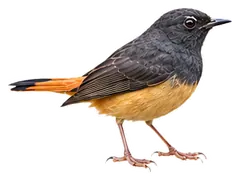 Rufous-tailed ShamaCopsychus pyrropygus
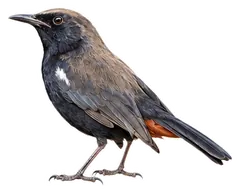 Indian RobinCopsychus fulicatus
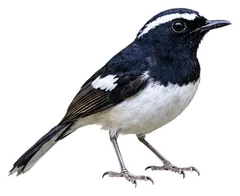 White-browed ShamaCopsychus luzoniensis
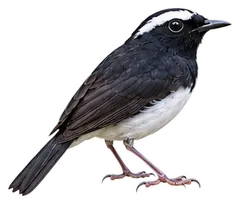 Visayan ShamaCopsychus superciliaris
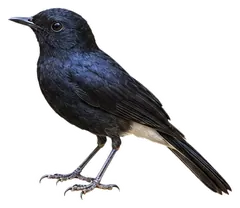 White-vented ShamaCopsychus niger
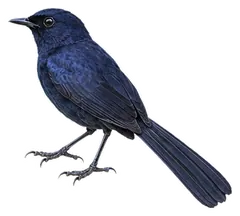 Black ShamaCopsychus cebuensis
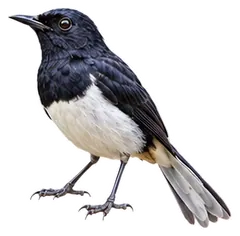 Andaman ShamaCopsychus albiventris
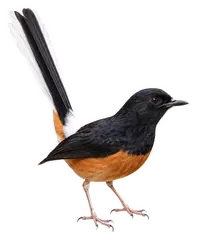 Larwo ShamaCopsychus omissus
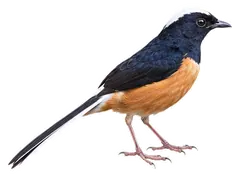 White-crowned ShamaCopsychus stricklandii
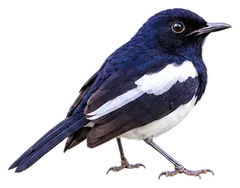
Download illustration
Free to use with credit: “Illustration: Bird Album (birdalbum.com)”. Drawn by AI from reference photos. ↗
Heard it but can't see it? Mingji identifies birds by sound and photo, on your phone.