 Bird Album
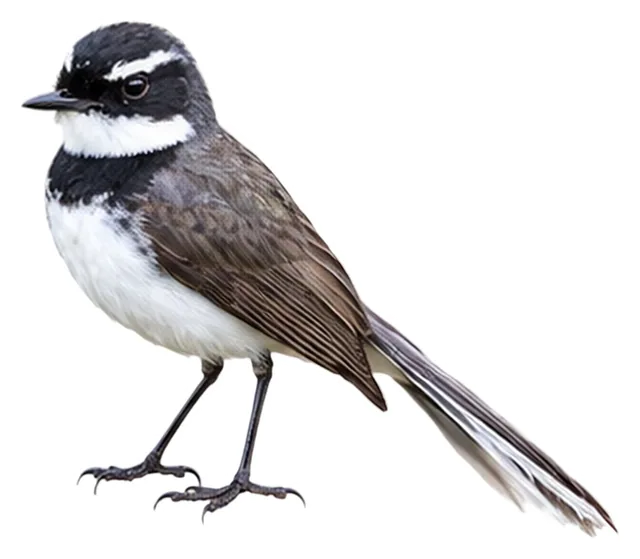
Philippine Pied Fantail
Rhipidura nigritorquis Vigors, 1831
≈14 cmLength17 gWeight
It has a black face, white supercilium and white throat, and constantly wags its tail from side to side.
Busiest months: January–March and November · Most records: Philippines
How to identify
Field marks
- Black face; white supercilium and throat
- Black band across the breast
- Smoky-gray upperparts and white underparts
Voice
The song consists of varied, slightly rough phrases of whistles.
Where and when it's recorded
Busiest months: January–March and November · Most records: Philippines

Philippine Pied Fantail has been recorded at 57 of the 8,276 birding hotspots we track, in 1 country or region.
Records by month Northern Hemisphere
Where it's recorded most
- La Mesa Eco Park, Quezon CityPhilippines764 records
- Las Pinas-Paranaque Critical Habitat and Ecotourism AreaPhilippines557 records
- Candaba MarshPhilippines418 records
More places
- UP Diliman – CampusPhilippines304 records
- Victoria Valley - Valley Golf, AntipoloPhilippines274 records
- Manila American Cemetery and Memorial, TaguigPhilippines223 records
- Victoria Valley Subdivision, AntipoloPhilippines203 records
- UP Diliman – Hardin ng RosasPhilippines194 records
- NLEX – Total Gas StationPhilippines190 records
- Panabo Coastal RoadPhilippines172 records
Countries and regions with the most records
eBird records via GBIF up to 2024-12-31. A record means someone listed it; more records partly mean more birders, not more birds.
About
The Philippine pied fantail (Rhipidura nigritorquis) is a medium-size species of bird in the family Rhipiduridae endemic to the Philippines. It was formerly considered conspecific with the Malaysian pied fantail.
Excerpt from Wikipedia, CC BY-SA 4.0 · authors · Read more on Wikipedia
Questions
How big is the Philippine Pied Fantail?
The Philippine Pied Fantail is about ≈14 cm long and weighs around 17 g.
Where does the Philippine Pied Fantail live?
Its breeding range: Oriental: Philippines. It is most often recorded in Philippines.
When is the best time to see the Philippine Pied Fantail?
At the hotspots we track, it is recorded most in January, February, March and November (Northern Hemisphere).
Is the Philippine Pied Fantail endangered?
The IUCN Red List classifies the Philippine Pied Fantail as Least Concern.
What does the Philippine Pied Fantail eat?
Main food: Insects & other invertebrates.
What family is the Philippine Pied Fantail in?
It belongs to the family Fantails (Rhipiduridae), order Passerines (Passeriformes).
At a glance
- Length
- ≈14 cm
- Weight
- 17 g
- Habitat
- Woodland
- Diet
- Insects & other invertebrates
- Lifestyle
- Perches in trees
- Migration
- Resident (barely migrates)
- Conservation
- Least Concern
More measurements
- Wing
- 68 mm
- Tail
- 67 mm
- Bill
- 14 mm
- Tarsus
- 16 mm
Averages from the AVONET dataset; length from field guides where available.
Range
Oriental: Philippines
Breeding range, IOC World Bird List 15.2
Classification
- Order
- Passerines Passeriformes
- Family
- Fantails Rhipiduridae
- Genus
- Rhipidura
Other birds in the genus Rhipidura
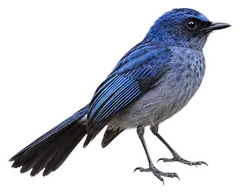 Mindanao Blue FantailRhipidura superciliaris
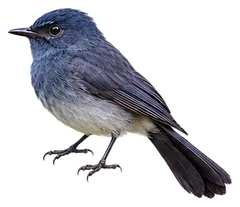 Visayan Blue FantailRhipidura samarensis
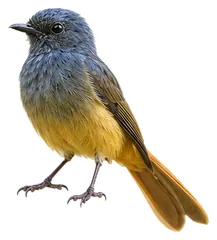 Blue-headed FantailRhipidura cyaniceps
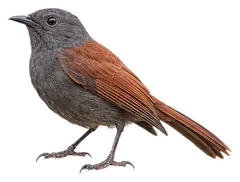 Tablas FantailRhipidura sauli
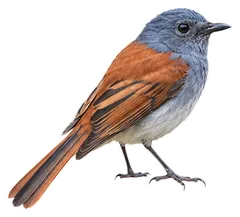 Visayan FantailRhipidura albiventris
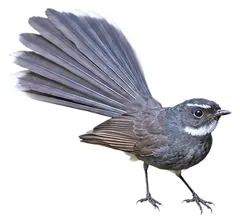 White-throated FantailRhipidura albicollis
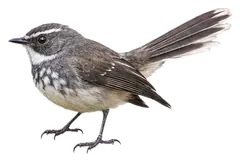 White-spotted FantailRhipidura albogularis
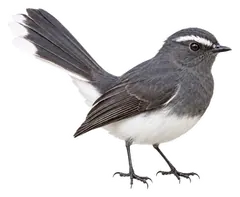 White-bellied FantailRhipidura euryura
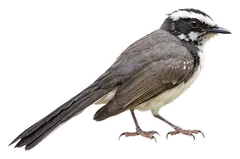 White-browed FantailRhipidura aureola
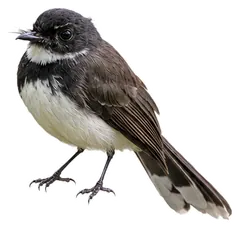 Sunda Pied FantailRhipidura javanica
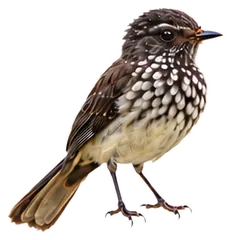 Spotted FantailRhipidura perlata
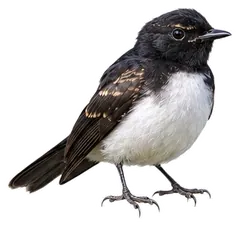 Willie WagtailRhipidura leucophrys
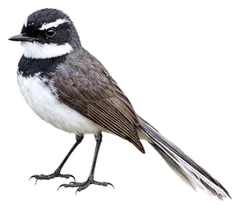
Download illustration
Free to use with credit: “Illustration: Bird Album (birdalbum.com)”. Drawn by AI from a reference photo by Gil Ewing. ↗
Heard it but can't see it? Mingji identifies birds by sound and photo, on your phone.
In other languages
- EnglishPhilippine Pied Fantail
- 简体中文菲律宾斑扇尾鹟
- 繁體中文菲律賓斑扇尾鶲
- 日本語フィリピンオビオウギビタキ
- DeutschPhilippinenfächerschwanz
- FrançaisRhipidure de Vigors
- EspañolAbanico pío de Filipinas
- Portuguêsrabo-de-leque-filipino
- NederlandsFilipijnse Bonte Waaierstaart
- РусскийФилиппинская веерохвостка
- Svenskafilippinsolfjäderstjärt
- DanskFilippinsk Viftehale
- Polskiwachlarzówka czarnogrzbieta