 Bird Album
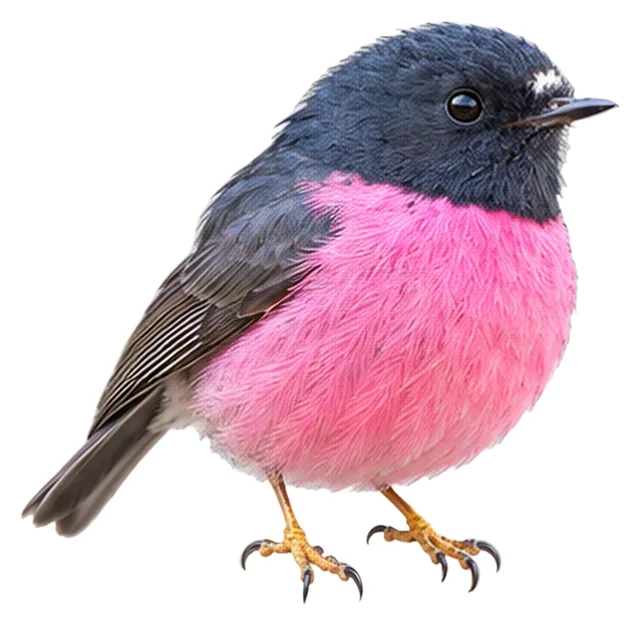
Pink Robin
Petroica rodinogaster (Drapiez, 1819)
14 cmLength10 gWeight
The pink robin (Petroica rodinogaster) is a small passerine bird native to southeastern Australia.
Busiest months: April–May · Most records: Australia
Where and when it's recorded

Pink Robin has been recorded at 37 of the 8,171 birding hotspots we track, in 1 country or region.
Records by month Southern Hemisphere
Where it's recorded most
- InalaAustralia395 records
- La Trobe University Bundoora – Nangak Tamboree Wildlife SanctuaryAustralia132 records
- Newport LakesAustralia97 records
More places
- Australian National Botanic GardensAustralia80 records
- Ocean Grove Nature ReserveAustralia79 records
- Huntingdale WetlandsAustralia50 records
- Serendip SanctuaryAustralia36 records
- Royal ParkAustralia25 records
- You Yangs Regional ParkAustralia22 records
- Crusoe Reservoir and No. 7 ParkAustralia16 records
Countries and regions with the most records
eBird records via GBIF up to 2024-12-31. A record means someone listed it; more records partly mean more birders, not more birds.
About
The pink robin (Petroica rodinogaster) is a small passerine bird native to southeastern Australia. Its natural habitats are cool temperate forests of far southeastern Australia. Like many brightly coloured robins of the family Petroicidae, it is sexually dimorphic.
Excerpt from Wikipedia, CC BY-SA 4.0 · authors · Read more on Wikipedia
Questions
How big is the Pink Robin?
The Pink Robin is about 14 cm long and weighs around 10 g.
Where does the Pink Robin live?
Its breeding range: Australasia: southeastern Australia and Tasmania. It is most often recorded in Australia.
When is the best time to see the Pink Robin?
At the hotspots we track, it is recorded most in April and May (Southern Hemisphere).
Is the Pink Robin endangered?
The IUCN Red List classifies the Pink Robin as Least Concern.
What does the Pink Robin eat?
Main food: Insects & other invertebrates.
What family is the Pink Robin in?
It belongs to the family Australasian Robins (Petroicidae), order Passerines (Passeriformes).
At a glance
- Length
- 14 cm
- Weight
- 10 g
- Habitat
- Forest
- Diet
- Insects & other invertebrates
- Lifestyle
- Perches in trees
- Migration
- Partial migrant
- Conservation
- Least Concern
More measurements
- Wing
- 66 mm
- Tail
- 53 mm
- Bill
- 12 mm
- Tarsus
- 18 mm
Averages from the AVONET dataset; length from field guides where available.
Range
Australasia: southeastern Australia and Tasmania
Breeding range, IOC World Bird List 15.2
Classification
- Order
- Passerines Passeriformes
- Family
- Australasian Robins Petroicidae
- Genus
- Petroica
Other birds in the genus Petroica
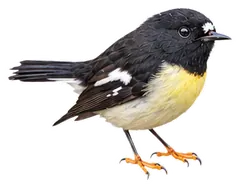 TomtitPetroica macrocephala
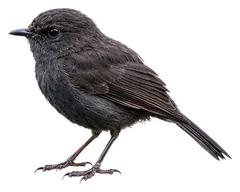 Black RobinPetroica traversi
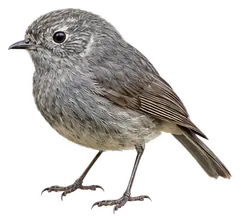 North Island RobinPetroica longipes
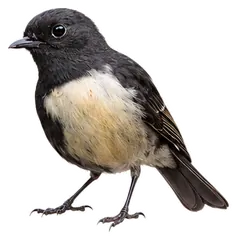 South Island RobinPetroica australis
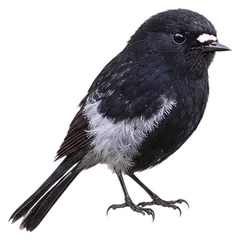 Mountain RobinPetroica bivittata
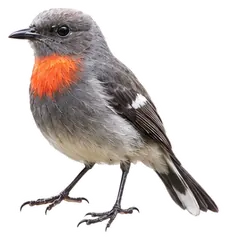 Snow Mountain RobinPetroica archboldi
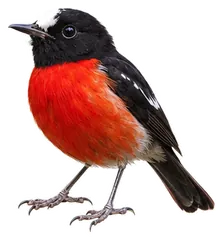 Norfolk RobinPetroica multicolor
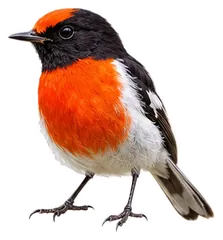 Red-capped RobinPetroica goodenovii
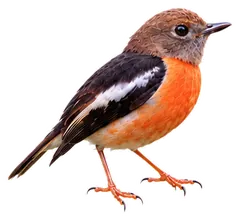 Solomons RobinPetroica polymorpha
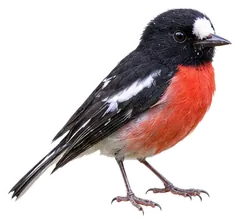 Pacific RobinPetroica pusilla
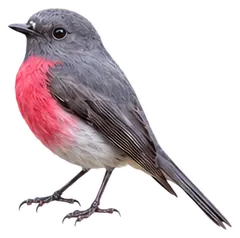 Rose RobinPetroica rosea
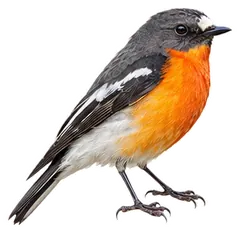 Flame RobinPetroica phoenicea
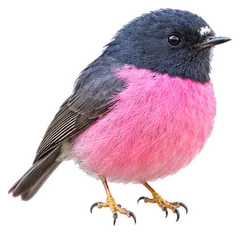
Download illustration
Free to use with credit: “Illustration: Bird Album (birdalbum.com)”. Drawn by AI from a reference photo by samzhang. ↗
Heard it but can't see it? Mingji identifies birds by sound and photo, on your phone.
In other languages
- EnglishPink Robin
- 简体中文粉红鸲鹟
- 繁體中文粉紅鴝鶲
- 日本語セグロサンショクヒタキ
- DeutschRosaschnäpper
- FrançaisMiro incarnat
- EspañolPetroica encarnada
- Portuguêspapinho-encarnado
- ItalianoPetroica rosa
- NederlandsZwart-roze Vliegenvanger
- РусскийМалиновогрудая петроика
- Svenskaskär sydhake
- DanskRosenbuget Sangfluesnapper
- Polskiskalinek czarnosterny