 Bird Album
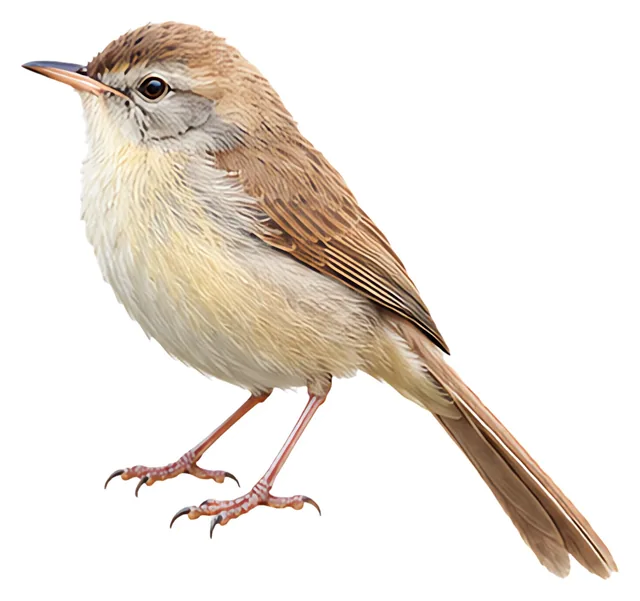
Plain Prinia
Prinia inornata Sykes, 1832
≈12 cmLength7 gWeight
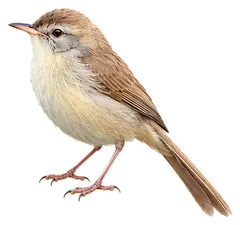
In the breeding season, this small bird has gray-rufous upperparts and a short white supercilium; it has a rather long tail and often hides in grass and scrub.
Busiest months: November–February · Most records: China, India, Thailand
How to identify
Field marks
- Gray-rufous back in breeding plumage
- Short, white supercilium
- Rufous feather edges on the folded wing in breeding plumage
- Rather long tail; short bill, black in the breeding season
Male, female and young
The sexes are identical in appearance; in winter plumage, the upperparts are tinged with warm rufous, the belly is rufous-tinged and the tail is longer.
Voice
A repeated “tlee-tlee-tlee”.
Where and when it's recorded

Plain Prinia has been recorded at 1,312 of the 8,171 birding hotspots we track, in 13 countries and regions.
Records by month Northern Hemisphere
Where it's recorded most
- Taipei – Tianliaoyang WetlandTaiwan (China)5,584 records
- Changaram Wetlands – EzhupunnaIndia4,198 records
- Huajiang IBA – Huajiang Wild Duck Nature Park (Huajiang to Zhongxing Bridge)Taiwan (China)3,688 records
More places
- Mai Po Nature ReserveHong Kong (China)3,220 records
- Bharatpur – Keoladeo Ghana NPIndia2,542 records
- Aogu Wetland IBATaiwan (China)2,247 records
- KattampallyIndia2,040 records
- Hoskote / Hosakote KereIndia2,012 records
- Baruipur MarshesIndia1,945 records
- GKVK CampusIndia1,940 records
Countries and regions with the most records
eBird records via GBIF up to 2024-12-31. A record means someone listed it; more records partly mean more birders, not more birds.
About
The plain prinia (Prinia inornata), also known as the plain wren-warbler or white-browed wren-warbler, is a small cisticolid warbler found in Southeast Asia. It is a resident breeder from Pakistan and India to south China and southeast Asia. It was formerly included in the tawny-flanked prinia (Prinia subflava), resident in Africa south of the Sahara.
Excerpt from Wikipedia, CC BY-SA 4.0 · authors · Read more on Wikipedia
Questions
How big is the Plain Prinia?
The Plain Prinia is about ≈12 cm long and weighs around 7 g.
Where does the Plain Prinia live?
Its breeding range: Oriental: northeastern Afghanistan to eastern China and Vietnam; disjunctly Java. It is most often recorded in China, India and Thailand.
When is the best time to see the Plain Prinia?
At the hotspots we track, it is recorded most in January, February, November and December (Northern Hemisphere).
Is the Plain Prinia endangered?
The IUCN Red List classifies the Plain Prinia as Least Concern.
What does the Plain Prinia eat?
Main food: Insects & other invertebrates.
What family is the Plain Prinia in?
It belongs to the family Cisticolas & Allies (Cisticolidae), order Passerines (Passeriformes).
At a glance
- Length
- ≈12 cm
- Weight
- 7 g
- Habitat
- Shrubland
- Diet
- Insects & other invertebrates
- Lifestyle
- Varied
- Migration
- Resident (barely migrates)
- Conservation
- Least Concern
More measurements
- Wing
- 50 mm
- Tail
- 71 mm
- Bill
- 12 mm
- Tarsus
- 18 mm
Averages from the AVONET dataset; length from field guides where available.
Range
Oriental: northeastern Afghanistan to eastern China and Vietnam; disjunctly Java
Breeding range, IOC World Bird List 15.2
Subspecies · 3
- Prinia inornata blanfordi n, c, e Myanmar, nw Thailand and w Yunnan (s China)
- Prinia inornata extensicauda n, e Yunnan (s China) to e China, n Indochina
- Prinia inornata flavirostris Taiwan (China)
Classification
- Order
- Passerines Passeriformes
- Family
- Cisticolas & Allies Cisticolidae
- Genus
- Prinia
Other birds in the genus Prinia
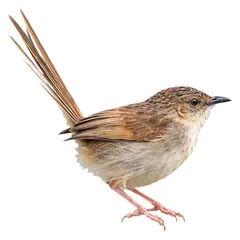 Himalayan PriniaPrinia crinigera
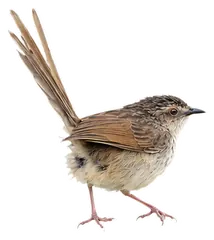 Striped PriniaPrinia striata
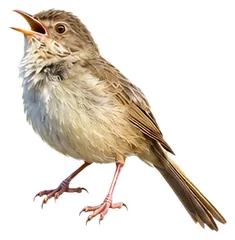 Brown PriniaPrinia polychroa
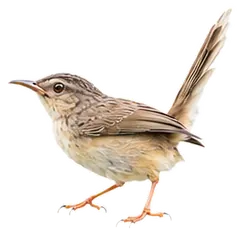 Burmese PriniaPrinia cooki
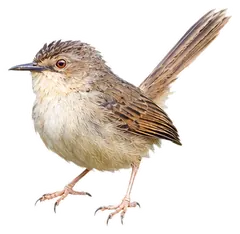 Annam PriniaPrinia rocki
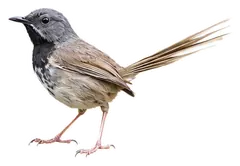 Black-throated PriniaPrinia atrogularis
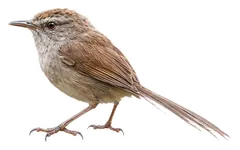 Rufous-crowned PriniaPrinia khasiana
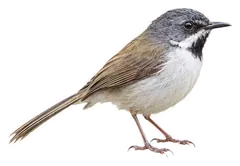 Hill PriniaPrinia superciliaris
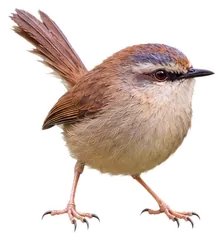 Grey-crowned PriniaPrinia cinereocapilla
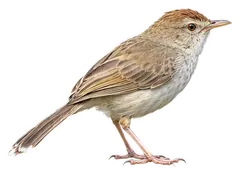 Rufous-fronted PriniaPrinia buchanani
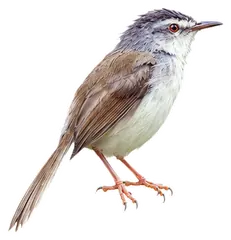 Rufescent PriniaPrinia rufescens
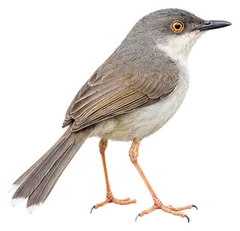 Grey-breasted PriniaPrinia hodgsonii
Download illustration
Free to use with credit: “Illustration: Bird Album (birdalbum.com)”. Drawn by AI from a reference photo by Charles J. Sharp. ↗

Heard it but can't see it? Mingji identifies birds by sound and photo, on your phone.