 Bird Album
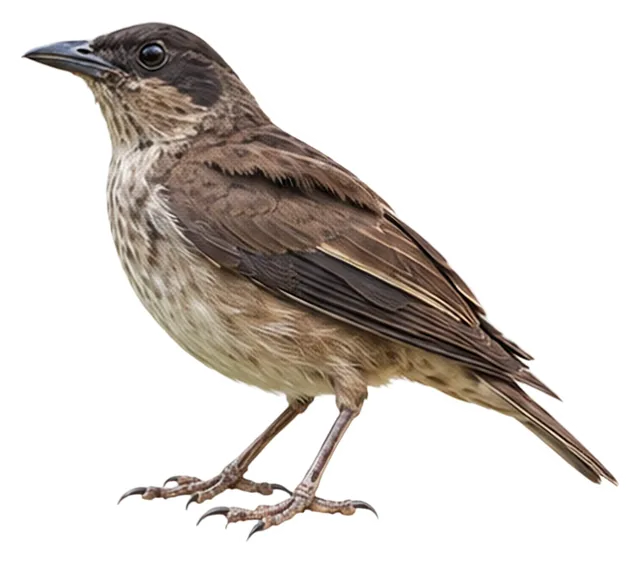
Polynesian Starling
Aplonis tabuensis (Gmelin, JF, 1788)
62 gWeight
The Polynesian starling (Aplonis tabuensis) is a species of starling of the family Sturnidae.
Busiest months: August · Most records: Fiji, Samoa, Tonga
Where and when it's recorded

Polynesian Starling has been recorded at 41 of the 8,171 birding hotspots we track, in 5 countries and regions.
Records by month Southern Hemisphere
Where it's recorded most
- Malolo'lelei Watershed ReserveSamoa90 records
- Kadavu Island - Papageno ResortFiji66 records
- Taveuni – Des Voeux PeakFiji57 records
More places
- Dave Parker's Eco LodgeSamoa42 records
- Des Veoux Peak – Mount ManukaFiji34 records
- Apia – Mt. Vaea & Robert Louis Stevenson MuseumSamoa33 records
- Vunisea – Road NorthFiji33 records
- Nuku'AlofaTonga31 records
- MatavaFiji30 records
- Tonga – Vava'uTonga18 records
Countries and regions with the most records
eBird records via GBIF up to 2024-12-31. A record means someone listed it; more records partly mean more birders, not more birds.
About
The Polynesian starling (Aplonis tabuensis) is a species of starling of the family Sturnidae. It is found in the Samoan Islands, Fiji, Niue, Tonga, the Santa Cruz Islands and Wallis and Futuna. Its natural habitats are subtropical or tropical dry forests and tropical moist forests.
Excerpt from Wikipedia, CC BY-SA 4.0 · authors · Read more on Wikipedia
Questions
How big is the Polynesian Starling?
The Polynesian Starling weighs around 62 g.
Where does the Polynesian Starling live?
Its breeding range: Pacific Ocean: southeastern Melanesia in Temotu (=Santa Cruz, southeastern Solomon Islands) through southern Polynesia. It is most often recorded in Fiji, Samoa and Tonga.
When is the best time to see the Polynesian Starling?
At the hotspots we track, it is recorded most in August (Southern Hemisphere).
Is the Polynesian Starling endangered?
The IUCN Red List classifies the Polynesian Starling as Least Concern.
What does the Polynesian Starling eat?
Main food: Fruit.
What family is the Polynesian Starling in?
It belongs to the family Starlings, Rhabdornises (Sturnidae), order Passerines (Passeriformes).
At a glance
- Weight
- 62 g
- Habitat
- Forest
- Diet
- Fruit
- Lifestyle
- Perches in trees
- Migration
- Resident (barely migrates)
- Conservation
- Least Concern
More measurements
- Wing
- 99 mm
- Tail
- 62 mm
- Bill
- 21 mm
- Tarsus
- 26 mm
Averages from the AVONET dataset; length from field guides where available.
Range
Pacific Ocean: southeastern Melanesia in Temotu (=Santa Cruz, southeastern Solomon Islands) through southern Polynesia
Breeding range, IOC World Bird List 15.2
Classification
- Order
- Passerines Passeriformes
- Family
- Starlings, Rhabdornises Sturnidae
- Genus
- Aplonis
Other birds in the genus Aplonis
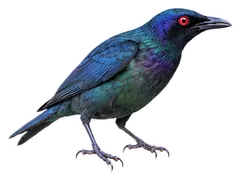 Metallic StarlingAplonis metallica
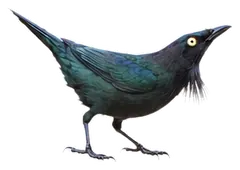 Yellow-eyed StarlingAplonis mystacea
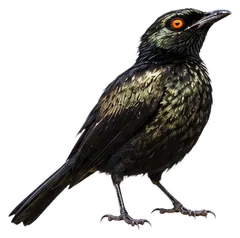 Singing StarlingAplonis cantoroides
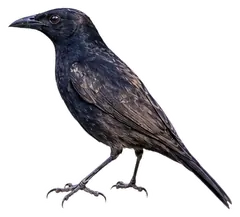 Tanimbar StarlingAplonis crassa
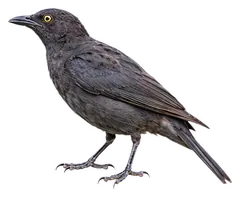 Atoll StarlingAplonis feadensis
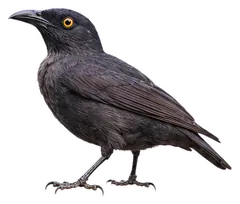 Rennell StarlingAplonis insularis
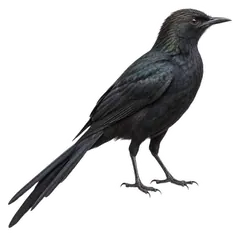 Long-tailed StarlingAplonis magna
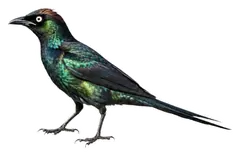 White-eyed StarlingAplonis brunneicapillus
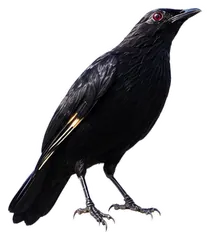 Brown-winged StarlingAplonis grandis
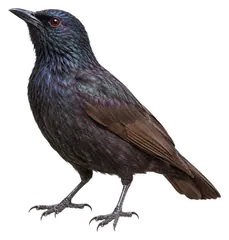 Makira StarlingAplonis dichroa
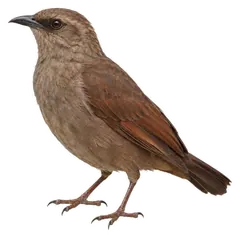 Rusty-winged StarlingAplonis zelandica
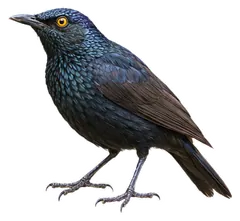 Striated StarlingAplonis striata
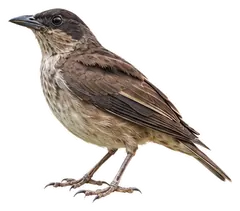
Download illustration
Free to use with credit: “Illustration: Bird Album (birdalbum.com)”. Drawn by AI from a reference photo by Rosario Douglas. ↗
Heard it but can't see it? Mingji identifies birds by sound and photo, on your phone.
In other languages
- EnglishPolynesian Starling
- 简体中文玻利辉椋鸟
- 繁體中文波里尼西亞輝椋鳥
- 日本語タテジマカラスモドキ
- DeutschSüdseestar
- FrançaisStourne de Polynésie
- EspañolEstornino de Polinesia
- Portuguêsestorninho-polinésio
- ItalianoStorno di Polinesia
- NederlandsPolynesische Purperspreeuw
- РусскийПолинезийский скворец
- Svenskasöderhavsstare
- DanskPolynesisk Træstær
- Polskiskworczyk polinezyjski