 Bird Album
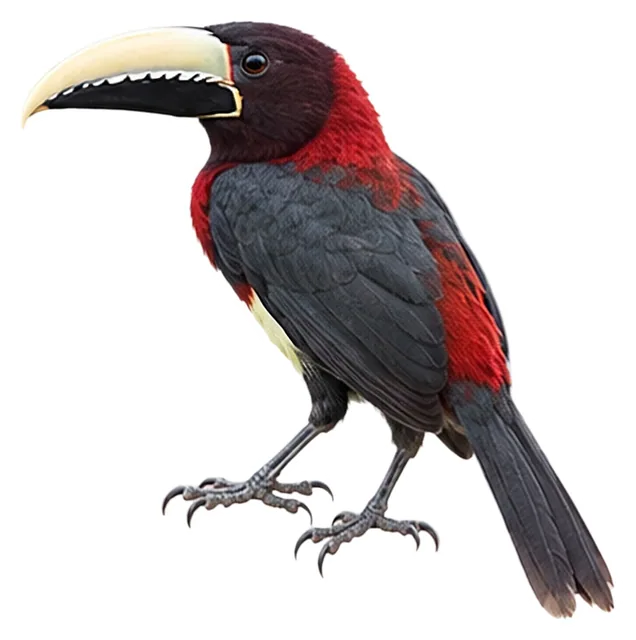
Red-necked Aracari
Pteroglossus bitorquatus Vigors, 1826
36–40 cmLength142 gWeight
The red-necked aracari or red-necked araçari (Pteroglossus bitorquatus) is a bird in the toucan family Ramphastidae.
Busiest months: August · Most records: Brazil, Bolivia
Where and when it's recorded

Red-necked Aracari has been recorded at 11 of the 8,171 birding hotspots we track, in 2 countries and regions.
Records by month Southern Hemisphere
Where it's recorded most
- Rio Cristalino – listas históricasBrazil502 records
- Jardim da AmazôniaBrazil327 records
- Cristalino Lodge – Torre 1Brazil306 records
More places
- Rio Azul Jungle LodgeBrazil195 records
- Cristalino Lodge – Torre 2 e trilhaBrazil188 records
- Cristalino Lodge – entorno do LodgeBrazil101 records
- Parque Ecológico de GunmaBrazil33 records
- São Félix do Xingu – listas históricasBrazil8 records
- San Miguelito Jaguar Conservation RanchBolivia2 records
- Poconé – Pousada PiuvalBrazil2 records
Countries and regions with the most records
eBird records via GBIF up to 2024-12-31. A record means someone listed it; more records partly mean more birders, not more birds.
About
The red-necked aracari or red-necked araçari (Pteroglossus bitorquatus) is a bird in the toucan family Ramphastidae. It is found in Bolivia and Brazil.
Excerpt from Wikipedia, CC BY-SA 4.0 · authors · Read more on Wikipedia
Questions
How big is the Red-necked Aracari?
The Red-necked Aracari is about 36–40 cm long and weighs around 142 g.
Where does the Red-necked Aracari live?
Its breeding range: South America: southern Amazonia. It is most often recorded in Brazil and Bolivia.
When is the best time to see the Red-necked Aracari?
At the hotspots we track, it is recorded most in August (Southern Hemisphere).
Is the Red-necked Aracari endangered?
The IUCN Red List classifies the Red-necked Aracari as Near Threatened.
What does the Red-necked Aracari eat?
Main food: Fruit.
What family is the Red-necked Aracari in?
It belongs to the family Toucans (Ramphastidae), order Piciformes.
At a glance
- Length
- 36–40 cm
- Weight
- 142 g
- Habitat
- Forest
- Diet
- Fruit
- Lifestyle
- Perches in trees
- Migration
- Resident (barely migrates)
- Conservation
- Near Threatened
More measurements
- Wing
- 118 mm
- Tail
- 123 mm
- Bill
- 79 mm
- Tarsus
- 30 mm
Averages from the AVONET dataset; length from field guides where available.
Range
South America: southern Amazonia
Breeding range, IOC World Bird List 15.2
Classification
- Order
- Piciformes
- Family
- Toucans Ramphastidae
- Genus
- Pteroglossus
Other birds in the genus Pteroglossus
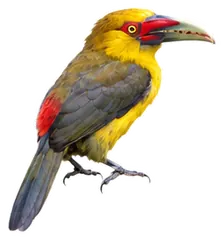 Saffron ToucanetPteroglossus bailloni
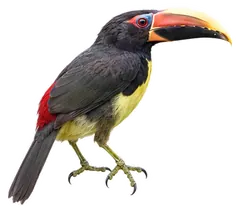 Green AracariPteroglossus viridis
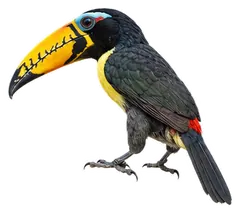 Lettered AracariPteroglossus inscriptus
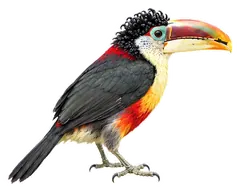 Curl-crested AracariPteroglossus beauharnaisii
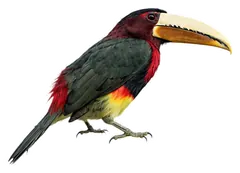 Ivory-billed AracariPteroglossus azara
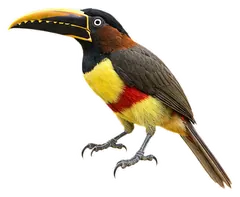 Chestnut-eared AracariPteroglossus castanotis
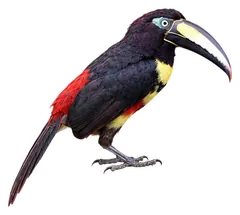 Many-banded AracariPteroglossus pluricinctus
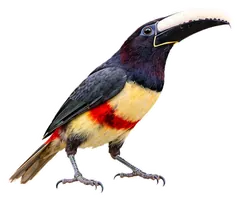 Black-necked AracariPteroglossus aracari
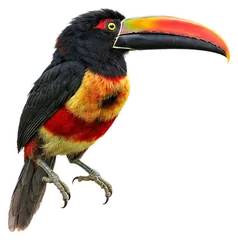 Fiery-billed AracariPteroglossus frantzii
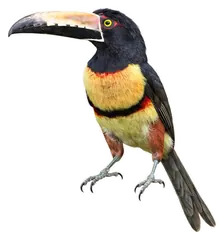 Collared AracariPteroglossus torquatus
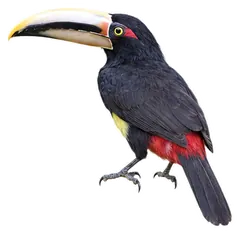 Pale-mandibled AracariPteroglossus erythropygius
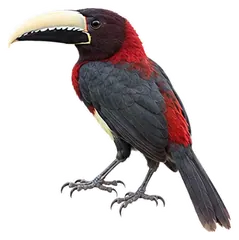
Download illustration
Free to use with credit: “Illustration: Bird Album (birdalbum.com)”. Drawn by AI from a reference photo by Lindolfo Souto. ↗
Heard it but can't see it? Mingji identifies birds by sound and photo, on your phone.
In other languages
- EnglishRed-necked Aracari
- 简体中文红颈簇舌巨嘴鸟
- 繁體中文紅頸阿拉卡鴷
- 日本語アオハシチュウハシ
- DeutschRotnackenarassari
- FrançaisAraçari à double collier
- EspañolArasarí cuellirrojo oriental
- Portuguêsaraçari-de-pescoço-vermelho
- ItalianoAracari collorosso
- NederlandsRoodhalsarassari
- РусскийКрасношейный арасари
- Svenskarödnackad arassari
- DanskRødhalset Arasari
- Polskiarasari rdzawoszyi