 Bird Album
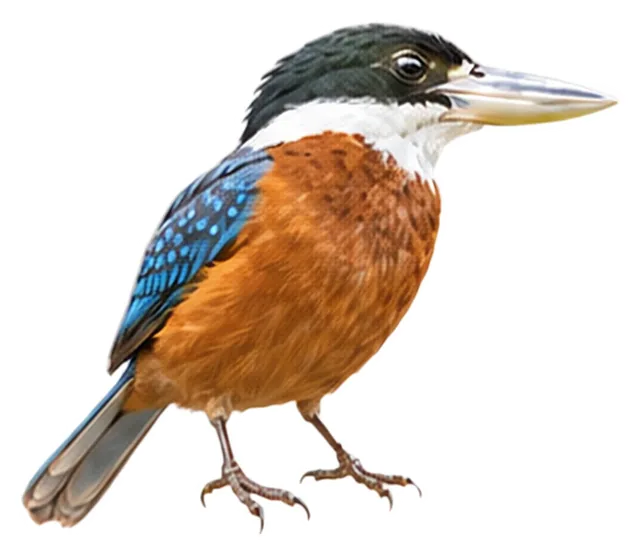
Rufous-bellied Kookaburra
Dacelo gaudichaud Gaimard, 1823
143 gWeight
The rufous-bellied kookaburra (Dacelo gaudichaud), originally known as Gaudichaud's kookaburra after French botanist Charles Gaudichaud-Beaupré, is a species of kookaburra that is widely distributed through the forests of lowland New Guinea.
Busiest months: July–August · Most records: Papua New Guinea, Indonesia
Where and when it's recorded

Rufous-bellied Kookaburra has been recorded at 32 of the 8,171 birding hotspots we track, in 2 countries and regions.
Records by month Southern Hemisphere
Where it's recorded most
- Varirata National ParkPapua New Guinea638 records
- West Waigeo birding roadIndonesia213 records
- MalagufukIndonesia190 records
More places
- Kwatu LodgePapua New Guinea173 records
- Nimbokrang – Jalan Korea swamp forestIndonesia149 records
- Alex Waisimon's PropertyIndonesia140 records
- West Waigeo forest - Red and Wilson's BOP sites areaIndonesia115 records
- Airport BayIndonesia111 records
- Tabubil-Kiunga Rd – Km 17Papua New Guinea110 records
- Malagufuk villageIndonesia107 records
Countries and regions with the most records
eBird records via GBIF up to 2024-12-31. A record means someone listed it; more records partly mean more birders, not more birds.
About
The rufous-bellied kookaburra (Dacelo gaudichaud), originally known as Gaudichaud's kookaburra after French botanist Charles Gaudichaud-Beaupré, is a species of kookaburra that is widely distributed through the forests of lowland New Guinea.
Excerpt from Wikipedia, CC BY-SA 4.0 · authors · Read more on Wikipedia
Questions
How big is the Rufous-bellied Kookaburra?
The Rufous-bellied Kookaburra weighs around 143 g.
Where does the Rufous-bellied Kookaburra live?
Its breeding range: Australasia: Raja Ampat Islands (northwest of New Guinea), Aru Islands (southwest of New Guinea), Meos Num and Yapen (Geelvink Bay islands, northwestern New Guinea), New Guinea, Sariba (=Rogeia) and Heath (east of southeastern New Guinea). It is most often recorded in Papua New Guinea and Indonesia.
When is the best time to see the Rufous-bellied Kookaburra?
At the hotspots we track, it is recorded most in July and August (Southern Hemisphere).
Is the Rufous-bellied Kookaburra endangered?
The IUCN Red List classifies the Rufous-bellied Kookaburra as Least Concern.
What does the Rufous-bellied Kookaburra eat?
Main food: Insects & other invertebrates.
What family is the Rufous-bellied Kookaburra in?
It belongs to the family Kingfishers (Alcedinidae), order Coraciiformes.
At a glance
- Weight
- 143 g
- Habitat
- Forest
- Diet
- Insects & other invertebrates
- Lifestyle
- Perches in trees
- Migration
- Resident (barely migrates)
- Conservation
- Least Concern
More measurements
- Wing
- 130 mm
- Tail
- 92 mm
- Bill
- 54 mm
- Tarsus
- 18 mm
Averages from the AVONET dataset; length from field guides where available.
Range
Australasia: Raja Ampat Islands (northwest of New Guinea), Aru Islands (southwest of New Guinea), Meos Num and Yapen (Geelvink Bay islands, northwestern New Guinea), New Guinea, Sariba (=Rogeia) and Heath (east of southeastern New Guinea)
Breeding range, IOC World Bird List 15.2
Classification
- Order
- Coraciiformes
- Family
- Kingfishers Alcedinidae
- Genus
- Dacelo
Other birds in the genus Dacelo
 Shovel-billed KookaburraDacelo rex
 Spangled KookaburraDacelo tyro
 Laughing KookaburraDacelo novaeguineae
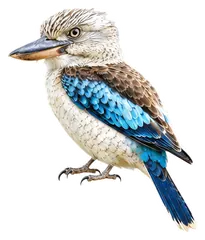 Blue-winged KookaburraDacelo leachii
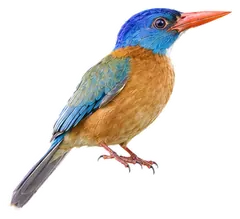 Green-backed KingfisherActenoides monachus
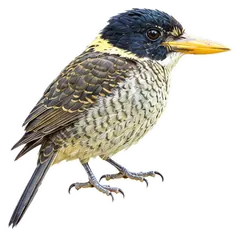 Scaly-breasted KingfisherActenoides princeps
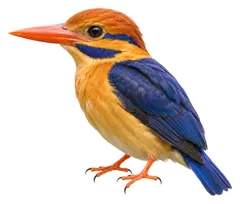 Moustached KingfisherActenoides bougainvillei
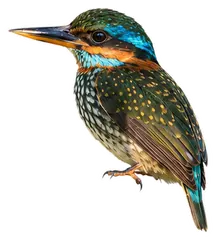 Spotted Wood KingfisherActenoides lindsayi
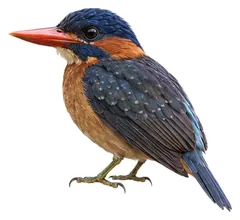 Blue-capped KingfisherActenoides hombroni
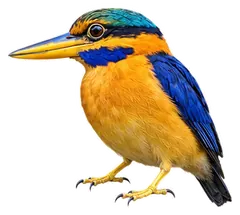 Rufous-collared KingfisherActenoides concretus
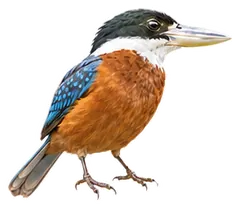
Download illustration
Free to use with credit: “Illustration: Bird Album (birdalbum.com)”. Drawn by AI from a reference photo by Jono Dashper. ↗
Heard it but can't see it? Mingji identifies birds by sound and photo, on your phone.
In other languages
- EnglishRufous-bellied Kookaburra
- 简体中文棕腹笑翠鸟
- 繁體中文棕腹笑翠鳥
- 日本語チャバラワライカワセミ
- DeutschRotbauchliest
- FrançaisMartin-chasseur de Gaudichaud
- EspañolCucaburra ventrirrufa
- Portuguêscucaburra-ruiva
- ItalianoKookaburra panciarossiccia
- NederlandsRoodbuikkookaburra
- РусскийКраснобрюхая кукабара
- Svenskavitnäbbad kokaburra
- DanskHvidnæbbet Latterfugl
- Polskikukabura rdzawobrzucha