 Bird Album
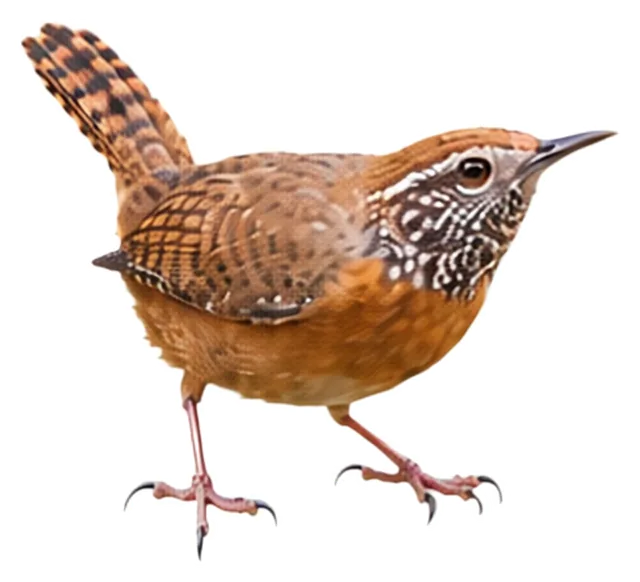
Rufous-breasted Wren
Pheugopedius rutilus (Vieillot, 1819)
14 cmLength16 gWeight
The rufous-breasted wren (Pheugopedius rutilus) is a small songbird of the family Troglodytidae.
Busiest months: January–March · Most records: Costa Rica, Panama, Venezuela
Where and when it's recorded

Rufous-breasted Wren has been recorded at 150 of the 8,171 birding hotspots we track, in 5 countries and regions.
Records by month Northern Hemisphere
Where it's recorded most
- Wilson Botanical GardenCosta Rica2,674 records
- PN Carara-Entrada principal [senderos Quebrada Bonita y Universal]Costa Rica2,410 records
- Parque Natural MetropolitanoPanama2,331 records
More places
- Asa Wright Nature CenterTrinidad & Tobago1,864 records
- Finca CántarosCosta Rica1,754 records
- PN Carara – Sendero La MeandricaCosta Rica1,290 records
- Paraíso Birding ParadisePanama798 records
- Summit PondsPanama734 records
- Canopy LodgePanama721 records
- Los CusingosCosta Rica650 records
Countries and regions with the most records
eBird records via GBIF up to 2024-12-31. A record means someone listed it; more records partly mean more birders, not more birds.
About
The rufous-breasted wren (Pheugopedius rutilus) is a small songbird of the family Troglodytidae.
Excerpt from Wikipedia, CC BY-SA 4.0 · authors · Read more on Wikipedia
Questions
How big is the Rufous-breasted Wren?
The Rufous-breasted Wren is about 14 cm long and weighs around 16 g.
Where does the Rufous-breasted Wren live?
Its breeding range: Middle America, South America: Costa Rica to Colombia and Venezuela. It is most often recorded in Costa Rica, Panama and Venezuela.
When is the best time to see the Rufous-breasted Wren?
At the hotspots we track, it is recorded most in January, February and March (Northern Hemisphere).
Is the Rufous-breasted Wren endangered?
The IUCN Red List classifies the Rufous-breasted Wren as Least Concern.
What does the Rufous-breasted Wren eat?
Main food: Insects & other invertebrates.
What family is the Rufous-breasted Wren in?
It belongs to the family Wrens (Troglodytidae), order Passerines (Passeriformes).
At a glance
- Length
- 14 cm
- Weight
- 16 g
- Habitat
- Forest
- Diet
- Insects & other invertebrates
- Lifestyle
- Perches in trees
- Migration
- Resident (barely migrates)
- Conservation
- Least Concern
More measurements
- Wing
- 59 mm
- Tail
- 55 mm
- Bill
- 19 mm
- Tarsus
- 21 mm
Averages from the AVONET dataset; length from field guides where available.
Range
Middle America, South America: Costa Rica to Colombia and Venezuela
Breeding range, IOC World Bird List 15.2
Classification
- Order
- Passerines Passeriformes
- Family
- Wrens Troglodytidae
- Genus
- Pheugopedius
Other birds in the genus Pheugopedius
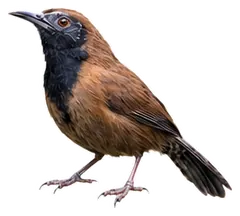 Black-throated WrenPheugopedius atrogularis
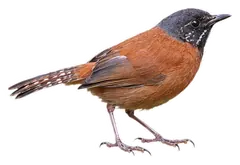 Sooty-headed WrenPheugopedius spadix
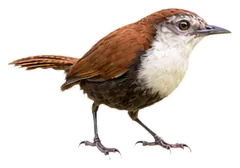 Black-bellied WrenPheugopedius fasciatoventris
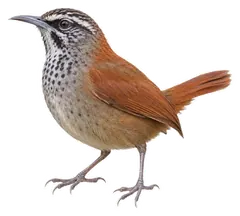 Plain-tailed WrenPheugopedius euophrys
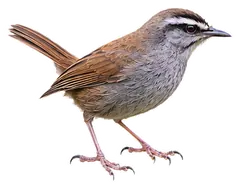 Grey-browed WrenPheugopedius schulenbergi
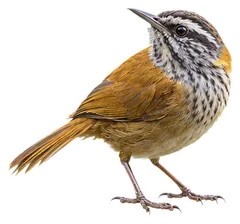 Inca WrenPheugopedius eisenmanni
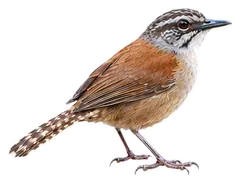 Moustached WrenPheugopedius genibarbis
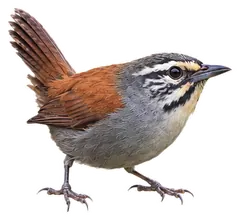 Whiskered WrenPheugopedius mystacalis
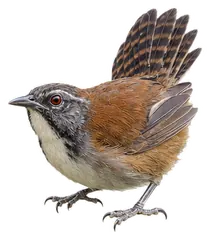 Coraya WrenPheugopedius coraya
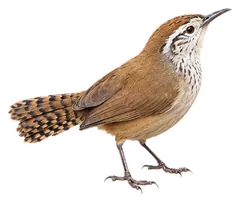 Happy WrenPheugopedius felix
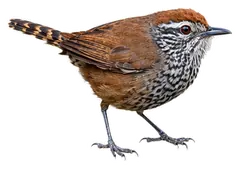 Spot-breasted WrenPheugopedius maculipectus
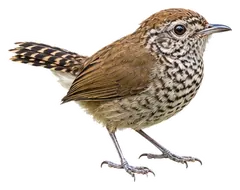 Speckle-breasted WrenPheugopedius sclateri
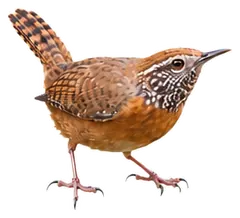
Download illustration
Free to use with credit: “Illustration: Bird Album (birdalbum.com)”. Drawn by AI from a reference photo by Greg Lasley. ↗
Heard it but can't see it? Mingji identifies birds by sound and photo, on your phone.
In other languages
- EnglishRufous-breasted Wren
- 简体中文棕胸苇鹪鹩
- 繁體中文棕胸葦鷦鷯
- 日本語クリムネマユミソサザイ
- DeutschRotbrust-Zaunkönig
- FrançaisTroglodyte des halliers
- EspañolCucarachero pechirrufo
- Portuguêsgarrinchão-de-peito-ruivo
- ItalianoScricciolo pettorossiccio
- NederlandsRoodborstwinterkoning
- РусскийРыжегрудый крапивник
- Svenskarostbröstad gärdsmyg
- DanskRødbrystet Smutte
- Polskistrzyżal epifitowy