 Bird Album
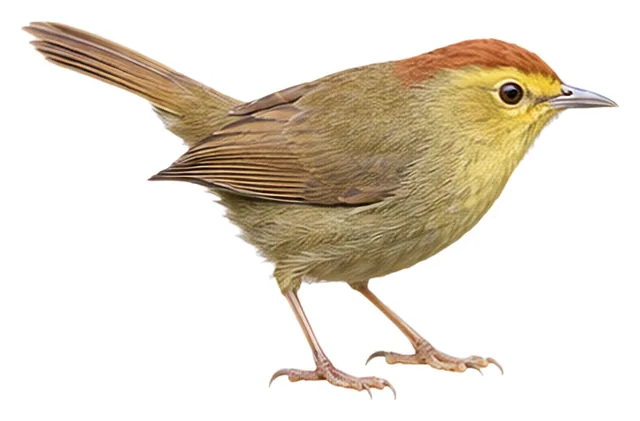
Rufous-capped Babbler
Cyanoderma ruficeps (Blyth, 1847)
12 cmLength10 gWeight
This small pale olive bird has a bright rufous crown and nape.
Busiest months: December–January and March–April · Most records: China, Vietnam, Bhutan
How to identify
Field marks
- Bright rufous crown and nape
- Pale olive body
- Paler throat
Where and when it's recorded

Rufous-capped Babbler has been recorded at 530 of the 8,171 birding hotspots we track, in 7 countries and regions.
Records by month Northern Hemisphere
Where it's recorded most
- Taipei – Tianliaoyang WetlandTaiwan (China)3,195 records
- Tai Po Kau Nature ReserveHong Kong (China)1,735 records
- Nantou – Meifeng Highland Experimental Farm of NTUTaiwan (China)1,474 records
More places
- Taipei – Gongliao Dexin TempleTaiwan (China)1,259 records
- Nantou – Xitou Nature Education AreaTaiwan (China)1,236 records
- Yilan – Dingliao Ecological ParkTaiwan (China)1,080 records
- Dasyueshan IBA – Hengliu Creek (15K)Taiwan (China)855 records
- Lam Tsuen ValleyHong Kong (China)736 records
- Tai Lam Country ParkHong Kong (China)716 records
- Taichung – Taichung Metropolitan ParkTaiwan (China)703 records
Countries and regions with the most records
eBird records via GBIF up to 2024-12-31. A record means someone listed it; more records partly mean more birders, not more birds.
About
The rufous-capped babbler (Cyanoderma ruficeps) is a babbler species in the family Timaliidae. It occurs from the Eastern Himalayas to northern Thailand, Laos, eastern China to Vietnam and Taiwan (China). It inhabits temperate forest with dense bushes or bamboo and is listed as Least Concern on the IUCN Red List.
Excerpt from Wikipedia, CC BY-SA 4.0 · authors · Read more on Wikipedia
Questions
How big is the Rufous-capped Babbler?
The Rufous-capped Babbler is about 12 cm long and weighs around 10 g.
Where does the Rufous-capped Babbler live?
Its breeding range: Oriental: Tibet to south-central Vietnam, Taiwan (China). It is most often recorded in China, Vietnam and Bhutan.
When is the best time to see the Rufous-capped Babbler?
At the hotspots we track, it is recorded most in January, March, April and December (Northern Hemisphere).
Is the Rufous-capped Babbler endangered?
The IUCN Red List classifies the Rufous-capped Babbler as Least Concern.
What does the Rufous-capped Babbler eat?
Main food: Insects & other invertebrates.
What family is the Rufous-capped Babbler in?
It belongs to the family Babblers, Scimitar Babblers (Timaliidae), order Passerines (Passeriformes).
At a glance
- Length
- 12 cm
- Weight
- 10 g
- Habitat
- Shrubland
- Diet
- Insects & other invertebrates
- Lifestyle
- Perches in trees
- Migration
- Resident (barely migrates)
- Conservation
- Least Concern
More measurements
- Wing
- 55 mm
- Tail
- 47 mm
- Bill
- 15 mm
- Tarsus
- 20 mm
Averages from the AVONET dataset; length from field guides where available.
Range
Oriental: Tibet to south-central Vietnam, Taiwan (China)
Breeding range, IOC World Bird List 15.2
Subspecies · 4
- Cyanoderma ruficeps bhamoense ne Myanmar and sw China
- Cyanoderma ruficeps davidi c, e, s China and n Indochina
- Cyanoderma ruficeps praecognitum Taiwan (China)
- Cyanoderma ruficeps goodsoni Hainan I. (off se China)
Classification
- Order
- Passerines Passeriformes
- Family
- Babblers, Scimitar Babblers Timaliidae
- Genus
- Cyanoderma
Other birds in the genus Cyanoderma
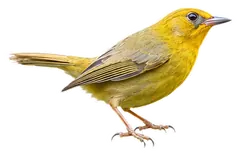 Golden BabblerCyanoderma chrysaeum
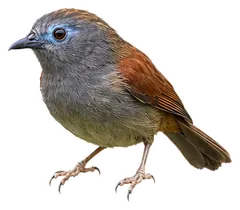 Chestnut-winged BabblerCyanoderma erythropterum
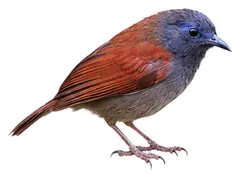 Bicolored BabblerCyanoderma bicolor
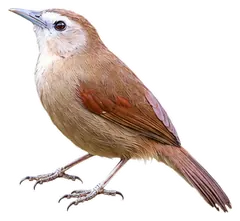 Crescent-chested BabblerCyanoderma melanothorax
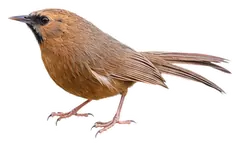 Black-chinned BabblerCyanoderma pyrrhops
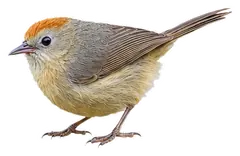 Rufous-fronted BabblerCyanoderma rufifrons
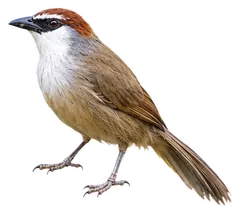 Chestnut-capped BabblerTimalia pileata
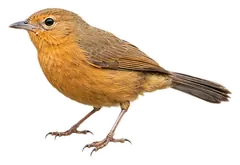 Tawny-bellied BabblerDumetia hyperythra
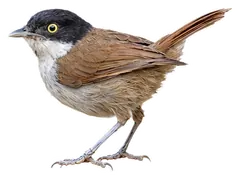 Dark-fronted BabblerDumetia atriceps
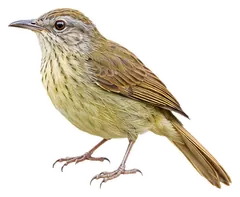 Grey-faced Tit-BabblerMixornis kelleyi
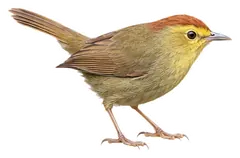
Download illustration
Free to use with credit: “Illustration: Bird Album (birdalbum.com)”. Drawn by AI from a reference photo by Charles J. Sharp. ↗

Heard it but can't see it? Mingji identifies birds by sound and photo, on your phone.
In other languages
- EnglishRufous-capped Babbler
- 简体中文红头穗鹛
- 繁體中文山紅頭
- 日本語ズアカチメドリ
- DeutschRotkopf-Buschtimalie
- FrançaisTimalie de Blyth
- EspañolTimalí coronirrojo
- Portuguêstagarela-de-barrete-ruivo
- ItalianoGarrulo caporossiccio
- NederlandsRoodkopboomtimalia
- РусскийРыжешапочная тимелия
- Svenskarödhättad timalia
- DanskBrunkronet Krattimalie
- Polskikolcodziób rdzawołbisty