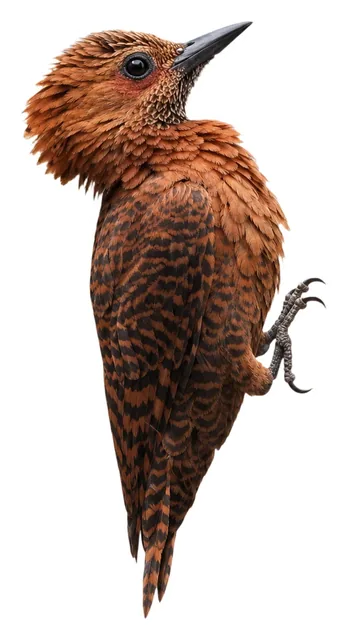
Rufous Woodpecker
Micropternus brachyurus (Vieillot, 1818)
≈24 cmLength86 gWeight
This dark brown woodpecker has dark barring across its wings and tail.
Busiest months: February–April · Most records: India, Malaysia, Singapore
How to identify
Field marks
- Dark barring on the wings and tail
- Paler head and darker underparts
- Short black bill with a slightly curved culmen
- Inconspicuous crest that can be raised
Male, female and young
The male has red feather tips below the eyes and elsewhere; females and juveniles lack these red tips.
Voice
Often gives three sharp, nasal notes, “keenk-keenk-keenk”.
Where and when it's recorded
Busiest months: February–April · Most records: India, Malaysia, Singapore

Rufous Woodpecker has been recorded at 541 of the 8,276 birding hotspots we track, in 14 countries and regions.
Records by month Northern Hemisphere
Where it's recorded most
- IIT BombayIndia584 records
- Rabindra SarovarIndia509 records
- PeralathvayalIndia433 records
More places
- Eshwar Nagar, ManipalIndia374 records
- Gunung Panti Recreational Forest – Panti Bird Sanctuary and North AreaMalaysia367 records
- Bondla Wildlife SanctuaryIndia362 records
- Sepilok – Rainforest Discovery CenterMalaysia358 records
- HergaIndia336 records
- Kalamassery – HMT Estate AreaIndia274 records
- Kanha NP – Mukki ZoneIndia268 records
Countries and regions with the most records
eBird records via GBIF up to 2024-12-31. A record means someone listed it; more records partly mean more birders, not more birds.
About
The rufous woodpecker (Micropternus brachyurus) is a medium-sized brown woodpecker native to South and Southeast Asia. It is short-billed, foraging in pairs on small insects, particularly ants and termites, in scrub, evergreen, and deciduous forests and is noted for building its nest within the carton nests of arboreal ants in the genus Crematogaster. It was for sometime placed in the otherwise Neotropical genus Celeus but this has been shown to be a case of evolutionary convergence and molecular phylogenetic studies support its placement in the monotypic genus Micropternus.
Excerpt from Wikipedia, CC BY-SA 4.0 · authors · Read more on Wikipedia
Questions
How big is the Rufous Woodpecker?
The Rufous Woodpecker is about ≈24 cm long and weighs around 86 g.
Where does the Rufous Woodpecker live?
Its breeding range: Oriental: widespread. It is most often recorded in India, Malaysia and Singapore.
When is the best time to see the Rufous Woodpecker?
At the hotspots we track, it is recorded most in February, March and April (Northern Hemisphere).
Is the Rufous Woodpecker endangered?
The IUCN Red List classifies the Rufous Woodpecker as Least Concern.
What does the Rufous Woodpecker eat?
Main food: Insects & other invertebrates.
What family is the Rufous Woodpecker in?
It belongs to the family Woodpeckers (Picidae), order Piciformes.
At a glance
- Length
- ≈24 cm
- Weight
- 86 g
- Habitat
- Forest
- Diet
- Insects & other invertebrates
- Lifestyle
- Perches in trees
- Migration
- Resident (barely migrates)
- Conservation
- Least Concern
More measurements
- Wing
- 118 mm
- Tail
- 66 mm
- Bill
- 28 mm
- Tarsus
- 20 mm
Averages from the AVONET dataset; length from field guides where available.
Range
Oriental: widespread
Breeding range, IOC World Bird List 15.2
Subspecies · 3
- Micropternus brachyurus phaioceps c Nepal and ne India to sw, s China, n, e Thailand and Myanmar
- Micropternus brachyurus fokiensis se China and n Vietnam
- Micropternus brachyurus holroydi Hainan I. (off se China)
Classification
- Order
- Piciformes
- Family
- Woodpeckers Picidae
- Genus
- Micropternus
More from the family Woodpeckers
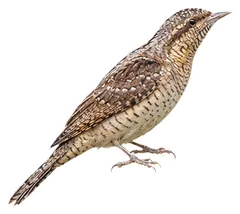 Eurasian WryneckJynx torquilla
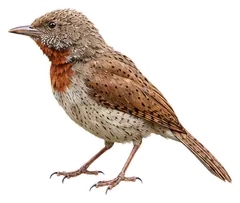 Red-throated WryneckJynx ruficollis
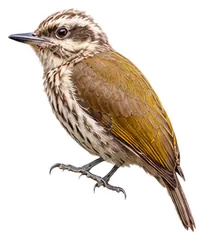 Speckled PiculetPicumnus innominatus
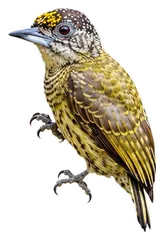 Bar-breasted PiculetPicumnus aurifrons
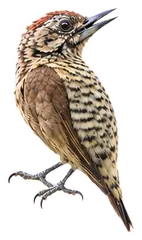 Lafresnaye's PiculetPicumnus lafresnayi
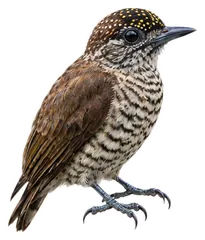 Orinoco PiculetPicumnus pumilus
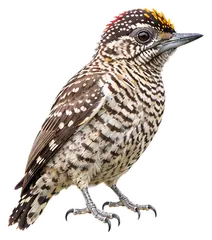 Golden-spangled PiculetPicumnus exilis
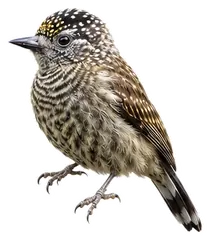 Ecuadorian PiculetPicumnus sclateri
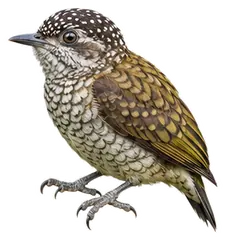 Scaled PiculetPicumnus squamulatus
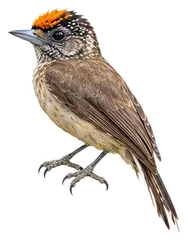 White-bellied PiculetPicumnus spilogaster
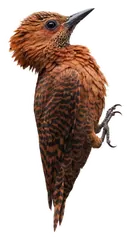
Download illustration
Free to use with credit: “Illustration: Bird Album (birdalbum.com)”. Drawn by AI from a reference photo by anukma. ↗
Heard it but can't see it? Mingji identifies birds by sound and photo, on your phone.