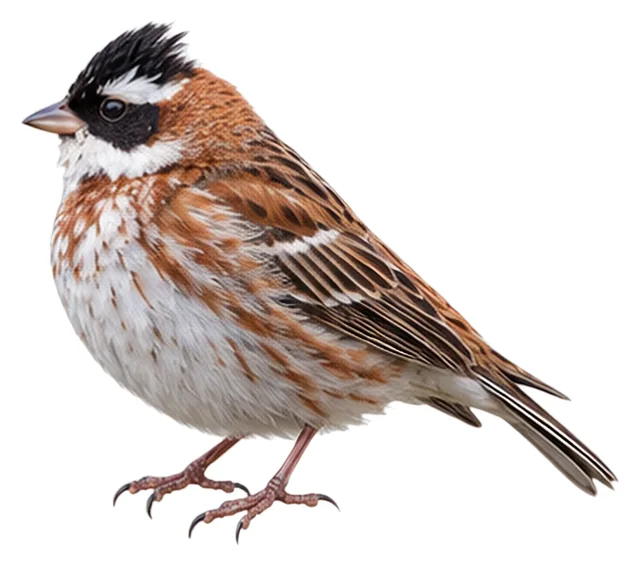
Rustic Bunting
Emberiza rustica Pallas, 1776
≈15 cmLength20 gWeight
In summer, the male has a black head, white throat and supercilium, and reddish-brown stripes on the breast.
Busiest months: November · Most records: China, Japan, South Korea
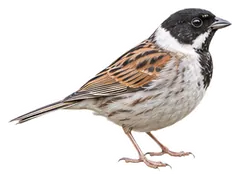
Looks like Common Reed Bunting
How to identify
Field marks
- Male in summer plumage has a black head, white throat and white supercilium
- Male in summer plumage has reddish-brown stripes on the breast
- Belly white, with reddish-brown markings on the sides
- Feet pink; lower mandible pink
Male, female and young
Female has dark stripes on the back, a rufous face and a white supercilium.
Voice
A distinctive “zit”; song plaintive, like “delee-deloo-delee”.
Similar species
Where and when it's recorded
Busiest months: November · Most records: China, Japan, South Korea

Rustic Bunting has been recorded at 658 of the 8,276 birding hotspots we track, in 33 countries and regions.
Records by month Northern Hemisphere
Where it's recorded most
- Taipei – Tianliaoyang WetlandTaiwan (China)570 records
- Nanhui DongtanChina336 records
- Beihu MarshlandChina331 records
More places
- Wajima – Hegurajima (island)Japan307 records
- St. Paul IslandUnited States253 records
- Seoul – Gangseo Wetland Eco ParkSouth Korea234 records
- GambellUnited States227 records
- Sakata – Tobishima (island)Japan220 records
- Muravyevka ParkRussia179 records
- South Lake, YuhangChina172 records
Countries and regions with the most records
eBird records via GBIF up to 2024-12-31. A record means someone listed it; more records partly mean more birders, not more birds.
About
The rustic bunting (Schoeniclus rusticus) is a small passerine bird in the Old World bunting family Emberizidae, a group now separated by most modern authors from the finches in the family Fringillidae. It breeds in the northern Palearctic from Scandinavia eastwards to the Kamchatka Peninsula and winters to south-eastern China, southern Japan and the Korean Peninsula.
Excerpt from Wikipedia, CC BY-SA 4.0 · authors · Read more on Wikipedia
Questions
How big is the Rustic Bunting?
The Rustic Bunting is about ≈15 cm long and weighs around 20 g.
Where does the Rustic Bunting live?
Its breeding range: Palearctic: subarctic to temperate Palearctic swamp forest: Scandinavia (except far northern and southern) across Russia to southern Chukotka, Kamchatka, south to northern Altai and northern Sakhalin (eastern Russia). It is most often recorded in China, Japan and South Korea.
When is the best time to see the Rustic Bunting?
At the hotspots we track, it is recorded most in November (Northern Hemisphere).
Is the Rustic Bunting endangered?
The IUCN Red List classifies the Rustic Bunting as Near Threatened.
What does the Rustic Bunting eat?
Main food: Seeds.
What family is the Rustic Bunting in?
It belongs to the family Buntings (Emberizidae), order Passerines (Passeriformes).
At a glance
- Length
- ≈15 cm
- Weight
- 20 g
- Habitat
- Forest
- Diet
- Seeds
- Lifestyle
- Varied
- Migration
- Migratory
- Conservation
- Near Threatened
More measurements
- Wing
- 78 mm
- Tail
- 63 mm
- Bill
- 12 mm
- Tarsus
- 20 mm
Averages from the AVONET dataset; length from field guides where available.
Range
Palearctic: subarctic to temperate Palearctic swamp forest: Scandinavia (except far northern and southern) across Russia to southern Chukotka, Kamchatka, south to northern Altai and northern Sakhalin (eastern Russia)
Breeding range, IOC World Bird List 15.2
Classification
- Order
- Passerines Passeriformes
- Family
- Buntings Emberizidae
- Genus
- Emberiza
Other birds in the genus Emberiza
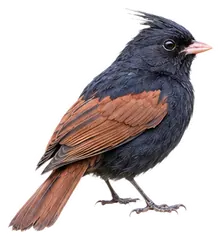 Crested BuntingEmberiza lathami
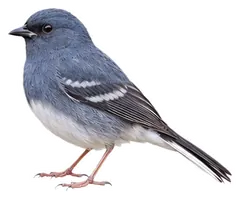 Slaty BuntingEmberiza siemsseni
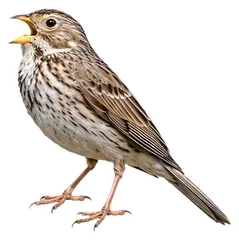 Corn BuntingEmberiza calandra
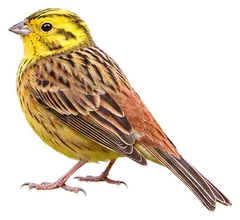 YellowhammerEmberiza citrinella
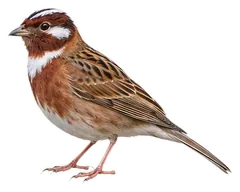 Pine BuntingEmberiza leucocephalos
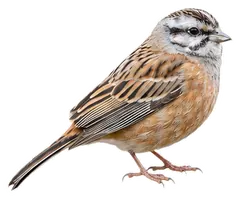 Rock BuntingEmberiza cia
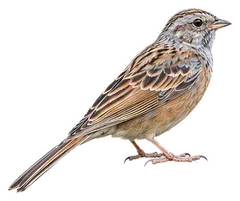 Godlewski's BuntingEmberiza godlewskii
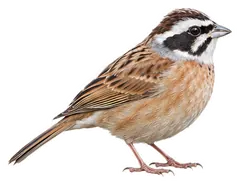 Meadow BuntingEmberiza cioides
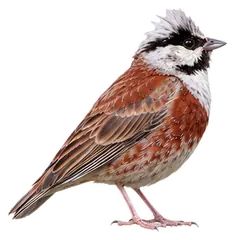 White-capped BuntingEmberiza stewarti
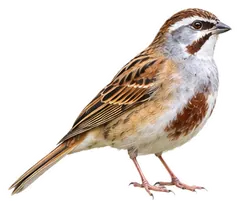 Jankowski's BuntingEmberiza jankowskii
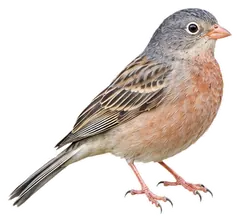 Grey-necked BuntingEmberiza buchanani
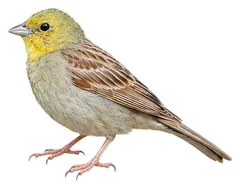 Cinereous BuntingEmberiza cineracea
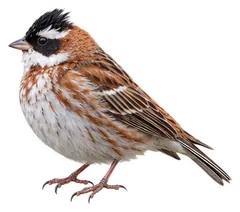
Download illustration
Free to use with credit: “Illustration: Bird Album (birdalbum.com)”. Drawn by AI from a reference photo by Gin tonic. ↗

Heard it but can't see it? Mingji identifies birds by sound and photo, on your phone.