 Bird Album
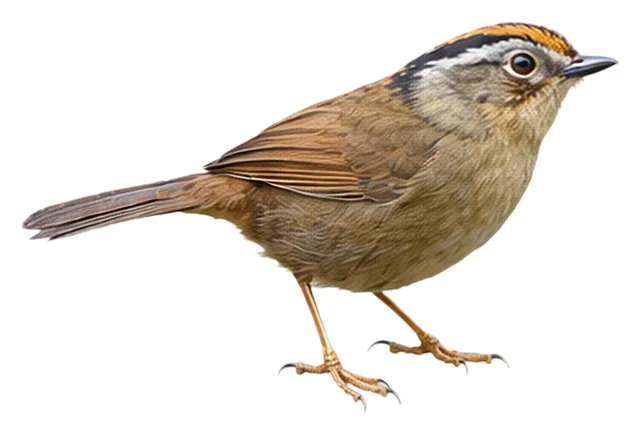
Rusty-capped Fulvetta
Schoeniparus dubius (Hume, 1874)
≈13 cmLength18 gWeight
This fulvetta inhabits subtropical and tropical moist mountain forests.
Busiest months: January · Most records: China, Vietnam, Myanmar (Burma)
How to identify
Where and when it's recorded

Rusty-capped Fulvetta has been recorded at 99 of the 8,171 birding hotspots we track, in 4 countries and regions.
Records by month Northern Hemisphere
Where it's recorded most
- Baihualing [General Area]China472 records
- Ngoc Linh NRVietnam119 records
- Kunming Xi ShanChina115 records
More places
- Laifengshan National Forest ParkChina100 records
- Sa Pa – Ham Rong GardensVietnam94 records
- Zixi Mountain PNRChina81 records
- Wuwei TempleChina54 records
- TongbiguanChina44 records
- Kunming Botanical GardenChina41 records
- Kunming Country ParkChina40 records
Countries and regions with the most records
eBird records via GBIF up to 2024-12-31. A record means someone listed it; more records partly mean more birders, not more birds.
About
The rusty-capped fulvetta (Schoeniparus dubius) is a species of bird in the family Pellorneidae. It is found in Bhutan, China, India, Laos, Myanmar, and Vietnam. Its natural habitat is subtropical or tropical moist montane forest.
Excerpt from Wikipedia, CC BY-SA 4.0 · authors · Read more on Wikipedia
Questions
How big is the Rusty-capped Fulvetta?
The Rusty-capped Fulvetta is about ≈13 cm long and weighs around 18 g.
Where does the Rusty-capped Fulvetta live?
Its breeding range: Oriental: Himalayas to central Vietnam. It is most often recorded in China, Vietnam and Myanmar (Burma).
When is the best time to see the Rusty-capped Fulvetta?
At the hotspots we track, it is recorded most in January (Northern Hemisphere).
Is the Rusty-capped Fulvetta endangered?
The IUCN Red List classifies the Rusty-capped Fulvetta as Least Concern.
What does the Rusty-capped Fulvetta eat?
Main food: Insects & other invertebrates.
What family is the Rusty-capped Fulvetta in?
It belongs to the family Ground Babblers (Pellorneidae), order Passerines (Passeriformes).
At a glance
- Length
- ≈13 cm
- Weight
- 18 g
- Habitat
- Forest
- Diet
- Insects & other invertebrates
- Lifestyle
- Varied
- Migration
- Resident (barely migrates)
- Conservation
- Least Concern
More measurements
- Wing
- 57 mm
- Tail
- 60 mm
- Bill
- 12 mm
- Tarsus
- 23 mm
Averages from the AVONET dataset; length from field guides where available.
Range
Oriental: Himalayas to central Vietnam
Breeding range, IOC World Bird List 15.2
Subspecies · 2
- Schoeniparus dubius intermedius ne, e Myanmar, w Yunnan (s China)
- Schoeniparus dubius genestieri s, se China and n Indochina
Classification
- Order
- Passerines Passeriformes
- Family
- Ground Babblers Pellorneidae
- Genus
- Schoeniparus
Other birds in the genus Schoeniparus
 Yellow-throated FulvettaSchoeniparus cinereus
 Rufous-winged FulvettaSchoeniparus castaneceps
 Black-crowned FulvettaSchoeniparus klossi
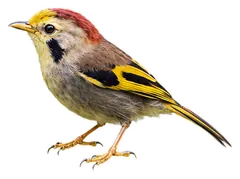 Golden-fronted FulvettaSchoeniparus variegaticeps
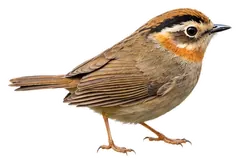 Rufous-throated FulvettaSchoeniparus rufogularis
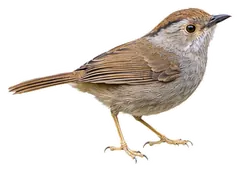 Dusky FulvettaSchoeniparus brunneus
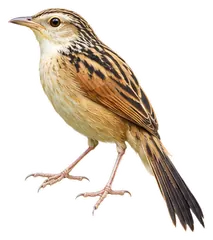 Indian GrassbirdGraminicola bengalensis
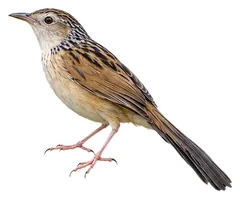 Chinese GrassbirdGraminicola striatus
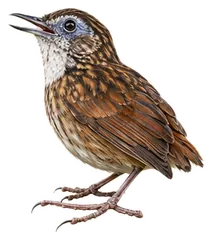 Large Wren-BabblerTurdinus macrodactylus
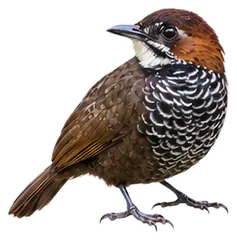 Marbled Wren-BabblerTurdinus marmoratus
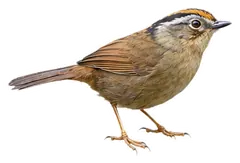
Download illustration
Free to use with credit: “Illustration: Bird Album (birdalbum.com)”. Drawn by AI from a reference photo by JJ Harrison. ↗

Heard it but can't see it? Mingji identifies birds by sound and photo, on your phone.
In other languages
- EnglishRusty-capped Fulvetta
- 简体中文褐胁雀鹛
- 繁體中文褐脅雀鶥
- 日本語マミジロチメドリ
- DeutschBraunkappen-Zweigdrossling
- FrançaisPseudominla à calotte rouille
- EspañolFulveta coronirrufa
- Portuguêsfulveta-de-coroa-ruiva
- ItalianoFulvetta caporuggine
- NederlandsOlijfflanknontimalia
- РусскийРжаволобая альциппа
- Svenskabronskronad timalia
- DanskRustkronet Fulvetta
- Polskibuszosikornik rdzawołbisty