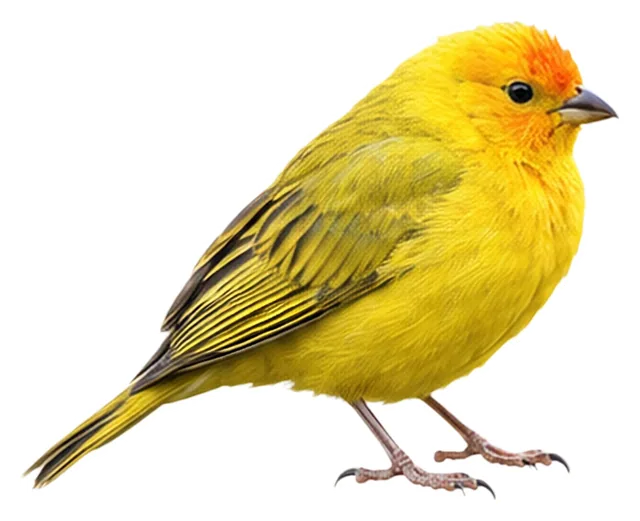
Saffron Finch
Sicalis flaveola (Linnaeus, 1766)
≈13 cmLength17 gWeight
The male is bright yellow overall with an orange patch on the crown.
Most records: Brazil, Colombia, Argentina
How to identify
Field marks
- Male has an orange crown
- Male has a bright yellow body
Male, female and young
Female is usually duller than the male; females of the southern subspecies pelzelni are olive-brown with heavy dark markings.
Voice
Song is melodious, but the same phrases are repeated.
Where and when it's recorded
Most records: Brazil, Colombia, Argentina

Saffron Finch has been recorded at 682 of the 8,276 birding hotspots we track, in 19 countries and regions.
Records by month Southern Hemisphere
Where it's recorded most
- Reserva Ecológica Costanera SurArgentina8,616 records
- Parque del EsteVenezuela5,867 records
- Hotel Tinamú Birding Nature ReserveColombia2,767 records
More places
- Posada El GalloVenezuela2,609 records
- Parque Simon BolivarVenezuela2,429 records
- RN Laguna de SonsoColombia2,197 records
- Reserva Ecológica Ciudad Universitaria - Costanera NorteArgentina1,844 records
- Poconé – Pousada PiuvalBrazil1,726 records
- La Florida - Bosque de Las AvesColombia1,548 records
- Parque Tematico Cafetero Finca La Pedregoza, San Antonio del TequendamaColombia1,301 records
Countries and regions with the most records
eBird records via GBIF up to 2024-12-31. A record means someone listed it; more records partly mean more birders, not more birds.
About
The saffron finch (Sicalis flaveola) is a tanager from South America that is common in open and semi-open areas in lowlands outside the Amazon Basin. They have a wide distribution in Colombia, northern Venezuela (where it is called "canario de tejado" or "roof canary"), western Ecuador, western Peru, eastern and southern Brazil (where it is called "canário-da-terra" or "native canary"), Bolivia, Paraguay, Uruguay, northern Argentina, and Trinidad and Tobago. It has also been introduced to Hawaii, Panama, Puerto Rico, Jamaica and elsewhere.
Excerpt from Wikipedia, CC BY-SA 4.0 · authors · Read more on Wikipedia
Questions
How big is the Saffron Finch?
The Saffron Finch is about ≈13 cm long and weighs around 17 g.
Where does the Saffron Finch live?
Its breeding range: South America: northern, west-central, southeastern, south-central. It is most often recorded in Brazil, Colombia and Argentina.
Is the Saffron Finch endangered?
The IUCN Red List classifies the Saffron Finch as Least Concern.
What does the Saffron Finch eat?
Main food: Seeds.
What family is the Saffron Finch in?
It belongs to the family Tanagers & Allies (Thraupidae), order Passerines (Passeriformes).
At a glance
- Length
- ≈13 cm
- Weight
- 17 g
- Habitat
- Shrubland
- Diet
- Seeds
- Lifestyle
- Active on the ground
- Migration
- Resident (barely migrates)
- Conservation
- Least Concern
More measurements
- Wing
- 70 mm
- Tail
- 53 mm
- Bill
- 11 mm
- Tarsus
- 20 mm
Averages from the AVONET dataset; length from field guides where available.
Range
South America: northern, west-central, southeastern, south-central
Breeding range, IOC World Bird List 15.2
Classification
- Order
- Passerines Passeriformes
- Family
- Tanagers & Allies Thraupidae
- Genus
- Sicalis
Other birds in the genus Sicalis
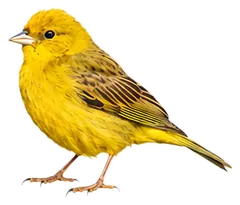 Stripe-tailed Yellow FinchSicalis citrina
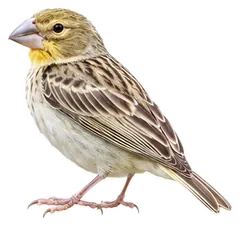 Sulphur-throated FinchSicalis taczanowskii
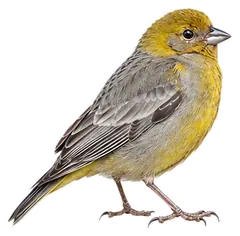 Bright-rumped Yellow FinchSicalis uropygialis
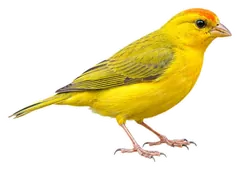 Orange-fronted Yellow FinchSicalis columbiana
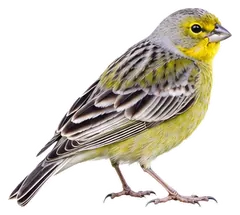 Grassland Yellow FinchSicalis luteola
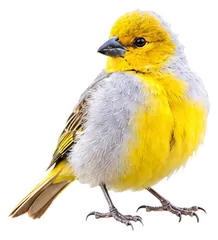 Citron-headed Yellow FinchSicalis luteocephala
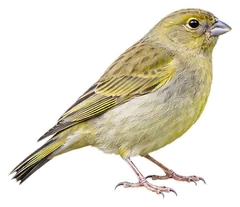 Patagonian Yellow FinchSicalis lebruni
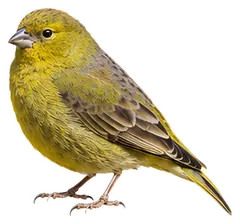 Greenish Yellow FinchSicalis olivascens
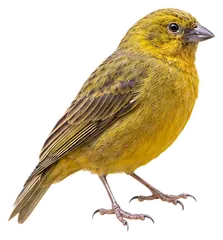 Monte Yellow FinchSicalis mendozae
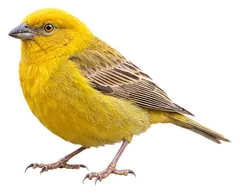 Greater Yellow FinchSicalis auriventris
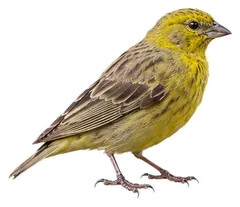 Raimondi's Yellow FinchSicalis raimondii
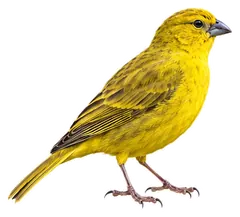 Puna Yellow FinchSicalis lutea
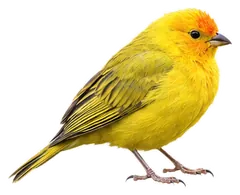
Download illustration
Free to use with credit: “Illustration: Bird Album (birdalbum.com)”. Drawn by AI from a reference photo by Josiah Smith. ↗
Heard it but can't see it? Mingji identifies birds by sound and photo, on your phone.