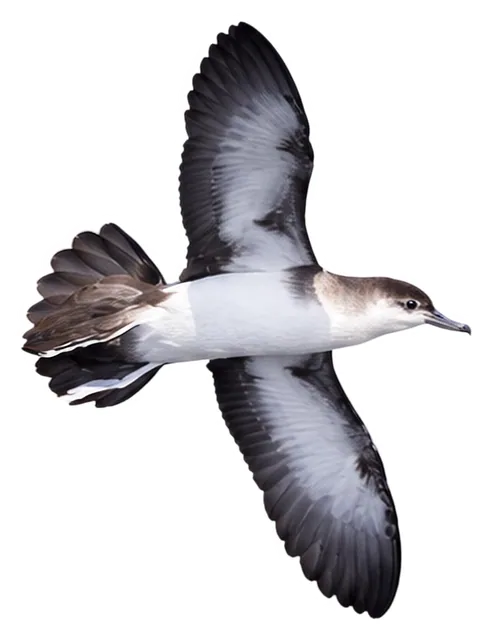
Sargasso Shearwater
Puffinus lherminieri Lesson, RP, 1839
30 cmLength193 gWeight
The Sargasso shearwater (Puffinus lherminieri) is a small tropical seabird in the petrel family.
Busiest months: March and May · Most records: Trinidad & Tobago, Bermuda, United States
Where and when it's recorded
Busiest months: March and May · Most records: Trinidad & Tobago, Bermuda, United States

Sargasso Shearwater has been recorded at 43 of the 8,276 birding hotspots we track, in 19 countries and regions.
Records by month Northern Hemisphere
Where it's recorded most
- Little Tobago IslandTrinidad & Tobago305 records
- Castle HarbourBermuda88 records
- Spittal Pond NRBermuda53 records
More places
- Fort De Soto ParkUnited States16 records
- Blue Waters InnTrinidad & Tobago11 records
- Pointe des ChateauxGuadeloupe4 records
- Nonsuch IslandBermuda4 records
- Klein CuraçaoCuraçao3 records
- Pointe des ChateauxGuadeloupe3 records
- Curry Hammock SP – FL Keys HawkwatchUnited States3 records
Countries and regions with the most records
eBird records via GBIF up to 2024-12-31. A record means someone listed it; more records partly mean more birders, not more birds.
About
The Sargasso shearwater (Puffinus lherminieri) is a small tropical seabird in the petrel family. The only shearwater to nest primarily in the Caribbean, it ranges throughout the western Atlantic during the non-breeding season. Its specific epithet honours the French naturalist Félix Louis L'Herminier.
Excerpt from Wikipedia, CC BY-SA 4.0 · authors · Read more on Wikipedia
Questions
How big is the Sargasso Shearwater?
The Sargasso Shearwater is about 30 cm long and weighs around 193 g.
Where does the Sargasso Shearwater live?
Its breeding range: Atlantic Ocean: Elbow Cay (east of central Abaco, northern Bahamas), Long Cay (Exumas, east-central Bahamas), off northern Cuba, east of Puerto Rico, and the Lesser Antilles (Caribbean Sea); Crab Cay (Providencia Islands, east of Nicaragua); Tiger Cay (Bocos del Toro Archipelago, Caribbean northwestern Panama); islands Los Roques, Orchila and Los Hermanos (north of central Venezuela); and islets of Fernando de Noronha (east of northern Brazil). It is most often recorded in Trinidad & Tobago, Bermuda and United States.
When is the best time to see the Sargasso Shearwater?
At the hotspots we track, it is recorded most in March and May (Northern Hemisphere).
Is the Sargasso Shearwater endangered?
The IUCN Red List classifies the Sargasso Shearwater as Least Concern.
What does the Sargasso Shearwater eat?
Main food: Fish, shrimp & shellfish.
What family is the Sargasso Shearwater in?
It belongs to the family Petrels, Shearwaters, Diving Petrels (Procellariidae), order Procellariiformes.
At a glance
- Length
- 30 cm
- Weight
- 193 g
- Habitat
- Ocean
- Diet
- Fish, shrimp & shellfish
- Lifestyle
- On the water surface
- Migration
- Partial migrant
- Conservation
- Least Concern
More measurements
- Wing
- 198 mm
- Tail
- 85 mm
- Bill
- 33 mm
- Tarsus
- 39 mm
Averages from the AVONET dataset; length from field guides where available.
Range
Atlantic Ocean: Elbow Cay (east of central Abaco, northern Bahamas), Long Cay (Exumas, east-central Bahamas), off northern Cuba, east of Puerto Rico, and the Lesser Antilles (Caribbean Sea); Crab Cay (Providencia Islands, east of Nicaragua); Tiger Cay (Bocos del Toro Archipelago, Caribbean northwestern Panama); islands Los Roques, Orchila and Los Hermanos (north of central Venezuela); and islets of Fernando de Noronha (east of northern Brazil)
Breeding range, IOC World Bird List 15.2
Classification
- Order
- Procellariiformes
- Family
- Petrels, Shearwaters, Diving Petrels Procellariidae
- Genus
- Puffinus
Other birds in the genus Puffinus
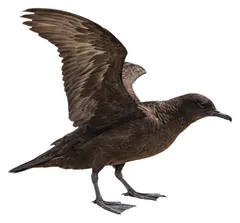 Christmas ShearwaterPuffinus nativitatis
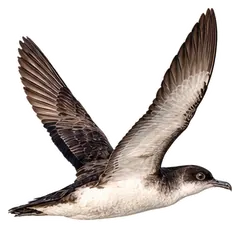 Manx ShearwaterPuffinus puffinus
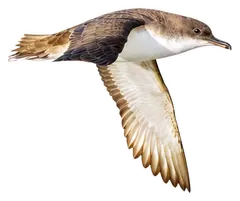 Yelkouan ShearwaterPuffinus yelkouan
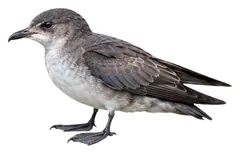 Balearic ShearwaterPuffinus mauretanicus
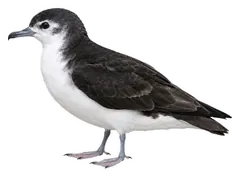 Bryan's ShearwaterPuffinus bryani
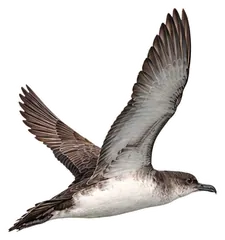 Black-vented ShearwaterPuffinus opisthomelas
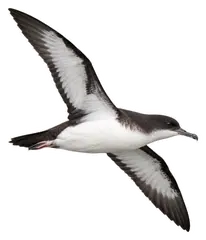 Townsend's ShearwaterPuffinus auricularis
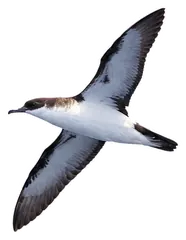 Newell's ShearwaterPuffinus newelli
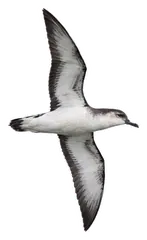 Rapa ShearwaterPuffinus myrtae
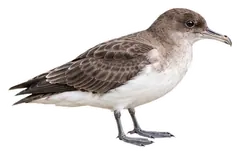 Fluttering ShearwaterPuffinus gavia
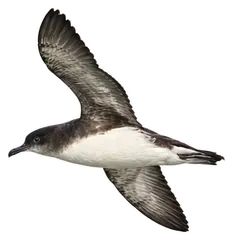 Hutton's ShearwaterPuffinus huttoni
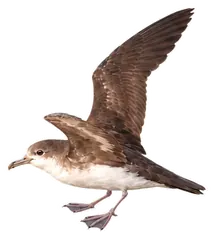 Persian ShearwaterPuffinus persicus
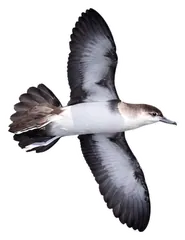
Download illustration
Free to use with credit: “Illustration: Bird Album (birdalbum.com)”. Drawn by AI from reference photos. ↗
Heard it but can't see it? Mingji identifies birds by sound and photo, on your phone.
In other languages
- EnglishSargasso Shearwater
- 简体中文奥氏鹱
- 繁體中文奧杜邦氏鸌
- 日本語セグロミズナギドリ
- DeutschAudubonsturmtaucher
- FrançaisPuffin d’Audubon
- EspañolPardela de Audubon
- Portuguêspintainho-das-antilhas
- ItalianoBerta di Audubon
- NederlandsAudubons Kleine Pijlstormvogel
- РусскийТемноспинный буревестник
- Svenskakariblira
- DanskTropeskråpe
- Polskiburzyk równikowy