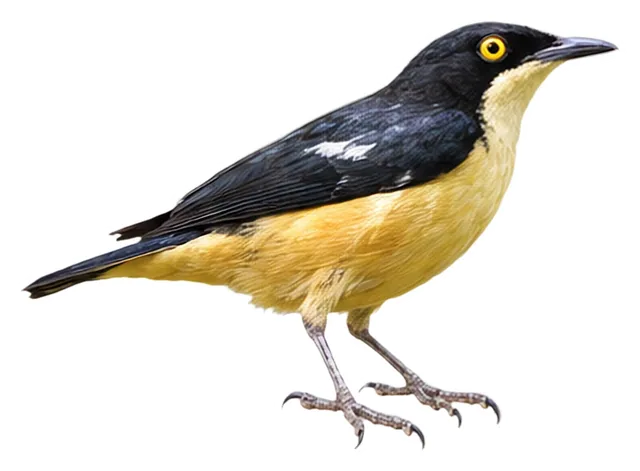
Sharpe's Starling
Pholia sharpii (Jackson, FJ, 1898)
41 gWeight
Sharpe's starling (Pholia sharpii) is a species of starling in the family Sturnidae.
Busiest months: July · Most records: Uganda, Tanzania, Ethiopia
Where and when it's recorded
Busiest months: July · Most records: Uganda, Tanzania, Ethiopia

Sharpe's Starling has been recorded at 41 of the 8,276 birding hotspots we track, in 7 countries and regions.
Records by month Southern Hemisphere
Where it's recorded most
- Bwindi-Impenetrable Forest NP – Ruhija to Broadbill WalkUganda114 records
- Bwindi-Impenetrable NP – RuhijaUganda112 records
- West Usambara Mountains – Old Sawmill TrackTanzania81 records
More places
- Bwindi-Impenetrable NP – Mubwindi SwampUganda70 records
- Wondo GenetEthiopia52 records
- Arusha NPTanzania46 records
- Mgahinga Gorilla NPUganda29 records
- Gatamaiyu ForestKenya23 records
- Bishangari LodgeEthiopia21 records
- Nyungwe Forest NPRwanda20 records
Countries and regions with the most records
eBird records via GBIF up to 2024-12-31. A record means someone listed it; more records partly mean more birders, not more birds.
About
Sharpe's starling (Pholia sharpii) is a species of starling in the family Sturnidae. It is found in Burundi, the Democratic Republic of the Congo, Ethiopia, Kenya, Rwanda, South Sudan, Sudan, Tanzania, and Uganda. It is monotypic in the genus Pholia.
Excerpt from Wikipedia, CC BY-SA 4.0 · authors · Read more on Wikipedia
Questions
How big is the Sharpe's Starling?
The Sharpe's Starling weighs around 41 g.
Where does the Sharpe's Starling live?
Its breeding range: Africa: central Ethiopia to eastern DR Congo and Tanzania. It is most often recorded in Uganda, Tanzania and Ethiopia.
When is the best time to see the Sharpe's Starling?
At the hotspots we track, it is recorded most in July (Southern Hemisphere).
Is the Sharpe's Starling endangered?
The IUCN Red List classifies the Sharpe's Starling as Least Concern.
What does the Sharpe's Starling eat?
Main food: Fruit.
What family is the Sharpe's Starling in?
It belongs to the family Starlings, Rhabdornises (Sturnidae), order Passerines (Passeriformes).
At a glance
- Weight
- 41 g
- Habitat
- Forest
- Diet
- Fruit
- Lifestyle
- Perches in trees
- Migration
- Partial migrant
- Conservation
- Least Concern
More measurements
- Wing
- 103 mm
- Tail
- 64 mm
- Bill
- 18 mm
- Tarsus
- 21 mm
Averages from the AVONET dataset; length from field guides where available.
Range
Africa: central Ethiopia to eastern DR Congo and Tanzania
Breeding range, IOC World Bird List 15.2
Classification
- Order
- Passerines Passeriformes
- Family
- Starlings, Rhabdornises Sturnidae
- Genus
- Pholia
More from the family Starlings, Rhabdornises
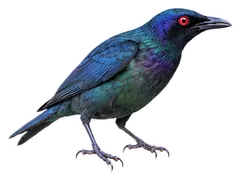 Metallic StarlingAplonis metallica
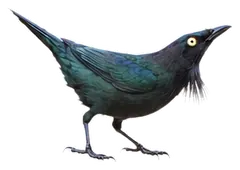 Yellow-eyed StarlingAplonis mystacea
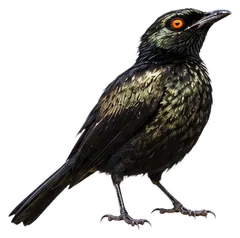 Singing StarlingAplonis cantoroides
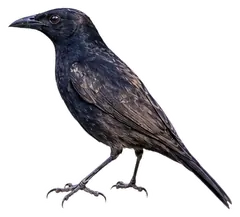 Tanimbar StarlingAplonis crassa
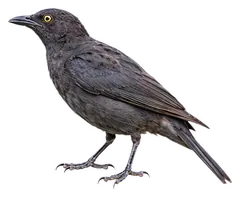 Atoll StarlingAplonis feadensis
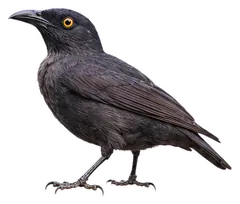 Rennell StarlingAplonis insularis
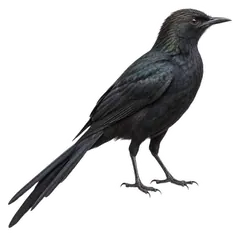 Long-tailed StarlingAplonis magna
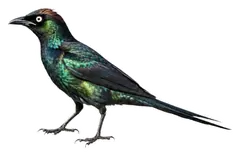 White-eyed StarlingAplonis brunneicapillus
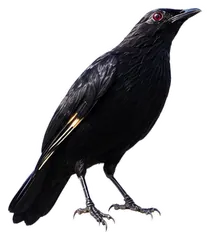 Brown-winged StarlingAplonis grandis
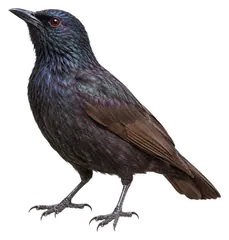 Makira StarlingAplonis dichroa
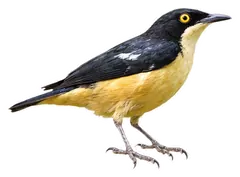
Download illustration
Free to use with credit: “Illustration: Bird Album (birdalbum.com)”. Drawn by AI from a reference photo by Markus Lilje. ↗
Heard it but can't see it? Mingji identifies birds by sound and photo, on your phone.
In other languages
- EnglishSharpe's Starling
- 简体中文黄腹紫椋鸟
- 繁體中文黃腹紫椋鳥
- 日本語ムナジロムクドリ
- DeutschRostbauchstar
- FrançaisChoucador de Sharpe
- EspañolEstornino de Sharpe
- Portuguêsestorninho-de-barriga-ruiva
- ItalianoStorno di Sharpe
- NederlandsSharpes Spreeuw
- РусскийЛасточковый скворец
- Svenskarostbukig stare
- DanskRustbuget Stær
- Polskibłyszczak rdzawobrzuchy