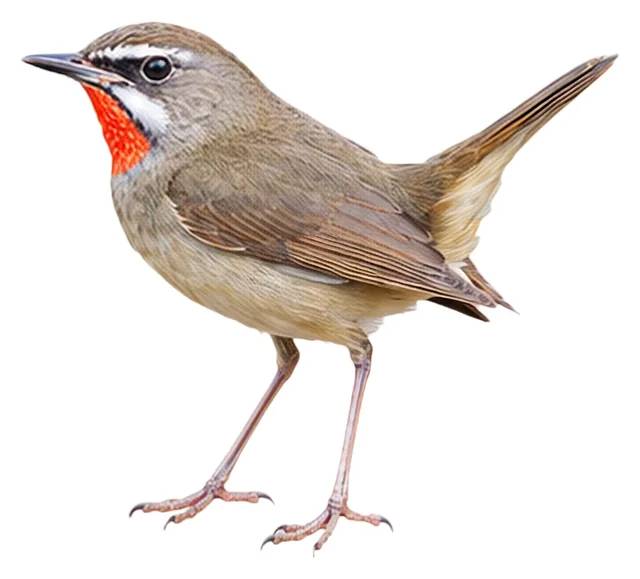
Siberian Rubythroat
Calliope calliope (Pallas, 1776)
16 cmLength18 gWeight
The male has a bright red throat with a black border and a broad white border, and a single white supercilium above the eye.
Busiest months: November–December · Most records: China, Thailand, India
How to identify
Field marks
- Male throat red, with a narrow black border and a broad white outer border
- White supercilium conspicuous
- Back plain brown
Male, female and young
Female lacks the bright red throat and its borders; throat white, stripe above eye pale yellow.
Voice
The male's song resembles Garden Warbler's, but is more forceful.
Where and when it's recorded
Busiest months: November–December · Most records: China, Thailand, India

Siberian Rubythroat has been recorded at 879 of the 8,276 birding hotspots we track, in 21 countries and regions.
Records by month Northern Hemisphere
Where it's recorded most
- Taipei – Tianliaoyang WetlandTaiwan (China)2,140 records
- Yeliu IBATaiwan (China)1,013 records
- Taipei – Gongliao Dexin TempleTaiwan (China)771 records
More places
- Mai Po Nature ReserveHong Kong (China)660 records
- Doi Pha Hom Pok NP – Doi Lang (W), AKA Doi San JuThailand642 records
- Mai Po NR – #8b ReedbedHong Kong (China)603 records
- Kinmen – Doumen Hiking TrailChina505 records
- Po ToiHong Kong (China)500 records
- Bharatpur – Keoladeo Ghana NPIndia466 records
- Taipei – Beitou Guizikeng Drainage CanalTaiwan (China)463 records
Countries and regions with the most records
eBird records via GBIF up to 2024-12-31. A record means someone listed it; more records partly mean more birders, not more birds.
About
The Siberian rubythroat (Calliope calliope) is a small passerine bird first described by Peter Simon Pallas in 1776. It was formerly classed as a member of the thrush family, Turdidae, but is now more generally considered to be an Old World flycatcher of the family Muscicapidae. The Siberian rubythroat and similar small European species are often called chats.
Excerpt from Wikipedia, CC BY-SA 4.0 · authors · Read more on Wikipedia
Questions
How big is the Siberian Rubythroat?
The Siberian Rubythroat is about 16 cm long and weighs around 18 g.
Where does the Siberian Rubythroat live?
Its breeding range: Palearctic: central, eastern. It is most often recorded in China, Thailand and India.
When is the best time to see the Siberian Rubythroat?
At the hotspots we track, it is recorded most in November and December (Northern Hemisphere).
Is the Siberian Rubythroat endangered?
The IUCN Red List classifies the Siberian Rubythroat as Least Concern.
What does the Siberian Rubythroat eat?
Main food: Insects & other invertebrates.
What family is the Siberian Rubythroat in?
It belongs to the family Chats, Old World Flycatchers (Muscicapidae), order Passerines (Passeriformes).
At a glance
- Length
- 16 cm
- Weight
- 18 g
- Habitat
- Shrubland
- Diet
- Insects & other invertebrates
- Lifestyle
- Active on the ground
- Migration
- Migratory
- Conservation
- Least Concern
More measurements
- Wing
- 78 mm
- Tail
- 63 mm
- Bill
- 16 mm
- Tarsus
- 29 mm
Averages from the AVONET dataset; length from field guides where available.
Range
Palearctic: central, eastern
Breeding range, IOC World Bird List 15.2
Subspecies · 2
- Calliope calliope calliope Siberia, n Mongolia, ne China and n Korea | non-breeding: to se Asia
- Calliope calliope beicki nc China
Classification
- Order
- Passerines Passeriformes
- Family
- Chats, Old World Flycatchers Muscicapidae
- Genus
- Calliope
Other birds in the genus Calliope
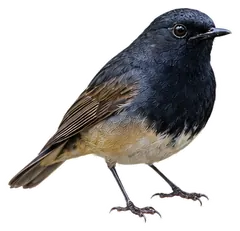 BlackthroatCalliope obscura
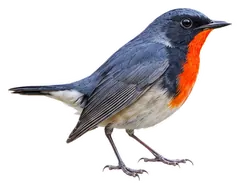 FirethroatCalliope pectardens
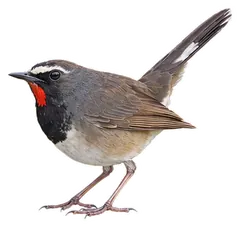 Himalayan RubythroatCalliope pectoralis
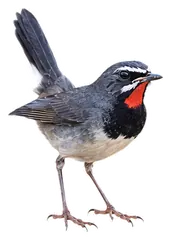 Chinese RubythroatCalliope tschebaiewi
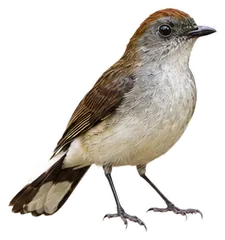 White-tailed AletheAlethe diademata
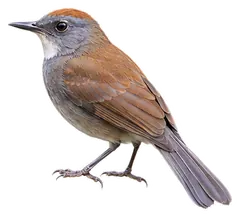 Fire-crested AletheAlethe castanea
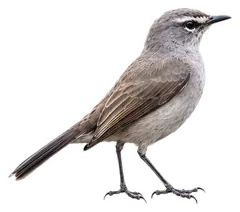 Karoo Scrub RobinTychaedon coryphoeus
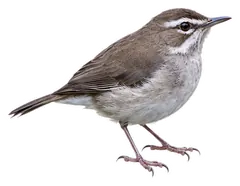 Brown Scrub RobinTychaedon signata
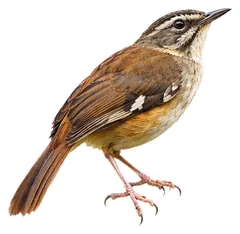 Forest Scrub RobinTychaedon leucosticta
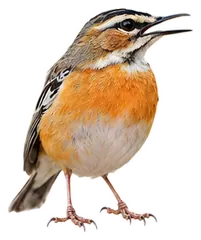 Bearded Scrub RobinTychaedon quadrivirgata
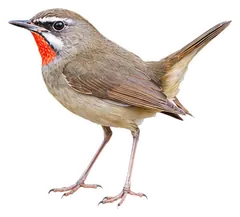
Download illustration
Free to use with credit: “Illustration: Bird Album (birdalbum.com)”. Drawn by AI from a reference photo by JJ Harrison (https://www.jjharrison.com.au/). ↗

Heard it but can't see it? Mingji identifies birds by sound and photo, on your phone.
In other languages
- EnglishSiberian Rubythroat
- 简体中文红喉歌鸲
- 繁體中文野鴝
- 日本語ノゴマ
- 한국어진홍가슴
- DeutschRubinkehlchen
- FrançaisRossignol calliope
- EspañolRuiseñor calíope
- Portuguêspisco-de-garganta-vermelha-siberiano
- ItalianoCalliope
- NederlandsRoodkeelnachtegaal
- РусскийСоловей-красношейка
- Svenskarubinnäktergal
- DanskRubinnattergal
- Polskisłowiczek rubinowy