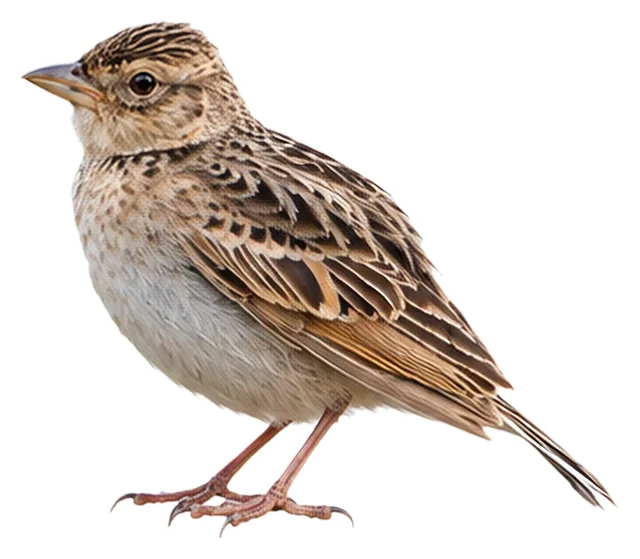
Singing Bush Lark
Mirafra javanica Horsfield, 1821
≈14 cmLength23 gWeight
It has a large head and a short bill like those of Eurasian Tree Sparrow, a buff supercilium and a rufous wing patch.
Busiest months: January · Most records: Australia, Cambodia, Thailand
Looks like Eurasian Skylark
How to identify
Field marks
- Large head and short bill like those of Eurasian Tree Sparrow
- Buff supercilium and spots or streaks on the breast
- Short, rounded wings with a distinct rufous wing patch
- Dark central streaks on the back
Male, female and young
Juvenile similar, but with narrow white feather edges on the crown and upperparts, forming a neat, scale-like pattern.
Voice
An indistinct chirping call when flushed.
Similar species
Where and when it's recorded
Busiest months: January · Most records: Australia, Cambodia, Thailand

Singing Bush Lark has been recorded at 199 of the 8,276 birding hotspots we track, in 18 countries and regions.
Records by month Southern Hemisphere
Where it's recorded most
- Western Treatment PlantAustralia1,613 records
- Roebuck Plains StationAustralia1,312 records
- Townsville Town Common Conservation ParkAustralia456 records
More places
- Bengal Florican ReserveCambodia281 records
- Western Treatment Plant – T Section PondsAustralia252 records
- Stanley Reservoir – Pannavadi, MetturIndia250 records
- Taylors LagoonAustralia216 records
- Holmes Jungle Nature ReserveAustralia187 records
- Terrick Terrick National ParkAustralia160 records
- Prolay grasslandsCambodia136 records
Countries and regions with the most records
eBird records via GBIF up to 2024-12-31. A record means someone listed it; more records partly mean more birders, not more birds.
About
The singing bush lark or Horsfield's bush lark (Mirafra javanica) is a species of lark which inhabits grassland throughout most of Australia and much of Southeast Asia. It was described by the American naturalist Thomas Horsfield.
Excerpt from Wikipedia, CC BY-SA 4.0 · authors · Read more on Wikipedia
Questions
How big is the Singing Bush Lark?
The Singing Bush Lark is about ≈14 cm long and weighs around 23 g.
Where does the Singing Bush Lark live?
Its breeding range: Africa, Oriental, Australasia: Sub-Saharan Africa and Arabian Peninsula to India, Southeast Asia, China, and Philippines to northern, eastern Australia. It is most often recorded in Australia, Cambodia and Thailand.
When is the best time to see the Singing Bush Lark?
At the hotspots we track, it is recorded most in January (Southern Hemisphere).
Is the Singing Bush Lark endangered?
The IUCN Red List classifies the Singing Bush Lark as Least Concern.
What does the Singing Bush Lark eat?
Main food: Omnivore.
What family is the Singing Bush Lark in?
It belongs to the family Larks (Alaudidae), order Passerines (Passeriformes).
At a glance
- Length
- ≈14 cm
- Weight
- 23 g
- Habitat
- Grassland
- Diet
- Omnivore
- Lifestyle
- Active on the ground
- Migration
- Resident (barely migrates)
- Conservation
- Least Concern
More measurements
- Wing
- 72 mm
- Tail
- 47 mm
- Bill
- 15 mm
- Tarsus
- 22 mm
Averages from the AVONET dataset; length from field guides where available.
Range
Africa, Oriental, Australasia: Sub-Saharan Africa and Arabian Peninsula to India, Southeast Asia, China, and Philippines to northern, eastern Australia
Breeding range, IOC World Bird List 15.2
Subspecies · 1
- Mirafra javanica williamsoni c Myanmar to s China, c, sc Thailand, Cambodia and c, s Vietnam
Classification
- Order
- Passerines Passeriformes
- Family
- Larks Alaudidae
- Genus
- Mirafra
Other birds in the genus Mirafra
 Monotonous LarkMirafra passerina
 Friedmann's LarkMirafra pulpa
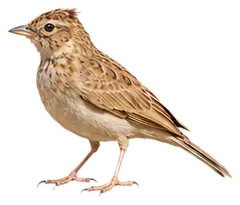 Kordofan LarkMirafra cordofanica
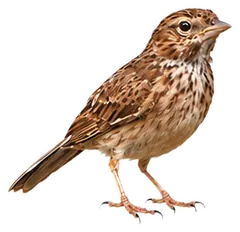 Williams's LarkMirafra williamsi
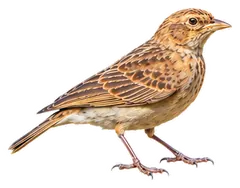 Melodious LarkMirafra cheniana
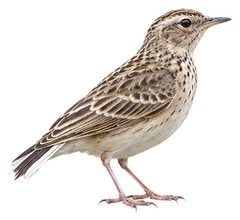 White-tailed LarkMirafra albicauda
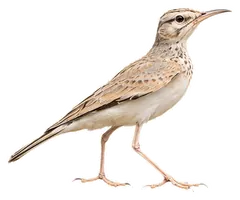 Greater Hoopoe-LarkAlaemon alaudipes
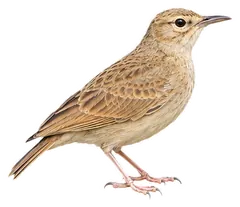 Lesser Hoopoe-LarkAlaemon hamertoni
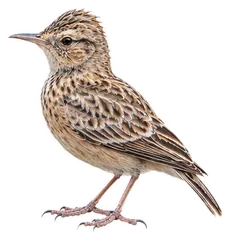 Beesley's LarkChersomanes beesleyi
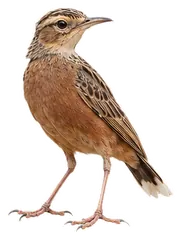 Spike-heeled LarkChersomanes albofasciata
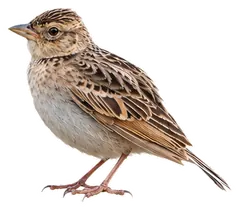
Download illustration
Free to use with credit: “Illustration: Bird Album (birdalbum.com)”. Drawn by AI from a reference photo by gggpellas. ↗
Heard it but can't see it? Mingji identifies birds by sound and photo, on your phone.
In other languages
- EnglishSinging Bush Lark
- 简体中文歌百灵
- 繁體中文歌百靈
- 日本語ヤブヒバリ
- DeutschHorsfieldlerche
- FrançaisAlouette de Java
- EspañolAlondra de Java
- Portuguêscotovia-australasiática
- ItalianoAllodola australasiatica
- NederlandsOosterse Struikleeuwerik
- РусскийКустарниковый жаворонок
- Svenskadrilllärka
- DanskSangbusklærke
- Polskiskowroniec śpiewny