 Bird Album
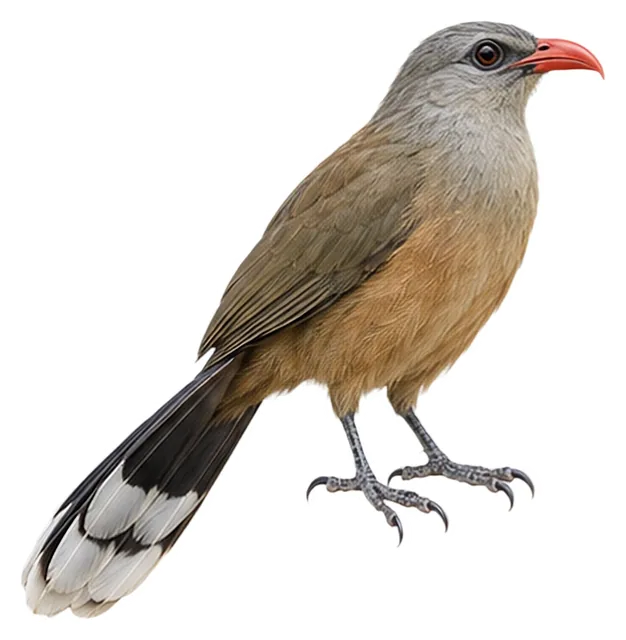
Sirkeer Malkoha
Taccocua leschenaultii Lesson, RP, 1830
175 gWeight
The sirkeer malkoha or sirkeer cuckoo (Taccocua leschenaultii), is a non-parasitic cuckoo found in dry scrub forest and open woodland habitats in the Indian subcontinent.
Busiest months: December–March · Most records: India, Sri Lanka, Nepal
Where and when it's recorded

Sirkeer Malkoha has been recorded at 88 of the 8,171 birding hotspots we track, in 4 countries and regions.
Records by month Northern Hemisphere
Where it's recorded most
- Uda Walawe NPSri Lanka287 records
- Yala National ParkSri Lanka205 records
- Rishi Valley – School CampusIndia205 records
More places
- Rishi ValleyIndia161 records
- Asola Wildlife SanctuaryIndia154 records
- Bandhavgarh NPIndia140 records
- Bhondsi Nature ParkIndia124 records
- Bharatpur – Keoladeo Ghana NPIndia116 records
- Sultanpur National ParkIndia112 records
- Kanha NP – Mukki ZoneIndia85 records
Countries and regions with the most records
eBird records via GBIF up to 2024-12-31. A record means someone listed it; more records partly mean more birders, not more birds.
About
The sirkeer malkoha or sirkeer cuckoo (Taccocua leschenaultii), is a non-parasitic cuckoo found in dry scrub forest and open woodland habitats in the Indian subcontinent. The species is long-tailed, largely olive brown on the upper side with a distinctive curved red beak tipped in yellow. They forage singly or in pairs mainly on or close to the ground creeping between grasses and bushes, often on rocky habitats where they feed on small lizards, insects, and sometimes berries and seeds.
Excerpt from Wikipedia, CC BY-SA 4.0 · authors · Read more on Wikipedia
Questions
How big is the Sirkeer Malkoha?
The Sirkeer Malkoha weighs around 175 g.
Where does the Sirkeer Malkoha live?
Its breeding range: Oriental: Pakistan and India. It is most often recorded in India, Sri Lanka and Nepal.
When is the best time to see the Sirkeer Malkoha?
At the hotspots we track, it is recorded most in January, February, March and December (Northern Hemisphere).
Is the Sirkeer Malkoha endangered?
The IUCN Red List classifies the Sirkeer Malkoha as Least Concern.
What does the Sirkeer Malkoha eat?
Main food: Insects & other invertebrates.
What family is the Sirkeer Malkoha in?
It belongs to the family Cuckoos (Cuculidae), order Cuculiformes.
At a glance
- Weight
- 175 g
- Habitat
- Forest
- Diet
- Insects & other invertebrates
- Lifestyle
- Active on the ground
- Migration
- Resident (barely migrates)
- Conservation
- Least Concern
More measurements
- Wing
- 163 mm
- Tail
- 240 mm
- Bill
- 32 mm
- Tarsus
- 40 mm
Averages from the AVONET dataset; length from field guides where available.
Range
Oriental: Pakistan and India
Breeding range, IOC World Bird List 15.2
Classification
- Order
- Cuculiformes
- Family
- Cuckoos Cuculidae
- Genus
- Taccocua
More from the family Cuckoos
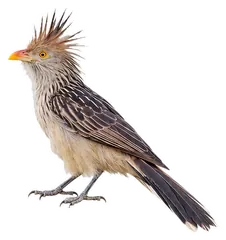 Guira CuckooGuira guira
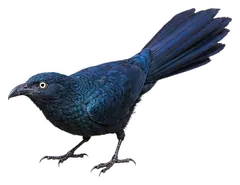 Greater AniCrotophaga major
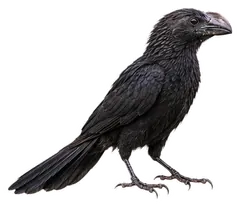 Smooth-billed AniCrotophaga ani
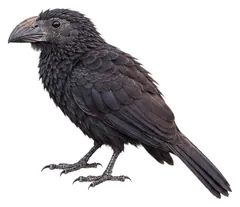 Groove-billed AniCrotophaga sulcirostris
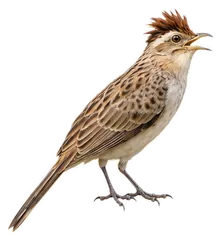 Striped CuckooTapera naevia
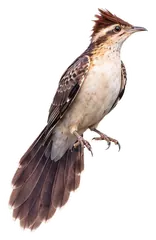 Pheasant CuckooDromococcyx phasianellus
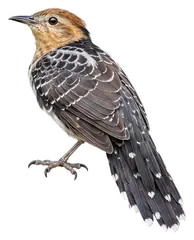 Pavonine CuckooDromococcyx pavoninus
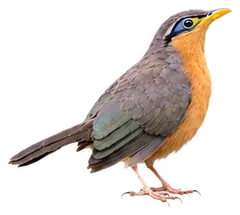 Lesser Ground CuckooMorococcyx erythropygus
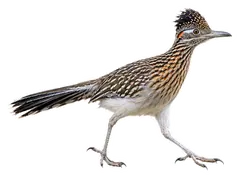 Greater RoadrunnerGeococcyx californianus
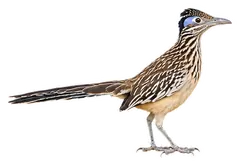 Lesser RoadrunnerGeococcyx velox
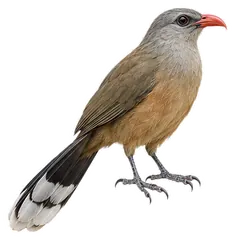
Download illustration
Free to use with credit: “Illustration: Bird Album (birdalbum.com)”. Drawn by AI from a reference photo by Ravisara Jayamanna. ↗
Heard it but can't see it? Mingji identifies birds by sound and photo, on your phone.