 Bird Album
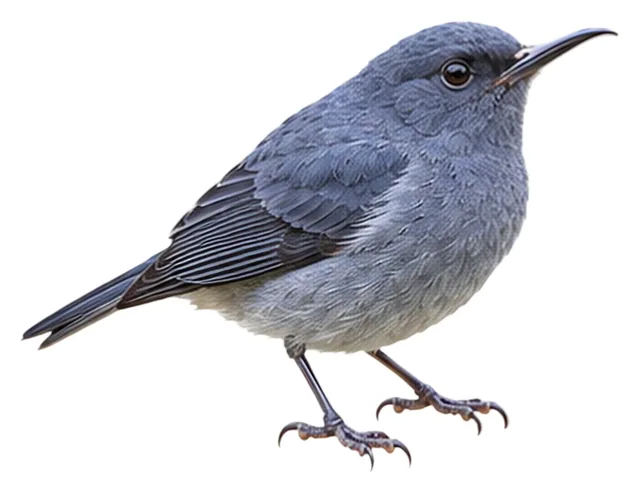
Slaty Flowerpiercer
Diglossa plumbea Cabanis, 1861
10 cmLength10 gWeight
The slaty flowerpiercer (Diglossa plumbea) is a passerine bird endemic to the Talamancan montane forests.
Busiest months: January–March · Most records: Costa Rica, Panama
Where and when it's recorded

Slaty Flowerpiercer has been recorded at 31 of the 8,171 birding hotspots we track, in 2 countries and regions.
Records by month Northern Hemisphere
Where it's recorded most
- Savegre HotelCosta Rica5,228 records
- Paraiso Quetzal Lodge - Km 70Costa Rica3,296 records
- Savegre Valley – Miriam's RestaurantCosta Rica2,008 records
More places
- San Gerardo de DotaCosta Rica1,141 records
- Mount Totumas Cloud Forest ReservePanama940 records
- Savegre Mt. Lodge – primary forest trails above lodgeCosta Rica727 records
- Finca LéridaPanama686 records
- La Paz Waterfall GardensCosta Rica549 records
- Reserva Biológica Bosque Nuboso MonteverdeCosta Rica310 records
- Bajo La Paz, San RamónCosta Rica129 records
Countries and regions with the most records
eBird records via GBIF up to 2024-12-31. A record means someone listed it; more records partly mean more birders, not more birds.
About
The slaty flowerpiercer (Diglossa plumbea) is a passerine bird endemic to the Talamancan montane forests.
Excerpt from Wikipedia, CC BY-SA 4.0 · authors · Read more on Wikipedia
Questions
How big is the Slaty Flowerpiercer?
The Slaty Flowerpiercer is about 10 cm long and weighs around 10 g.
Where does the Slaty Flowerpiercer live?
Its breeding range: Middle America: Costa Rica and western Panama. It is most often recorded in Costa Rica and Panama.
When is the best time to see the Slaty Flowerpiercer?
At the hotspots we track, it is recorded most in January, February and March (Northern Hemisphere).
Is the Slaty Flowerpiercer endangered?
The IUCN Red List classifies the Slaty Flowerpiercer as Least Concern.
What does the Slaty Flowerpiercer eat?
Main food: Nectar.
What family is the Slaty Flowerpiercer in?
It belongs to the family Tanagers & Allies (Thraupidae), order Passerines (Passeriformes).
At a glance
- Length
- 10 cm
- Weight
- 10 g
- Habitat
- Forest
- Diet
- Nectar
- Lifestyle
- Perches in trees
- Migration
- Resident (barely migrates)
- Conservation
- Least Concern
More measurements
- Wing
- 55 mm
- Tail
- 43 mm
- Bill
- 13 mm
- Tarsus
- 18 mm
Averages from the AVONET dataset; length from field guides where available.
Range
Middle America: Costa Rica and western Panama
Breeding range, IOC World Bird List 15.2
Classification
- Order
- Passerines Passeriformes
- Family
- Tanagers & Allies Thraupidae
- Genus
- Diglossa
Other birds in the genus Diglossa
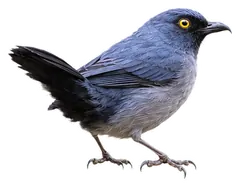 Golden-eyed FlowerpiercerDiglossa glauca
 Bluish FlowerpiercerDiglossa caerulescens
 Warbling Masked FlowerpiercerDiglossa cyanea
 Indigo FlowerpiercerDiglossa indigotica
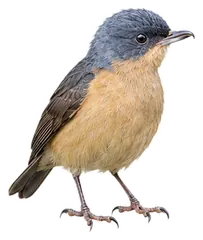 Rusty FlowerpiercerDiglossa sittoides
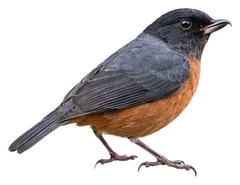 Cinnamon-bellied FlowerpiercerDiglossa baritula
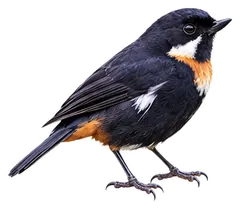 Moustached FlowerpiercerDiglossa mystacalis
 Glossy FlowerpiercerDiglossa lafresnayii
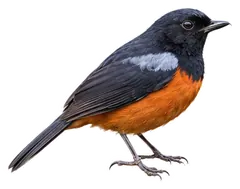 Chestnut-bellied FlowerpiercerDiglossa gloriosissima
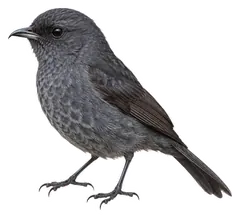 Scaled FlowerpiercerDiglossa duidae
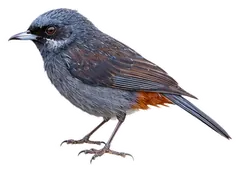 Greater FlowerpiercerDiglossa major
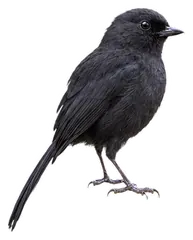 Venezuelan FlowerpiercerDiglossa venezuelensis
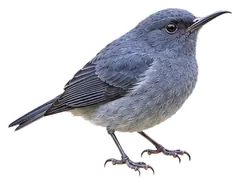
Download illustration
Free to use with credit: “Illustration: Bird Album (birdalbum.com)”. Drawn by AI from a reference photo by Richard Yank. ↗
Heard it but can't see it? Mingji identifies birds by sound and photo, on your phone.
In other languages
- EnglishSlaty Flowerpiercer
- 简体中文灰刺花鸟
- 繁體中文石板灰刺花鳥
- 日本語ウスズミハナサシミツドリ
- DeutschEinfarb-Hakenschnabel
- FrançaisPercefleur ardoisé
- EspañolPinchaflor plomizo
- Portuguêsfura-flor-plúmbeo
- ItalianoBucafiori ardesia
- NederlandsLeigrijze Berghoningkruiper
- РусскийСвинцовый цветокол
- Svenskagrå blomstickare
- DanskEnsfarvet Blomsterborer
- Polskihaczykodziobek śniady