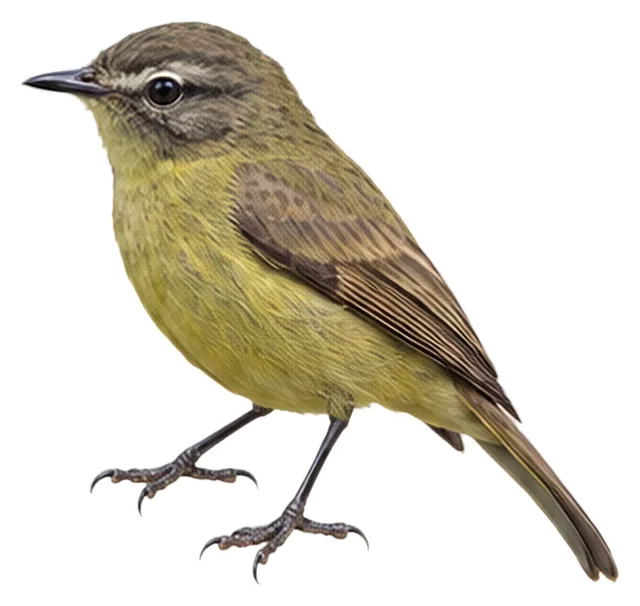
Sooty-headed Tyrannulet
Phyllomyias griseiceps (Sclater, PL & Salvin, 1871)
10 cmLength7.2 gWeight
The sooty-headed tyrannulet (Phyllomyias griseiceps) is a species of bird in subfamily Elaeniinae of family Tyrannidae, the tyrant flycatchers.
Busiest months: January–February and October–November · Most records: Colombia, Ecuador, Panama
Where and when it's recorded
Busiest months: January–February and October–November · Most records: Colombia, Ecuador, Panama

Sooty-headed Tyrannulet has been recorded at 183 of the 8,276 birding hotspots we track, in 7 countries and regions.
Records by month Northern Hemisphere
Where it's recorded most
- Rio Silanche Bird SanctuaryEcuador1,122 records
- Hotel Tinamú Birding Nature ReserveColombia1,018 records
- Quebrada grande san antonio del tequendamaColombia782 records
More places
- Laguna El TabacalColombia532 records
- Canopy CampPanama494 records
- RN BellavistaColombia428 records
- Represa CameguaduaColombia375 records
- Reinita Cielo Azul ProAves ReserveColombia370 records
- Ayampe – Ruta del ColibríEcuador364 records
- Vereda La ClorindaColombia352 records
Countries and regions with the most records
eBird records via GBIF up to 2024-12-31. A record means someone listed it; more records partly mean more birders, not more birds.
About
The sooty-headed tyrannulet (Phyllomyias griseiceps) is a species of bird in subfamily Elaeniinae of family Tyrannidae, the tyrant flycatchers. It is found in Brazil, Colombia, Ecuador, French Guiana, Guyana, Panama, Peru, Suriname, and Venezuela.
Excerpt from Wikipedia, CC BY-SA 4.0 · authors · Read more on Wikipedia
Questions
How big is the Sooty-headed Tyrannulet?
The Sooty-headed Tyrannulet is about 10 cm long and weighs around 7.2 g.
Where does the Sooty-headed Tyrannulet live?
Its breeding range: South America: eastern Panama to the Guianas and northern Brazil, eastern Ecuador and eastern Peru, southwestern Colombia and northwestern Ecuador. It is most often recorded in Colombia, Ecuador and Panama.
When is the best time to see the Sooty-headed Tyrannulet?
At the hotspots we track, it is recorded most in January, February, October and November (Northern Hemisphere).
Is the Sooty-headed Tyrannulet endangered?
The IUCN Red List classifies the Sooty-headed Tyrannulet as Least Concern.
What does the Sooty-headed Tyrannulet eat?
Main food: Insects & other invertebrates.
What family is the Sooty-headed Tyrannulet in?
It belongs to the family Tyrant Flycatchers, Calyptura (Tyrannidae), order Passerines (Passeriformes).
At a glance
- Length
- 10 cm
- Weight
- 7.2 g
- Habitat
- Forest
- Diet
- Insects & other invertebrates
- Lifestyle
- Perches in trees
- Migration
- Resident (barely migrates)
- Conservation
- Least Concern
More measurements
- Wing
- 52 mm
- Tail
- 45 mm
- Bill
- 9 mm
- Tarsus
- 14 mm
Averages from the AVONET dataset; length from field guides where available.
Range
South America: eastern Panama to the Guianas and northern Brazil, eastern Ecuador and eastern Peru, southwestern Colombia and northwestern Ecuador
Breeding range, IOC World Bird List 15.2
Classification
- Order
- Passerines Passeriformes
- Family
- Tyrant Flycatchers, Calyptura Tyrannidae
- Genus
- Phyllomyias
Other birds in the genus Phyllomyias
 Greenish TyrannuletPhyllomyias virescens
 Reiser's TyrannuletPhyllomyias reiseri
 Urich's TyrannuletPhyllomyias urichi
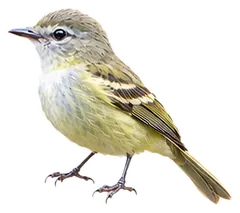 Sclater's TyrannuletPhyllomyias sclateri
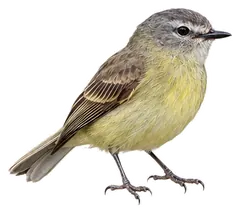 Yungas TyrannuletPhyllomyias weedeni
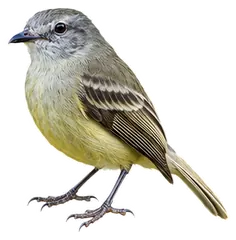 Planalto TyrannuletPhyllomyias fasciatus
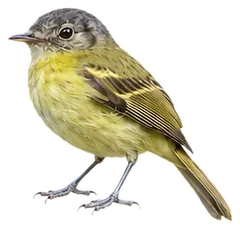 Plumbeous-crowned TyrannuletPhyllomyias plumbeiceps
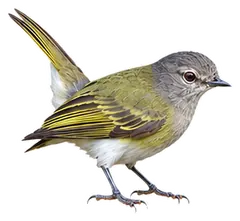 Grey-capped TyrannuletPhyllomyias griseocapilla
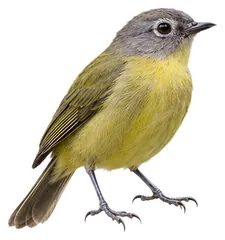 Grey-headed PipritesPiprites griseiceps
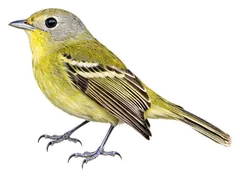 Wing-barred PipritesPiprites chloris
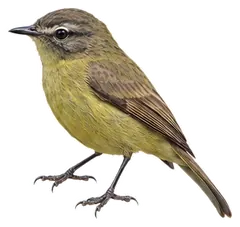
Download illustration
Free to use with credit: “Illustration: Bird Album (birdalbum.com)”. Drawn by AI from a reference photo by David Beadle. ↗
Heard it but can't see it? Mingji identifies birds by sound and photo, on your phone.
In other languages
- EnglishSooty-headed Tyrannulet
- 简体中文乌头小霸鹟
- 繁體中文烏頭小霸鶲
- 日本語ハイガシラコタイランチョウ
- DeutschRußkappen-Kleintyrann
- FrançaisTyranneau nain
- EspañolMosquerito cabecigrís
- Portuguêspiolhinho-de-cabeça-cinza
- ItalianoTirannetto testafuliggine
- NederlandsDwergvliegenpikker
- РусскийТемношапочный москитеро
- Svenskasotkronad dvärgtyrann
- DanskSodhovedet Tyrannulet
- Polskioliwiarek okopcony