 Bird Album
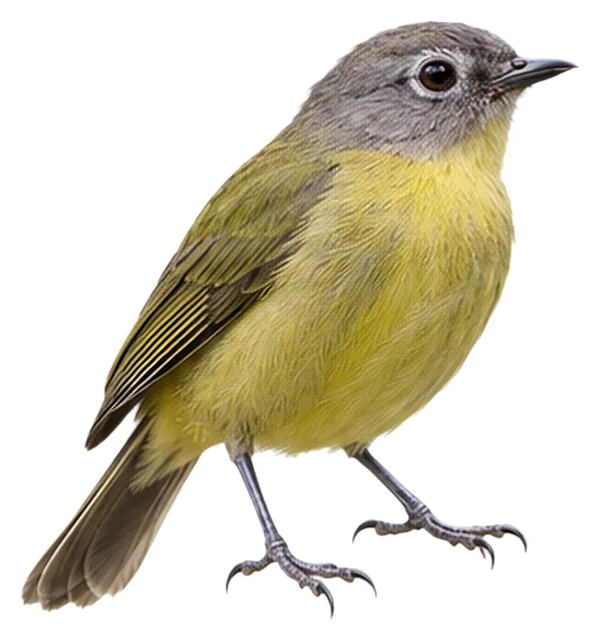
Grey-headed Piprites
Piprites griseiceps Salvin, 1865
12–13 cmLength16 gWeight
The grey-headed piprites (Piprites griseiceps) is a species of bird in subfamily Pipritinae of family Tyrannidae, the tyrant flycatchers.
Busiest months: January · Most records: Costa Rica, Honduras, Nicaragua
Where and when it's recorded
Busiest months: January · Most records: Costa Rica, Honduras, Nicaragua

Grey-headed Piprites has been recorded at 13 of the 8,276 birding hotspots we track, in 3 countries and regions.
Records by month Northern Hemisphere
Where it's recorded most
- Rancho NaturalistaCosta Rica88 records
- Estación Biológica La Selva-OTSCosta Rica16 records
- Reserva El CopalCosta Rica13 records
More places
- Selva Verde LodgeCosta Rica9 records
- Laguna Lagarto LodgeCosta Rica7 records
- PN Pico Bonito – Lodge at Pico BonitoHonduras6 records
- Rainforest Adventures Braulio CarrilloCosta Rica6 records
- RB Indio Maíz – Entrada y Refugio BartolaNicaragua4 records
- Jardín Botánico LancetillaHonduras4 records
- PN Braulio Carrillo – Quebrada GonzálezCosta Rica4 records
Countries and regions with the most records
eBird records via GBIF up to 2024-12-31. A record means someone listed it; more records partly mean more birders, not more birds.
About
The grey-headed piprites (Piprites griseiceps) is a species of bird in subfamily Pipritinae of family Tyrannidae, the tyrant flycatchers. It is found in Costa Rica, Guatemala, Honduras, Nicaragua, and Panama. Prior to genetic studies in 2009, it was placed in the family Pipritinae with the manakins.
Excerpt from Wikipedia, CC BY-SA 4.0 · authors · Read more on Wikipedia
Questions
How big is the Grey-headed Piprites?
The Grey-headed Piprites is about 12–13 cm long and weighs around 16 g.
Where does the Grey-headed Piprites live?
Its breeding range: Middle America: eastern Guatemala to western Panama. It is most often recorded in Costa Rica, Honduras and Nicaragua.
When is the best time to see the Grey-headed Piprites?
At the hotspots we track, it is recorded most in January (Northern Hemisphere).
Is the Grey-headed Piprites endangered?
The IUCN Red List classifies the Grey-headed Piprites as Least Concern.
What does the Grey-headed Piprites eat?
Main food: Omnivore.
What family is the Grey-headed Piprites in?
It belongs to the family Tyrant Flycatchers, Calyptura (Tyrannidae), order Passerines (Passeriformes).
At a glance
- Length
- 12–13 cm
- Weight
- 16 g
- Habitat
- Forest
- Diet
- Omnivore
- Lifestyle
- Perches in trees
- Migration
- Resident (barely migrates)
- Conservation
- Least Concern
More measurements
- Wing
- 64 mm
- Tail
- 48 mm
- Bill
- 11 mm
- Tarsus
- 16 mm
Averages from the AVONET dataset; length from field guides where available.
Range
Middle America: eastern Guatemala to western Panama
Breeding range, IOC World Bird List 15.2
Classification
- Order
- Passerines Passeriformes
- Family
- Tyrant Flycatchers, Calyptura Tyrannidae
- Genus
- Piprites
Other birds in the genus Piprites
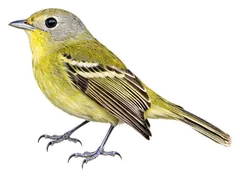 Wing-barred PipritesPiprites chloris
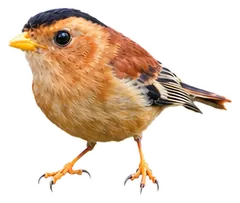 Black-capped PipritesPiprites pileata
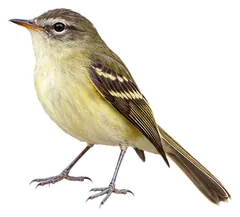 Greenish TyrannuletPhyllomyias virescens
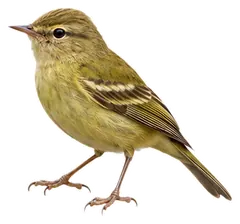 Reiser's TyrannuletPhyllomyias reiseri
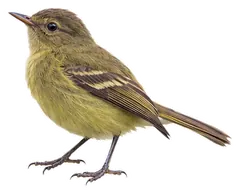 Urich's TyrannuletPhyllomyias urichi
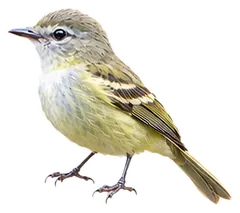 Sclater's TyrannuletPhyllomyias sclateri
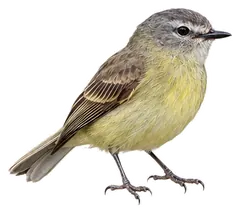 Yungas TyrannuletPhyllomyias weedeni
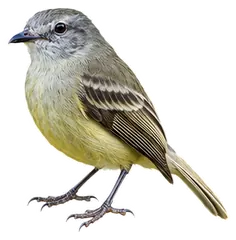 Planalto TyrannuletPhyllomyias fasciatus
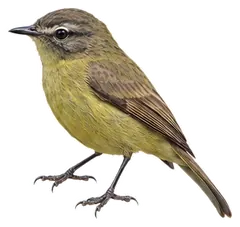 Sooty-headed TyrannuletPhyllomyias griseiceps
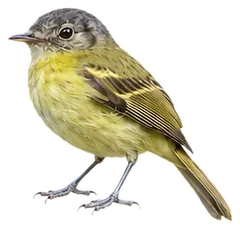 Plumbeous-crowned TyrannuletPhyllomyias plumbeiceps
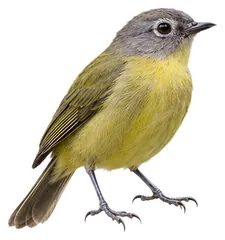
Download illustration
Free to use with credit: “Illustration: Bird Album (birdalbum.com)”. Drawn by AI from a reference photo by Lev Frid. ↗
Heard it but can't see it? Mingji identifies birds by sound and photo, on your phone.
In other languages
- EnglishGrey-headed Piprites
- 简体中文灰头娇鹟
- 繁體中文灰頭侏儒鳥
- 日本語メジロマイコドリ
- DeutschGraustirn-Pipratyrann
- FrançaisPiprite à tête grise
- EspañolPiprites cabecigrís
- Portuguêscaneleirinho-de-cabeça-cinzenta
- ItalianoPiprite testagrigia
- NederlandsGrijskopmanakin
- РусскийСероголовая пиприта
- Svenskagråhuvad piprit
- DanskGråhovedet Piprites
- Polskikrzykaczyk szarogłowy