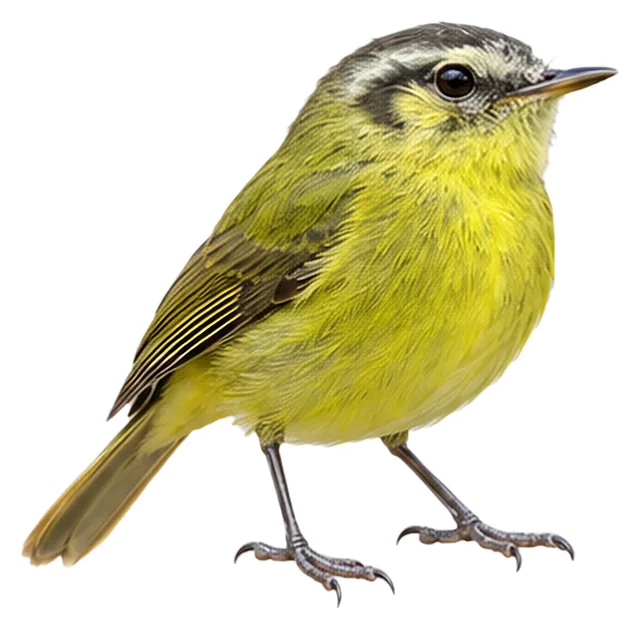
Southern Bristle Tyrant
Pogonotriccus eximius (Temminck, 1822)
11–12 cmLength7.5 gWeight
The southern bristle tyrant (Pogonotriccus eximius) is a Least Concern species of passerine bird in the family Tyrannidae, the tyrant flycatchers.
Busiest months: July–August · Most records: Argentina, Brazil, Paraguay
Where and when it's recorded
Busiest months: July–August · Most records: Argentina, Brazil, Paraguay

Southern Bristle Tyrant has been recorded at 30 of the 8,276 birding hotspots we track, in 3 countries and regions.
Records by month Southern Hemisphere
Where it's recorded most
- PP Urugua-í – Seccional UruzúArgentina381 records
- PN do Iguaçu – Trilha do Poço PretoBrazil242 records
- Parque Nacional Ybycui, Dpto. ParaguariParaguay114 records
More places
- PP Cruce CaballeroArgentina78 records
- PP de la AraucariaArgentina68 records
- PP Caá YaríArgentina58 records
- PN Iguazú – Área CataratasArgentina51 records
- Bio Reserva KaradyaArgentina50 records
- Parque Nacional San Rafael, Dptos. Itapúa y CaazapáParaguay45 records
- San Sebastián de la SelvaArgentina44 records
Countries and regions with the most records
eBird records via GBIF up to 2024-12-31. A record means someone listed it; more records partly mean more birders, not more birds.
About
The southern bristle tyrant (Pogonotriccus eximius) is a Least Concern species of passerine bird in the family Tyrannidae, the tyrant flycatchers. It is found in Argentina, Brazil, and Paraguay.
Excerpt from Wikipedia, CC BY-SA 4.0 · authors · Read more on Wikipedia
Questions
How big is the Southern Bristle Tyrant?
The Southern Bristle Tyrant is about 11–12 cm long and weighs around 7.5 g.
Where does the Southern Bristle Tyrant live?
Its breeding range: South America: eastern Paraguay, northeastern Argentina and southeastern Brazil. It is most often recorded in Argentina, Brazil and Paraguay.
When is the best time to see the Southern Bristle Tyrant?
At the hotspots we track, it is recorded most in July and August (Southern Hemisphere).
Is the Southern Bristle Tyrant endangered?
The IUCN Red List classifies the Southern Bristle Tyrant as Least Concern.
What does the Southern Bristle Tyrant eat?
Main food: Insects & other invertebrates.
What family is the Southern Bristle Tyrant in?
It belongs to the family Tyrant Flycatchers, Calyptura (Tyrannidae), order Passerines (Passeriformes).
At a glance
- Length
- 11–12 cm
- Weight
- 7.5 g
- Habitat
- Forest
- Diet
- Insects & other invertebrates
- Lifestyle
- Perches in trees
- Migration
- Resident (barely migrates)
- Conservation
- Least Concern
More measurements
- Wing
- 53 mm
- Tail
- 48 mm
- Bill
- 11 mm
- Tarsus
- 15 mm
Averages from the AVONET dataset; length from field guides where available.
Range
South America: eastern Paraguay, northeastern Argentina and southeastern Brazil
Breeding range, IOC World Bird List 15.2
Classification
- Order
- Passerines Passeriformes
- Family
- Tyrant Flycatchers, Calyptura Tyrannidae
- Genus
- Pogonotriccus
Other birds in the genus Pogonotriccus
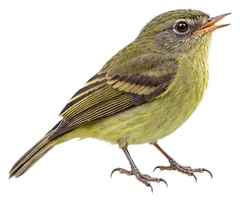 Variegated Bristle TyrantPogonotriccus poecilotis
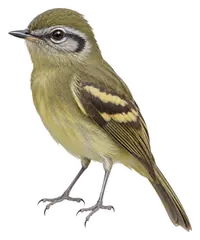 Chapman's Bristle TyrantPogonotriccus chapmani
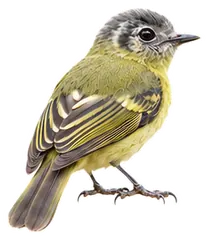 Marble-faced Bristle TyrantPogonotriccus ophthalmicus
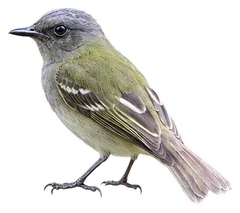 Spectacled Bristle TyrantPogonotriccus orbitalis
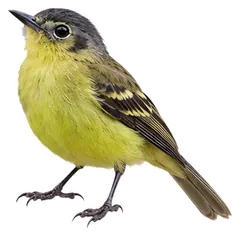 Venezuelan Bristle TyrantPogonotriccus venezuelanus
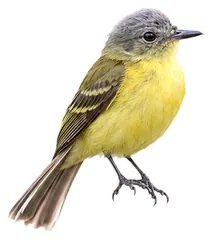 Antioquia Bristle TyrantPogonotriccus lanyoni
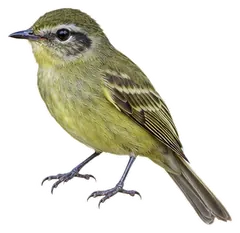 Sao Paulo Bristle TyrantPogonotriccus paulista
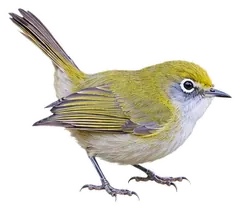 Serra do Mar Bristle TyrantPogonotriccus difficilis
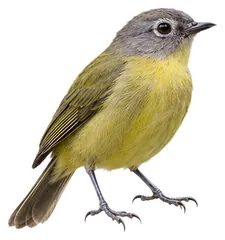 Grey-headed PipritesPiprites griseiceps
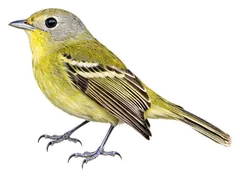 Wing-barred PipritesPiprites chloris
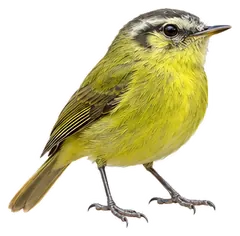
Download illustration
Free to use with credit: “Illustration: Bird Album (birdalbum.com)”. Drawn by AI from a reference photo by Allan Clé Porto. ↗
Heard it but can't see it? Mingji identifies birds by sound and photo, on your phone.
In other languages
- EnglishSouthern Bristle Tyrant
- 简体中文南须霸鹟
- 繁體中文南鬚霸鶲
- 日本語ミナミヒゲハエトリ
- DeutschWeißzügel-Laubtyrann
- FrançaisTyranneau distingué
- EspañolOrejerito cejudo
- Portuguêsbarbudinho-do-sul
- ItalianoTiranno riccio meridionale
- NederlandsTemmincks Looftiran
- РусскийБородатый тираннчик
- Svenskasydlig borsttyrann
- DanskSydlig Børstetyran
- Polskityrańczyk białobrewy