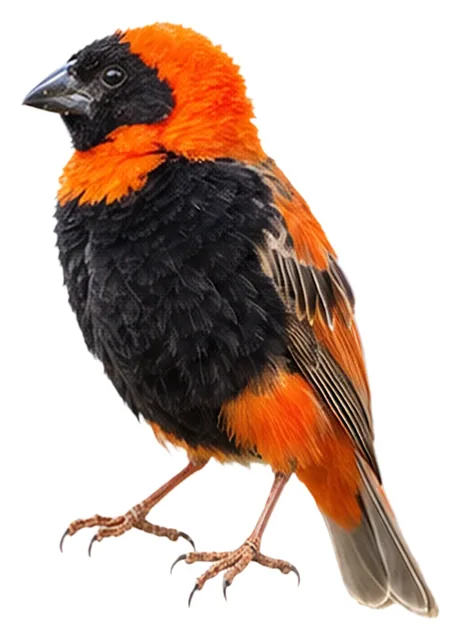
Southern Red Bishop
Euplectes orix (Linnaeus, 1758)
≈14 cmLength23 gWeight
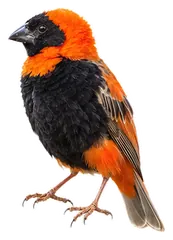
The male is red and black in the breeding season, but otherwise resembles the streaked brown female.
Busiest months: November–February · Most records: South Africa, Uganda, Tanzania
How to identify
Field marks
- Breeding male has red-and-black plumage, sometimes tinged orange
- Breeding male has red upper breast and undertail-coverts
- Breeding male has red back and brown wings and tail
- Bill thick and conical
Male, female and young
The non-breeding male and female are streaked brown with paler underparts; the female is smaller than the male.
Voice
Various twitters and nasal contact calls; the male's song is a buzzing sound.
Where and when it's recorded
Busiest months: November–February · Most records: South Africa, Uganda, Tanzania

Southern Red Bishop has been recorded at 308 of the 8,276 birding hotspots we track, in 28 countries and regions.
Records by month Southern Hemisphere
Where it's recorded most
- Rietvlei NRSouth Africa979 records
- Marievale Bird SanctuarySouth Africa847 records
- Abu Dhabi Golf and Equestrian ClubUnited Arab Emirates687 records
More places
- Avis DamNamibia451 records
- PaardevleiSouth Africa415 records
- Strandfontein WTPSouth Africa373 records
- Macaneta – Wetland, dune forests and coastMozambique362 records
- Delta ParkSouth Africa324 records
- Intaka IslandSouth Africa319 records
- Wakkerstroom Wetland NR – bridge/causewaySouth Africa310 records
Countries and regions with the most records
eBird records via GBIF up to 2024-12-31. A record means someone listed it; more records partly mean more birders, not more birds.
About
The southern red bishop or red bishop (Euplectes orix) is a small passerine bird belonging to the bishop and widowbird genus Euplectes in the weaver family, the Ploceidae. It is common in wetlands and grassland in Africa south of the Equator. North of the Equator, it is replaced by the northern red bishop or orange bishop (E. franciscanus) which was formerly regarded as a subspecies of this species.
Excerpt from Wikipedia, CC BY-SA 4.0 · authors · Read more on Wikipedia
Questions
How big is the Southern Red Bishop?
The Southern Red Bishop is about ≈14 cm long and weighs around 23 g.
Where does the Southern Red Bishop live?
Its breeding range: Africa: southern, eastern DR Congo and southwestern Kenya to Mozambique, Angola, western Zambia, northern Botswana, Namibia and South Africa. It is most often recorded in South Africa, Uganda and Tanzania.
When is the best time to see the Southern Red Bishop?
At the hotspots we track, it is recorded most in January, February, November and December (Southern Hemisphere).
Is the Southern Red Bishop endangered?
The IUCN Red List classifies the Southern Red Bishop as Least Concern.
What does the Southern Red Bishop eat?
Main food: Seeds.
What family is the Southern Red Bishop in?
It belongs to the family Weavers, Widowbirds (Ploceidae), order Passerines (Passeriformes).
At a glance
- Length
- ≈14 cm
- Weight
- 23 g
- Habitat
- Grassland
- Diet
- Seeds
- Lifestyle
- Active on the ground
- Migration
- Resident (barely migrates)
- Conservation
- Least Concern
More measurements
- Wing
- 71 mm
- Tail
- 42 mm
- Bill
- 16 mm
- Tarsus
- 20 mm
Averages from the AVONET dataset; length from field guides where available.
Range
Africa: southern, eastern DR Congo and southwestern Kenya to Mozambique, Angola, western Zambia, northern Botswana, Namibia and South Africa
Breeding range, IOC World Bird List 15.2
Classification
- Order
- Passerines Passeriformes
- Family
- Weavers, Widowbirds Ploceidae
- Genus
- Euplectes
Other birds in the genus Euplectes
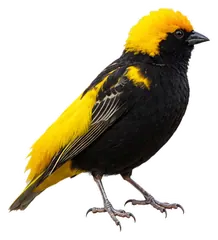 Yellow-crowned BishopEuplectes afer
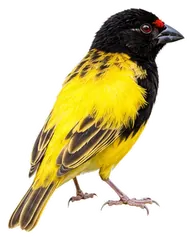 Fire-fronted BishopEuplectes diadematus
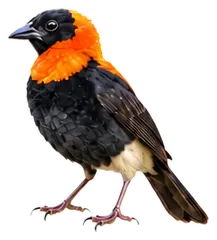 Black BishopEuplectes gierowii
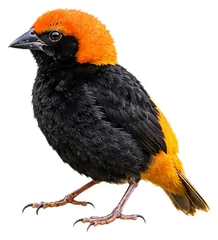 Zanzibar Red BishopEuplectes nigroventris
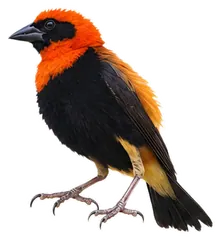 Black-winged Red BishopEuplectes hordeaceus
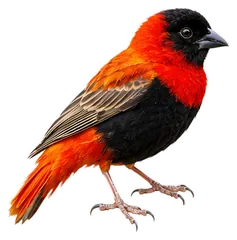 Northern Red BishopEuplectes franciscanus
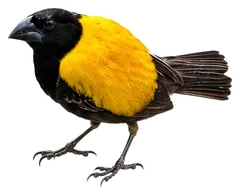 Golden-backed BishopEuplectes aureus
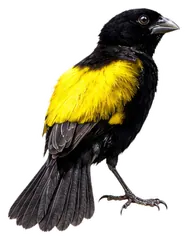 Yellow BishopEuplectes capensis
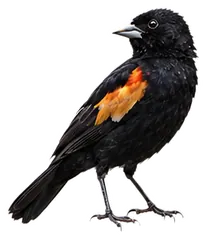 Fan-tailed WidowbirdEuplectes axillaris
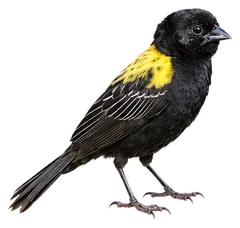 Yellow-mantled WidowbirdEuplectes macroura
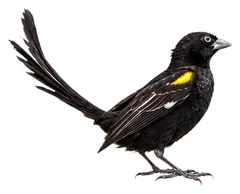 Marsh WidowbirdEuplectes hartlaubi
 Montane WidowbirdEuplectes psammacromius
Download illustration
Free to use with credit: “Illustration: Bird Album (birdalbum.com)”. Drawn by AI from a reference photo by John Gale. ↗
Heard it but can't see it? Mingji identifies birds by sound and photo, on your phone.