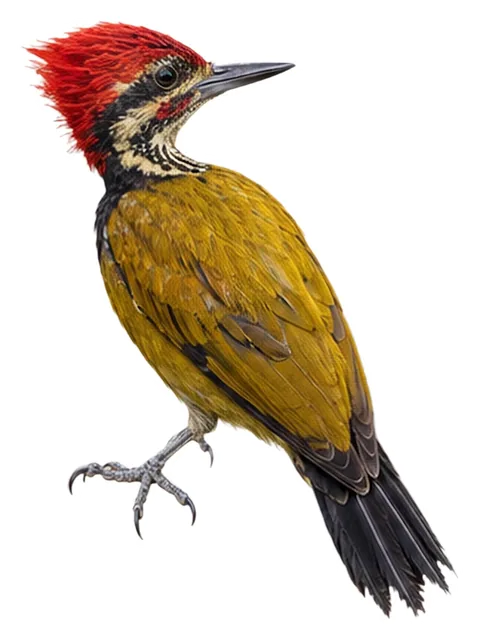
Spot-throated Flameback
Dinopium everetti (Tweeddale, 1878)
94 gWeight
The spot-throated flameback (Dinopium everetti) is a species of bird in the family Picidae.
Busiest months: February–March · Most records: Philippines
Where and when it's recorded
Busiest months: February–March · Most records: Philippines

Spot-throated Flameback has been recorded at 9 of the 8,276 birding hotspots we track, in 1 country or region.
Records by month Northern Hemisphere
Where it's recorded most
- Napsan, Puerto Princesa CityPhilippines126 records
- Irawan Eco Park, Puerto PrincesaPhilippines126 records
- Sabang, Puerto PrincesaPhilippines62 records
More places
- Puerto Princesa Subterranean River National ParkPhilippines53 records
- Iwahig Prison & Penal FarmPhilippines53 records
- Sabang – Cockatoo Viewpoint, Puerto PrincesaPhilippines48 records
- Iwahig Prison & Penal Farm – Balsahan River Trail, Puerto PrincesaPhilippines48 records
- Zigzag Road, Puerto PrincesaPhilippines46 records
- Iwahig Prison & Penal Farm – Ricefields, Puerto PrincesaPhilippines18 records
Countries and regions with the most records
eBird records via GBIF up to 2024-12-31. A record means someone listed it; more records partly mean more birders, not more birds.
About
The spot-throated flameback (Dinopium everetti) is a species of bird in the family Picidae. It is endemic to the Philippines only being found in the province of Palawan in the islands of Balabac, Busuanga and Calamian and mainland Palawan.. It is sometimes considered a subspecies of the common flameback.It is found in moist lowland forests including primary, secondary and even plantations and clearings provided there are still standing trees.
Excerpt from Wikipedia, CC BY-SA 4.0 · authors · Read more on Wikipedia
Questions
How big is the Spot-throated Flameback?
The Spot-throated Flameback weighs around 94 g.
Where does the Spot-throated Flameback live?
Its breeding range: Oriental: Palawan, Balabac, and Calamian Islands (southwestern Philippines). It is most often recorded in Philippines.
When is the best time to see the Spot-throated Flameback?
At the hotspots we track, it is recorded most in February and March (Northern Hemisphere).
Is the Spot-throated Flameback endangered?
The IUCN Red List classifies the Spot-throated Flameback as Near Threatened.
What does the Spot-throated Flameback eat?
Main food: Insects & other invertebrates.
What family is the Spot-throated Flameback in?
It belongs to the family Woodpeckers (Picidae), order Piciformes.
At a glance
- Weight
- 94 g
- Habitat
- Woodland
- Diet
- Insects & other invertebrates
- Lifestyle
- Perches in trees
- Migration
- Resident (barely migrates)
- Conservation
- Near Threatened
More measurements
- Wing
- 137 mm
- Tail
- 82 mm
- Bill
- 31 mm
- Tarsus
- 24 mm
Averages from the AVONET dataset; length from field guides where available.
Range
Oriental: Palawan, Balabac, and Calamian Islands (southwestern Philippines)
Breeding range, IOC World Bird List 15.2
Classification
- Order
- Piciformes
- Family
- Woodpeckers Picidae
- Genus
- Dinopium
Other birds in the genus Dinopium
 Himalayan FlamebackDinopium shorii
 Common FlamebackDinopium javanense
 Black-rumped FlamebackDinopium benghalense
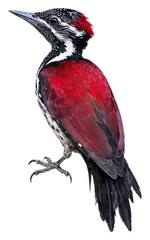 Red-backed FlamebackDinopium psarodes
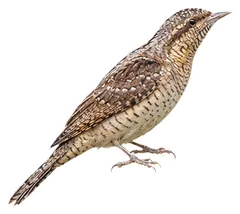 Eurasian WryneckJynx torquilla
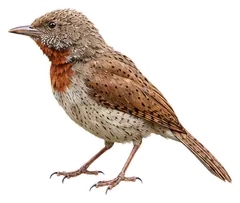 Red-throated WryneckJynx ruficollis
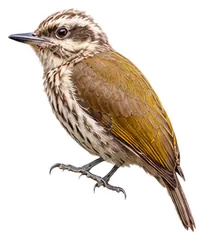 Speckled PiculetPicumnus innominatus
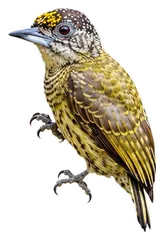 Bar-breasted PiculetPicumnus aurifrons
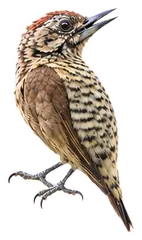 Lafresnaye's PiculetPicumnus lafresnayi
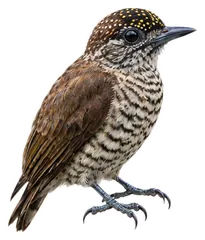 Orinoco PiculetPicumnus pumilus
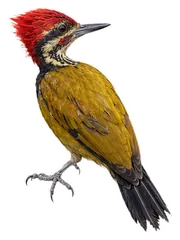
Download illustration
Free to use with credit: “Illustration: Bird Album (birdalbum.com)”. Drawn by AI from a reference photo by Simone Durigon. ↗
Heard it but can't see it? Mingji identifies birds by sound and photo, on your phone.
In other languages
- EnglishSpot-throated Flameback
- 简体中文斑喉三趾啄木鸟
- 繁體中文斑喉金背三趾啄木
- 日本語ノドホシミユビゲラ
- DeutschPalawanspecht
- FrançaisPic d’Everett
- EspañolPito culirrojo de Filipinas
- Portuguêspeto-de-garganta-malhada
- ItalianoDorso di fiamma di Everett
- NederlandsVlekkeelgoudrugspecht
- РусскийПалаванский дятел-султан
- Svenskafläckstrupig flamspett
- DanskPletbrystet Sultanspætte
- Polskisułtanik palawański