 Bird Album
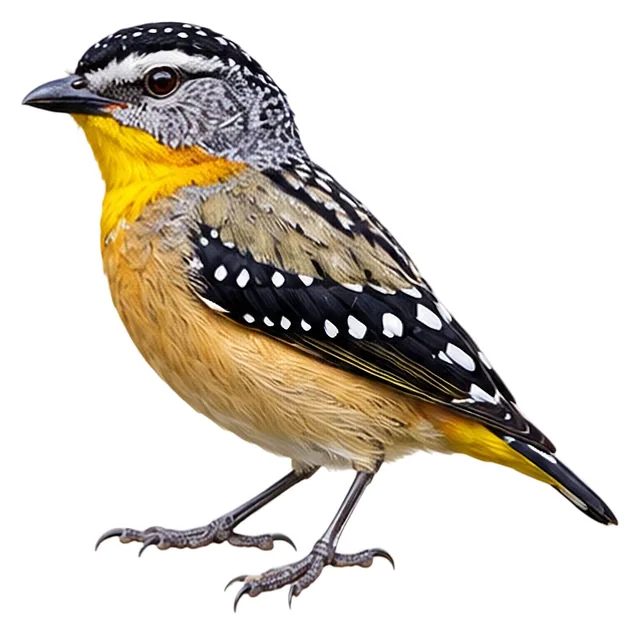
Spotted Pardalote
Pardalotus punctatus (Shaw, 1792)
8–10 cmLength8.7 gWeight
The spotted pardalote (Pardalotus punctatus) is a small passerine bird native to eastern and southern Australia, at elevations of up to 2,000 metres (6,600 ft).
Busiest months: April–May and July–October · Most records: Australia
Where and when it's recorded

Spotted Pardalote has been recorded at 182 of the 8,171 birding hotspots we track, in 1 country or region.
Records by month Southern Hemisphere
Where it's recorded most
- Royal ParkAustralia3,564 records
- Australian National Botanic GardensAustralia2,313 records
- Jerrabomberra Wetlands Nature ReserveAustralia1,994 records
More places
- Banyule Flats ReserveAustralia1,889 records
- Shepherds BushAustralia1,819 records
- Royal Botanic Gardens MelbourneAustralia1,793 records
- Mt Ainslie Nature Reserve – Campbell ParkAustralia1,433 records
- Bushy Park WetlandsAustralia1,376 records
- Serendip SanctuaryAustralia1,232 records
- Gemmill Swamp Wildlife ReserveAustralia1,228 records
Countries and regions with the most records
eBird records via GBIF up to 2024-12-31. A record means someone listed it; more records partly mean more birders, not more birds.
About
The spotted pardalote (Pardalotus punctatus) is a small passerine bird native to eastern and southern Australia, at elevations of up to 2,000 metres (6,600 ft). It is part of the pardalote family, Pardalotidae. Although moderately common in all of the reasonably fertile parts of Australia (the east coast, the south-east, and the south-west corner) it is seldom seen closely enough to enable identification.
Excerpt from Wikipedia, CC BY-SA 4.0 · authors · Read more on Wikipedia
Questions
How big is the Spotted Pardalote?
The Spotted Pardalote is about 8–10 cm long and weighs around 8.7 g.
Where does the Spotted Pardalote live?
Its breeding range: Australasia: southern, eastern Australia. It is most often recorded in Australia.
When is the best time to see the Spotted Pardalote?
At the hotspots we track, it is recorded most in April, May, July, August, September and October (Southern Hemisphere).
Is the Spotted Pardalote endangered?
The IUCN Red List classifies the Spotted Pardalote as Least Concern.
What does the Spotted Pardalote eat?
Main food: Insects & other invertebrates.
What family is the Spotted Pardalote in?
It belongs to the family Pardalotes (Pardalotidae), order Passerines (Passeriformes).
At a glance
- Length
- 8–10 cm
- Weight
- 8.7 g
- Habitat
- Forest
- Diet
- Insects & other invertebrates
- Lifestyle
- Perches in trees
- Migration
- Resident (barely migrates)
- Conservation
- Least Concern
More measurements
- Wing
- 56 mm
- Tail
- 28 mm
- Bill
- 8 mm
- Tarsus
- 17 mm
Averages from the AVONET dataset; length from field guides where available.
Range
Australasia: southern, eastern Australia
Breeding range, IOC World Bird List 15.2
Classification
- Order
- Passerines Passeriformes
- Family
- Pardalotes Pardalotidae
- Genus
- Pardalotus
Other birds in the genus Pardalotus
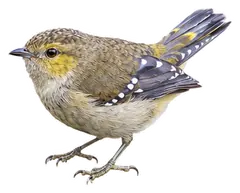 Forty-spotted PardalotePardalotus quadragintus
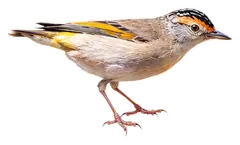 Red-browed PardalotePardalotus rubricatus
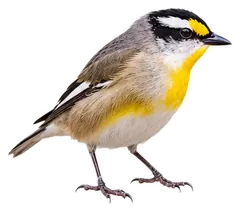 Striated PardalotePardalotus striatus
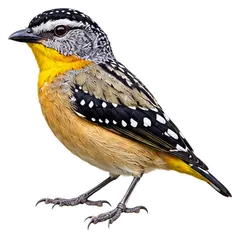
Download illustration
Free to use with credit: “Illustration: Bird Album (birdalbum.com)”. Drawn by AI from a reference photo by Kenton. ↗
Heard it but can't see it? Mingji identifies birds by sound and photo, on your phone.
In other languages
- EnglishSpotted Pardalote
- 简体中文斑翅食蜜鸟
- 繁體中文斑啄果鳥
- 日本語ホウセキドリ
- DeutschFleckenpanthervogel
- FrançaisPardalote pointillé
- EspañolPardalote moteado
- Portuguêspardalote-pontilhado
- ItalianoPardaloto macchiato
- NederlandsGevlekte Diamantvogel
- РусскийЛеопардовый радужник
- Svenskafläckpardalot
- DanskPlettet Panterfugl
- Polskilamparcik plamisty