 Bird Album
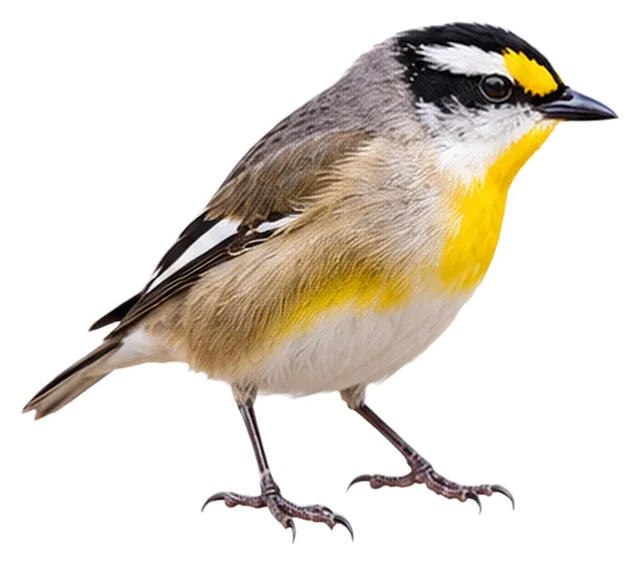
Striated Pardalote
Pardalotus striatus (Gmelin, JF, 1789)
11 gWeight
The striated pardalote (Pardalotus striatus) is the least colourful and most common of the four pardalote species.
Busiest months: August–October · Most records: Australia
Where and when it's recorded

Striated Pardalote has been recorded at 204 of the 8,171 birding hotspots we track, in 1 country or region.
Records by month Southern Hemisphere
Where it's recorded most
- Oxley Creek CommonAustralia3,506 records
- Sandy Camp Road WetlandsAustralia3,459 records
- Mt Ainslie Nature Reserve – Campbell ParkAustralia1,768 records
More places
- Gemmill Swamp Wildlife ReserveAustralia1,656 records
- Lake Samsonvale – Golds Scrub LaneAustralia1,480 records
- Tinchi Tamba Wetlands ReserveAustralia1,433 records
- Kumbartcho SanctuaryAustralia1,422 records
- Herdsman LakeAustralia1,360 records
- Eagleby WetlandsAustralia1,318 records
- Bowra Wildlife SanctuaryAustralia1,202 records
Countries and regions with the most records
eBird records via GBIF up to 2024-12-31. A record means someone listed it; more records partly mean more birders, not more birds.
About
The striated pardalote (Pardalotus striatus) is the least colourful and most common of the four pardalote species. Other common names include pickwick, wittachew and chip-chip. It is a very small, short-tailed bird that is more often heard than seen, foraging noisily for lerps and other small creatures in the treetops.
Excerpt from Wikipedia, CC BY-SA 4.0 · authors · Read more on Wikipedia
Questions
How big is the Striated Pardalote?
The Striated Pardalote weighs around 11 g.
Where does the Striated Pardalote live?
Its breeding range: Australasia: Australia and Tasmania. It is most often recorded in Australia.
When is the best time to see the Striated Pardalote?
At the hotspots we track, it is recorded most in August, September and October (Southern Hemisphere).
Is the Striated Pardalote endangered?
The IUCN Red List classifies the Striated Pardalote as Least Concern.
What does the Striated Pardalote eat?
Main food: Insects & other invertebrates.
What family is the Striated Pardalote in?
It belongs to the family Pardalotes (Pardalotidae), order Passerines (Passeriformes).
At a glance
- Weight
- 11 g
- Habitat
- Forest
- Diet
- Insects & other invertebrates
- Lifestyle
- Perches in trees
- Migration
- Resident (barely migrates)
- Conservation
- Least Concern
More measurements
- Wing
- 64 mm
- Tail
- 31 mm
- Bill
- 9 mm
- Tarsus
- 19 mm
Averages from the AVONET dataset; length from field guides where available.
Range
Australasia: Australia and Tasmania
Breeding range, IOC World Bird List 15.2
Classification
- Order
- Passerines Passeriformes
- Family
- Pardalotes Pardalotidae
- Genus
- Pardalotus
Other birds in the genus Pardalotus
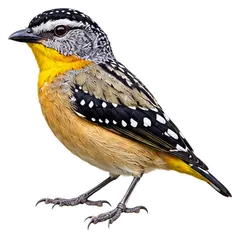 Spotted PardalotePardalotus punctatus
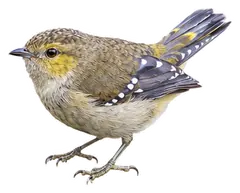 Forty-spotted PardalotePardalotus quadragintus
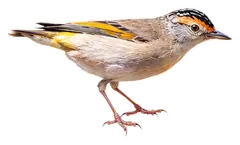 Red-browed PardalotePardalotus rubricatus
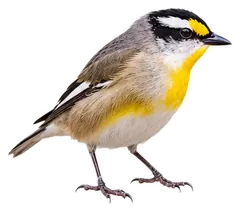
Download illustration
Free to use with credit: “Illustration: Bird Album (birdalbum.com)”. Drawn by AI from a reference photo by Erica Siegel. ↗
Heard it but can't see it? Mingji identifies birds by sound and photo, on your phone.
In other languages
- EnglishStriated Pardalote
- 简体中文纹翅食蜜鸟
- 繁體中文黃眉端斑啄果鳥
- 日本語キボシホウセキドリ
- DeutschStreifenpanthervogel
- FrançaisPardalote à point jaune
- EspañolPardalote estriado
- Portuguêspardalote-estriado
- ItalianoPardaloto striato
- NederlandsGestreepte Diamantvogel
- РусскийЖелтогрудый радужник
- Svenskastrimpardalot
- DanskStribet Panterfugl
- Polskilamparcik strojny