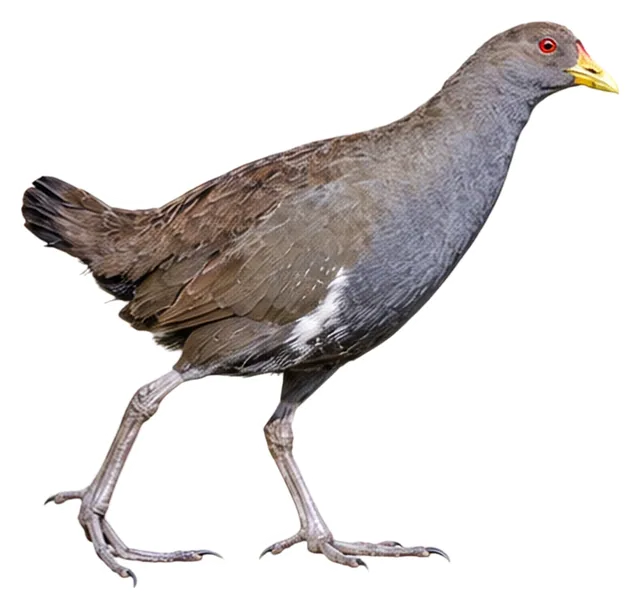
Tasmanian Nativehen
Tribonyx mortierii Du Bus de Gisignies, 1840
51 cmLength1.3 kgWeight
Busiest months: October–November · Most records: Australia
Where and when it's recorded
Busiest months: October–November · Most records: Australia

Tasmanian Nativehen has been recorded at 3 of the 8,276 birding hotspots we track, in 1 country or region.
Records by month Southern Hemisphere
Where it's recorded most
- Goulds Lagoon Wildlife SanctuaryAustralia1,425 records
- InalaAustralia896 records
- Tamar Island WetlandsAustralia698 records
Countries and regions with the most records
eBird records via GBIF up to 2024-12-31. A record means someone listed it; more records partly mean more birders, not more birds.
About
The Tasmanian nativehen (Tribonyx mortierii) (alternative spellings: Tasmanian native-hen or Tasmanian native hen), also known by its palawa kani name piyura, is a flightless rail and one of twelve species of birds endemic to Australia's island state of Tasmania. Although many flightless birds have a history of extinction at the hands of humans, the species has actually benefited from the introduction of European-style agricultural practices in Tasmania. Its success may also be attributed to the recent extinction of its main predator, the thylacine.
Excerpt from Wikipedia, CC BY-SA 4.0 · authors · Read more on Wikipedia
Questions
How big is the Tasmanian Nativehen?
The Tasmanian Nativehen is about 51 cm long and weighs around 1.3 kg.
Where does the Tasmanian Nativehen live?
Its breeding range: Australasia: Tasmania (southeastern Australia). It is most often recorded in Australia.
When is the best time to see the Tasmanian Nativehen?
At the hotspots we track, it is recorded most in October and November (Southern Hemisphere).
Is the Tasmanian Nativehen endangered?
The IUCN Red List classifies the Tasmanian Nativehen as Least Concern.
What does the Tasmanian Nativehen eat?
Main food: Omnivore.
What family is the Tasmanian Nativehen in?
It belongs to the family Rails, Crakes & Coots (Rallidae), order Gruiformes.
At a glance
- Length
- 51 cm
- Weight
- 1.3 kg
- Habitat
- Wetland
- Diet
- Omnivore
- Lifestyle
- Active on the ground
- Migration
- Resident (barely migrates)
- Conservation
- Least Concern
More measurements
- Wing
- 186 mm
- Tail
- 88 mm
- Bill
- 38 mm
- Tarsus
- 75 mm
Averages from the AVONET dataset; length from field guides where available.
Range
Australasia: Tasmania (southeastern Australia)
Breeding range, IOC World Bird List 15.2
Classification
- Order
- Gruiformes
- Family
- Rails, Crakes & Coots Rallidae
- Genus
- Tribonyx
Other birds in the genus Tribonyx
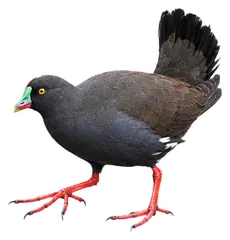 Black-tailed NativehenTribonyx ventralis
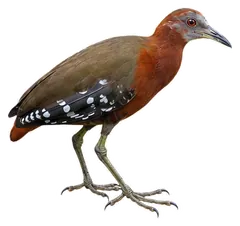 Grey-throated RailCanirallus oculeus
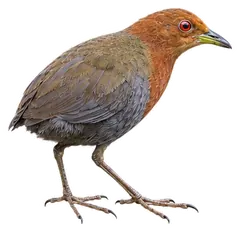 Chestnut-headed CrakeAnurolimnas castaneiceps
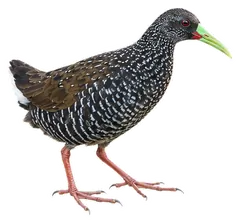 Spotted RailPardirallus maculatus
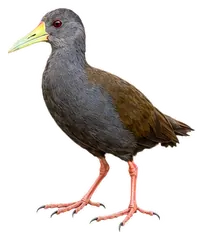 Blackish RailPardirallus nigricans
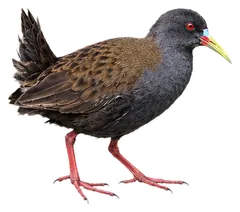 Plumbeous RailPardirallus sanguinolentus
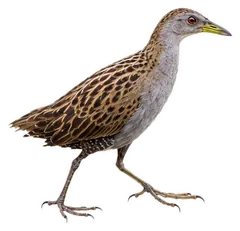 Ash-throated CrakeMustelirallus albicollis
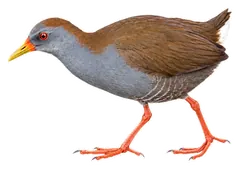 Zapata RailMustelirallus cerverai
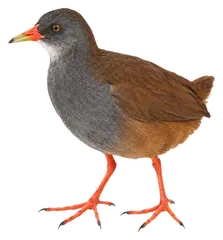 Colombian CrakeMustelirallus colombianus
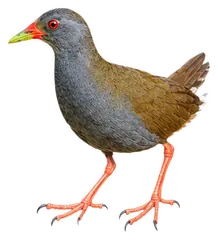 Paint-billed CrakeMustelirallus erythrops
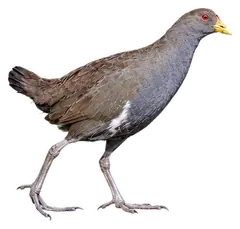
Download illustration
Free to use with credit: “Illustration: Bird Album (birdalbum.com)”. Drawn by AI from reference photos. ↗
Heard it but can't see it? Mingji identifies birds by sound and photo, on your phone.
In other languages
- EnglishTasmanian Nativehen
- 简体中文绿水鸡
- 繁體中文塔斯馬尼亞水雞
- 日本語タスマニアオグロバン
- DeutschGrünfuß-Teichhuhn
- FrançaisGallinule de Tasmanie
- EspañolGallineta de Tasmania
- Portuguêsgalinha-de-água-da-tasmânia
- ItalianoGallinella di Tasmania
- NederlandsTasmaans Waterhoen
- РусскийТасманийская камышница
- Svenskatasmanrörhöna
- DanskTasmansk Rørhøne
- Polskikureczka andamańska