 Bird Album
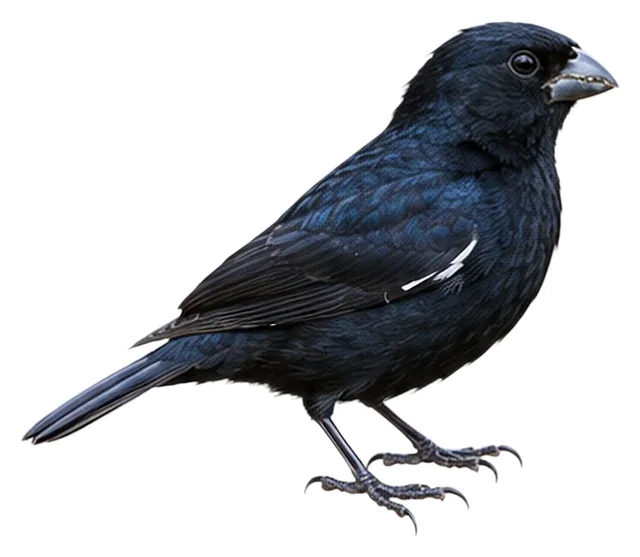
Variable Seedeater
Sporophila corvina (Sclater, PL, 1860)
10 cmLength11 gWeight
The variable seedeater (Sporophila corvina) is a passerine bird which breeds from southern Mexico through Central America to the Chocó of northwestern South America.
Busiest months: February–March · Most records: Costa Rica, Panama, Ecuador
Where and when it's recorded

Variable Seedeater has been recorded at 279 of the 8,171 birding hotspots we track, in 10 countries and regions.
Records by month Northern Hemisphere
Where it's recorded most
- Arenal Observatory LodgeCosta Rica9,739 records
- Estación Biológica La Selva-OTSCosta Rica7,564 records
- Ammo Dump PondsPanama3,899 records
More places
- Rancho NaturalistaCosta Rica2,977 records
- Refugio mixto Caño NegroCosta Rica2,516 records
- Wilson Botanical GardenCosta Rica2,423 records
- Selva Verde LodgeCosta Rica2,170 records
- Gamboa Rainforest ReservePanama1,920 records
- Tranquilo Bay Eco-Adventure LodgePanama1,800 records
- Esquinas Rainforest LodgeCosta Rica1,724 records
Countries and regions with the most records
eBird records via GBIF up to 2024-12-31. A record means someone listed it; more records partly mean more birders, not more birds.
About
The variable seedeater (Sporophila corvina) is a passerine bird which breeds from southern Mexico through Central America to the Chocó of northwestern South America. The taxonomy is confusing, and it was formerly considered a subspecies of Sporophila americana (see Taxonomy). Even within the variable seedeater as presently defined, there are great variations in plumage.
Excerpt from Wikipedia, CC BY-SA 4.0 · authors · Read more on Wikipedia
Questions
How big is the Variable Seedeater?
The Variable Seedeater is about 10 cm long and weighs around 11 g.
Where does the Variable Seedeater live?
Its breeding range: Middle America, South America: eastern Mexico to Peru. It is most often recorded in Costa Rica, Panama and Ecuador.
When is the best time to see the Variable Seedeater?
At the hotspots we track, it is recorded most in February and March (Northern Hemisphere).
Is the Variable Seedeater endangered?
The IUCN Red List classifies the Variable Seedeater as Least Concern.
What does the Variable Seedeater eat?
Main food: Seeds.
What family is the Variable Seedeater in?
It belongs to the family Tanagers & Allies (Thraupidae), order Passerines (Passeriformes).
At a glance
- Length
- 10 cm
- Weight
- 11 g
- Habitat
- Towns & farmland
- Diet
- Seeds
- Lifestyle
- Perches in trees
- Migration
- Partial migrant
- Conservation
- Least Concern
More measurements
- Wing
- 53 mm
- Tail
- 43 mm
- Bill
- 11 mm
- Tarsus
- 17 mm
Averages from the AVONET dataset; length from field guides where available.
Range
Middle America, South America: eastern Mexico to Peru
Breeding range, IOC World Bird List 15.2
Classification
- Order
- Passerines Passeriformes
- Family
- Tanagers & Allies Thraupidae
- Genus
- Sporophila
Other birds in the genus Sporophila
 Lesson's SeedeaterSporophila bouvronides
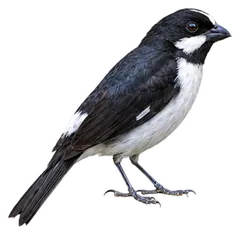 Lined SeedeaterSporophila lineola
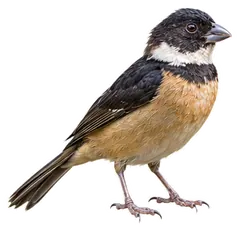 Cinnamon-rumped SeedeaterSporophila torqueola
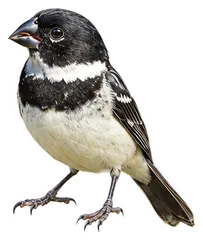 Morelet's SeedeaterSporophila morelleti
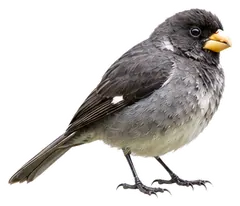 Grey SeedeaterSporophila intermedia
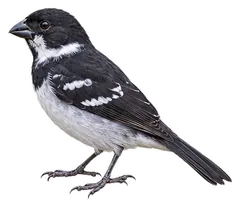 Wing-barred SeedeaterSporophila americana
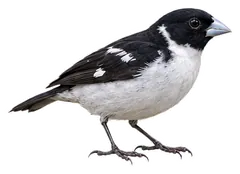 White-naped SeedeaterSporophila fringilloides
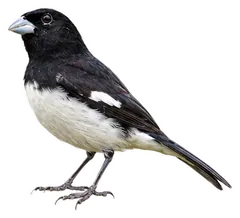 Black-and-white SeedeaterSporophila luctuosa
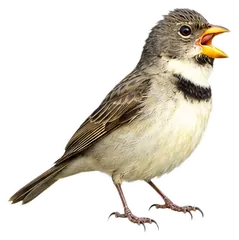 Double-collared SeedeaterSporophila caerulescens
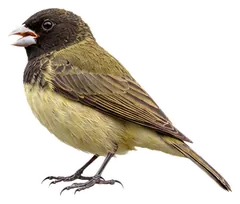 Yellow-bellied SeedeaterSporophila nigricollis
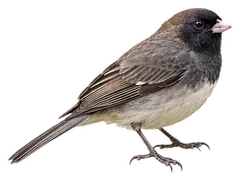 Dubois's SeedeaterSporophila ardesiaca
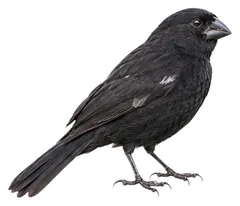 Thick-billed Seed FinchSporophila funerea
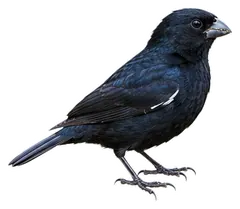
Download illustration
Free to use with credit: “Illustration: Bird Album (birdalbum.com)”. Drawn by AI from a reference photo by Rolando Chavez. ↗
Heard it but can't see it? Mingji identifies birds by sound and photo, on your phone.
In other languages
- EnglishVariable Seedeater
- 简体中文黑食籽雀
- 繁體中文雜色食籽雀
- 日本語カワリヒメウソ
- DeutschDunkelspelzer
- FrançaisSporophile variable
- EspañolSemillero corvino
- Portuguêspapa-capim-corvino
- ItalianoBeccasemi variabile
- NederlandsNoordelijk Bont Dikbekje
- РусскийЧёрный просяночник
- Svenskavariabel frötangara
- DanskBrilleklerkefugl
- Polskiziarnojadek kruczy