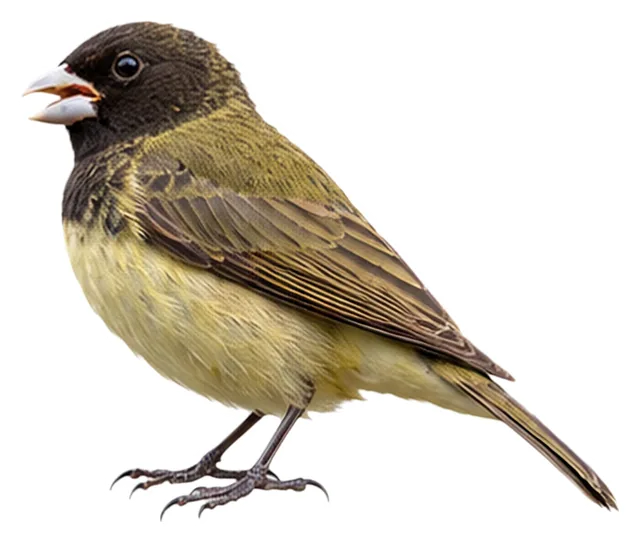
Yellow-bellied Seedeater
Sporophila nigricollis (Vieillot, 1823)
8.5–10 cmLength9.6 gWeight
The yellow-bellied seedeater (Sporophila nigricollis) is a species of bird in the family Thraupidae, the tanagers and allies.
Busiest months: February–March, May and October–November · Most records: Colombia, Ecuador, Panama
Where and when it's recorded
Busiest months: February–March, May and October–November · Most records: Colombia, Ecuador, Panama

Yellow-bellied Seedeater has been recorded at 456 of the 8,276 birding hotspots we track, in 16 countries and regions.
Records by month Northern Hemisphere
Where it's recorded most
- Ammo Dump PondsPanama1,607 records
- RN Laguna de SonsoColombia1,247 records
- Refugio Paz de las AvesEcuador1,036 records
More places
- Mindo – Vía a las cascadasEcuador998 records
- Parque Tematico Cafetero Finca La Pedregoza, San Antonio del TequendamaColombia986 records
- Hotel Tinamú Birding Nature ReserveColombia902 records
- SFF Otún QuimbayaColombia899 records
- Camino Montezuma – Montezuma Rainforest LodgeColombia894 records
- Las Tangaras ProAves ReserveColombia830 records
- Reserva Mashpi-AmagusaEcuador817 records
Countries and regions with the most records
eBird records via GBIF up to 2024-12-31. A record means someone listed it; more records partly mean more birders, not more birds.
About
The yellow-bellied seedeater (Sporophila nigricollis) is a species of bird in the family Thraupidae, the tanagers and allies. It is found in Costa Rica, Panama, on Trinidad, in the Lesser Antilles, and in every South American country except Chile and Uruguay. However, it has been found in Argentina only as a vagrant and reports from Paraguay are unconfirmed.
Excerpt from Wikipedia, CC BY-SA 4.0 · authors · Read more on Wikipedia
Questions
How big is the Yellow-bellied Seedeater?
The Yellow-bellied Seedeater is about 8.5–10 cm long and weighs around 9.6 g.
Where does the Yellow-bellied Seedeater live?
Its breeding range: Middle America, South America: Costa Rica to Bolivia. It is most often recorded in Colombia, Ecuador and Panama.
When is the best time to see the Yellow-bellied Seedeater?
At the hotspots we track, it is recorded most in February, March, May, October and November (Northern Hemisphere).
Is the Yellow-bellied Seedeater endangered?
The IUCN Red List classifies the Yellow-bellied Seedeater as Least Concern.
What does the Yellow-bellied Seedeater eat?
Main food: Seeds.
What family is the Yellow-bellied Seedeater in?
It belongs to the family Tanagers & Allies (Thraupidae), order Passerines (Passeriformes).
At a glance
- Length
- 8.5–10 cm
- Weight
- 9.6 g
- Habitat
- Shrubland
- Diet
- Seeds
- Lifestyle
- Perches in trees
- Migration
- Resident (barely migrates)
- Conservation
- Least Concern
More measurements
- Wing
- 52 mm
- Tail
- 43 mm
- Bill
- 9 mm
- Tarsus
- 14 mm
Averages from the AVONET dataset; length from field guides where available.
Range
Middle America, South America: Costa Rica to Bolivia
Breeding range, IOC World Bird List 15.2
Classification
- Order
- Passerines Passeriformes
- Family
- Tanagers & Allies Thraupidae
- Genus
- Sporophila
Other birds in the genus Sporophila
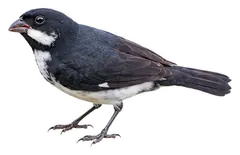 Lesson's SeedeaterSporophila bouvronides
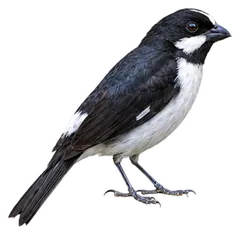 Lined SeedeaterSporophila lineola
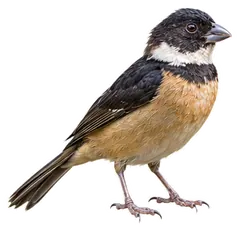 Cinnamon-rumped SeedeaterSporophila torqueola
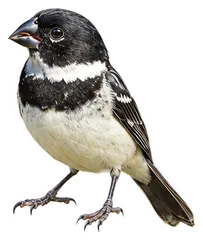 Morelet's SeedeaterSporophila morelleti
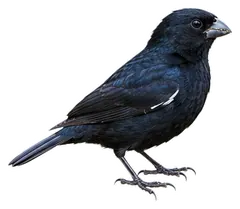 Variable SeedeaterSporophila corvina
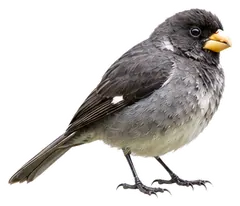 Grey SeedeaterSporophila intermedia
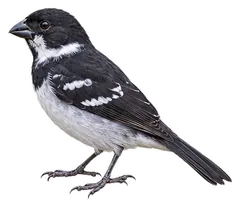 Wing-barred SeedeaterSporophila americana
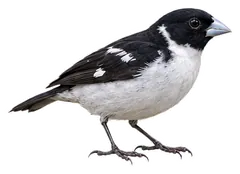 White-naped SeedeaterSporophila fringilloides
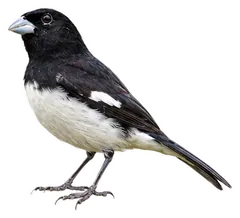 Black-and-white SeedeaterSporophila luctuosa
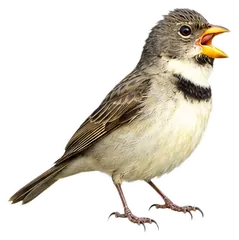 Double-collared SeedeaterSporophila caerulescens
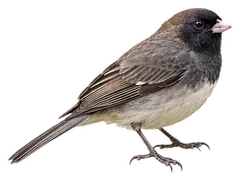 Dubois's SeedeaterSporophila ardesiaca
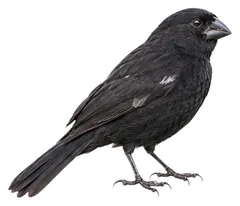 Thick-billed Seed FinchSporophila funerea
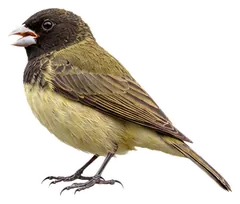
Download illustration
Free to use with credit: “Illustration: Bird Album (birdalbum.com)”. Drawn by AI from a reference photo by Joao Quental. ↗
Heard it but can't see it? Mingji identifies birds by sound and photo, on your phone.
In other languages
- EnglishYellow-bellied Seedeater
- 简体中文黄腹食籽雀
- 繁體中文黃腹食籽雀
- 日本語キバラヒメウソ
- DeutschGelbbauchspelzer
- FrançaisSporophile à ventre jaune
- EspañolSemillero ventriamarillo
- Portuguêsbaiano
- ItalianoBeccasemi panciagialla
- NederlandsGeelbuikdikbekje
- РусскийЖелтобрюхий просяночник
- Svenskagulbukig frötangara
- DanskGulbuget Klerkefinke
- Polskiziarnojadek czarnolicy