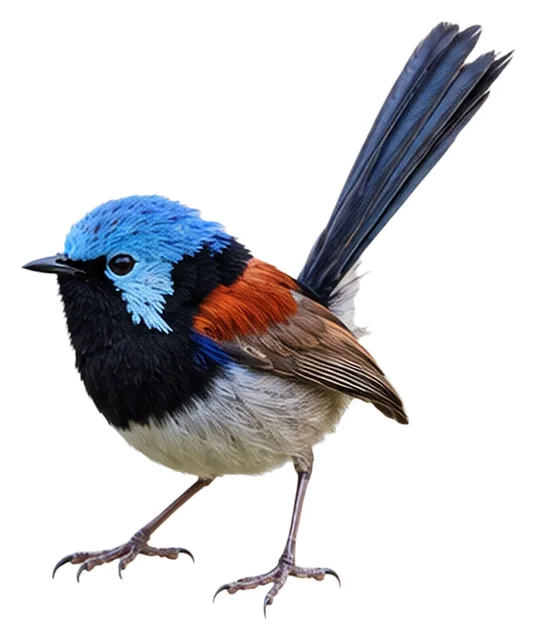
Variegated Fairywren
Malurus lamberti Vigors & Horsfield, 1827
14–15 cmLength8 gWeight
The variegated fairywren (Malurus lamberti) is a fairywren that lives in eastern Australia.
Busiest months: September–October · Most records: Australia
Where and when it's recorded
Busiest months: September–October · Most records: Australia

Variegated Fairywren has been recorded at 76 of the 8,276 birding hotspots we track, in 1 country or region.
Records by month Southern Hemisphere
Where it's recorded most
- Sandy Camp Road WetlandsAustralia3,450 records
- Oxley Creek CommonAustralia2,489 records
- Lake Samsonvale – Golds Scrub LaneAustralia1,972 records
More places
- Eagleby WetlandsAustralia881 records
- Minnippi ParklandsAustralia721 records
- Anstead Bushland ReserveAustralia645 records
- Lake Samsonvale – Postmans TrackAustralia624 records
- Tinchi Tamba Wetlands ReserveAustralia620 records
- Gold Creek ReservoirAustralia589 records
- Cattai WetlandsAustralia581 records
Countries and regions with the most records
eBird records via GBIF up to 2024-12-31. A record means someone listed it; more records partly mean more birders, not more birds.
About
The variegated fairywren (Malurus lamberti) is a fairywren that lives in eastern Australia. As a species that exhibits sexual dimorphism, the brightly coloured breeding male has chestnut shoulders and azure crown and ear coverts, while non-breeding males, females and juveniles have predominantly grey-brown plumage, although females of two subspecies have mainly blue-grey plumage.
Excerpt from Wikipedia, CC BY-SA 4.0 · authors · Read more on Wikipedia
Questions
How big is the Variegated Fairywren?
The Variegated Fairywren is about 14–15 cm long and weighs around 8 g.
Where does the Variegated Fairywren live?
Its breeding range: Australasia: southeastern Queensland to southeastern New South Wales (southeastern Australia). It is most often recorded in Australia.
When is the best time to see the Variegated Fairywren?
At the hotspots we track, it is recorded most in September and October (Southern Hemisphere).
Is the Variegated Fairywren endangered?
The IUCN Red List classifies the Variegated Fairywren as Least Concern.
What does the Variegated Fairywren eat?
Main food: Insects & other invertebrates.
What family is the Variegated Fairywren in?
It belongs to the family Australasian Wrens (Maluridae), order Passerines (Passeriformes).
At a glance
- Length
- 14–15 cm
- Weight
- 8 g
- Habitat
- Shrubland
- Diet
- Insects & other invertebrates
- Lifestyle
- Perches in trees
- Migration
- Resident (barely migrates)
- Conservation
- Least Concern
More measurements
- Wing
- 48 mm
- Tail
- 76 mm
- Bill
- 12 mm
- Tarsus
- 21 mm
Averages from the AVONET dataset; length from field guides where available.
Range
Australasia: southeastern Queensland to southeastern New South Wales (southeastern Australia)
Breeding range, IOC World Bird List 15.2
Classification
- Order
- Passerines Passeriformes
- Family
- Australasian Wrens Maluridae
- Genus
- Malurus
Other birds in the genus Malurus
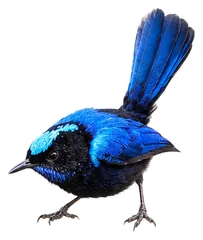 Emperor FairywrenMalurus cyanocephalus
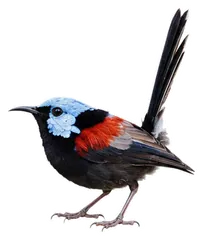 Lovely FairywrenMalurus amabilis
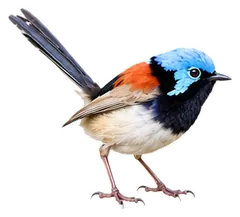 Purple-backed FairywrenMalurus assimilis
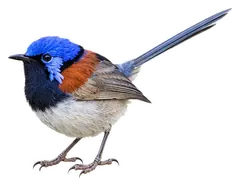 Blue-breasted FairywrenMalurus pulcherrimus
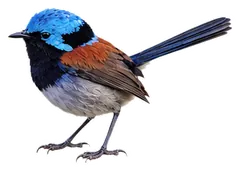 Red-winged FairywrenMalurus elegans
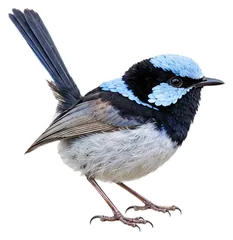 Superb FairywrenMalurus cyaneus
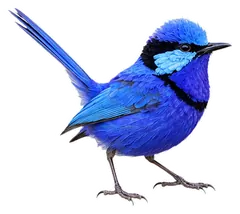 Splendid FairywrenMalurus splendens
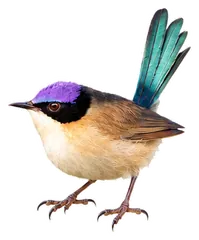 Purple-crowned FairywrenMalurus coronatus
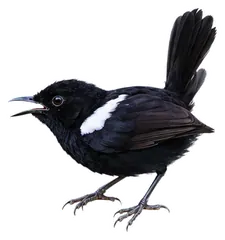 White-shouldered FairywrenMalurus alboscapulatus
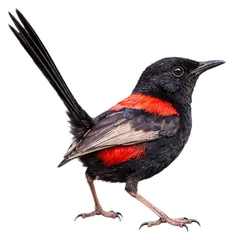 Red-backed FairywrenMalurus melanocephalus
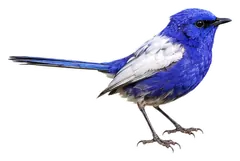 White-winged FairywrenMalurus leucopterus
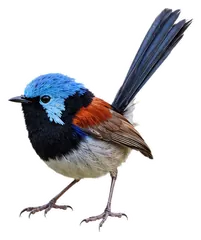
Download illustration
Free to use with credit: “Illustration: Bird Album (birdalbum.com)”. Drawn by AI from a reference photo by samzhang. ↗
Heard it but can't see it? Mingji identifies birds by sound and photo, on your phone.
In other languages
- EnglishVariegated Fairywren
- 简体中文杂色细尾鹩莺
- 繁體中文雜色細尾鷯鶯
- 日本語タサイオーストラリアムシクイ
- DeutschWeißbauch-Staffelschwanz
- FrançaisMérion de Lambert
- EspañolMaluro variegado
- Portuguêsfadinha-variegada
- ItalianoScricciolo fatato variegato
- NederlandsBont Elfje
- РусскийРазноцветный малюр
- Svenskabrokblåsmyg
- DanskAlfesmutte
- Polskichwostka rudoskrzydła