 Bird Album
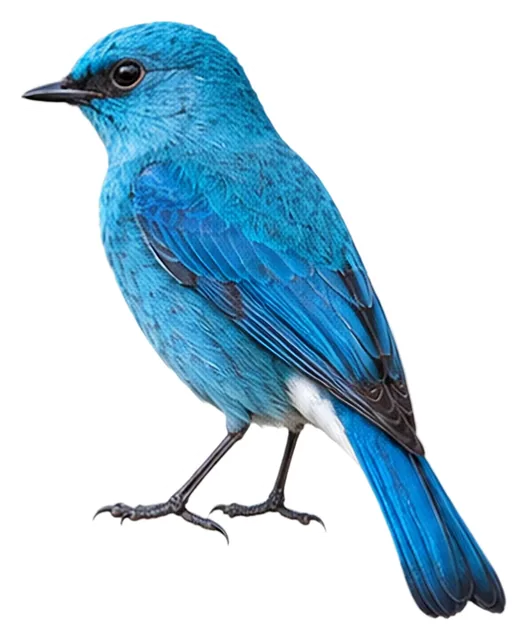
Verditer Flycatcher
Eumyias thalassinus (Swainson, 1838)
13–16 cmLength18 gWeight
This small flycatcher is bright verditer-blue overall, with a dark patch on the male's lores.
Busiest months: February and December · Most records: India, Thailand, China
How to identify
Field marks
- Male is bright verditer-blue overall
- Adult male has a dark patch on the lores and above the base of the bill
- White terminal patches on the undertail-coverts
- Black bill, legs and feet; brown iris
Male, female and young
Female resembles the male but is duller, with a gray-blue wash on the underparts; juvenile is gray with brown spots.
Where and when it's recorded

Verditer Flycatcher has been recorded at 861 of the 8,171 birding hotspots we track, in 17 countries and regions.
Records by month Northern Hemisphere
Where it's recorded most
- SattalIndia938 records
- GKVK CampusIndia745 records
- Sinhagad ValleyIndia676 records
More places
- Rabindra SarovarIndia601 records
- Bukit FraserMalaysia589 records
- Nandi HillsIndia568 records
- Khao Yai NPThailand534 records
- Kaeng Krachan NPThailand527 records
- Sangla and AreaNepal515 records
- Doi Pha Hom Pok NP – Doi Lang (W), AKA Doi San JuThailand482 records
Countries and regions with the most records
eBird records via GBIF up to 2024-12-31. A record means someone listed it; more records partly mean more birders, not more birds.
About
The verditer flycatcher (Eumyias thalassinus) is an Old World flycatcher. It is found from the Himalayas through Southeast Asia to Sumatra. This species is named after its distinctive shade of copper-sulphate blue and has a dark patch between the eyes and above the bill base.
Excerpt from Wikipedia, CC BY-SA 4.0 · authors · Read more on Wikipedia
Questions
How big is the Verditer Flycatcher?
The Verditer Flycatcher is about 13–16 cm long and weighs around 18 g.
Where does the Verditer Flycatcher live?
Its breeding range: Oriental: Himalayas from Pakistan to east-central China, Southeast Asia, Sumatra and Borneo. It is most often recorded in India, Thailand and China.
When is the best time to see the Verditer Flycatcher?
At the hotspots we track, it is recorded most in February and December (Northern Hemisphere).
Is the Verditer Flycatcher endangered?
The IUCN Red List classifies the Verditer Flycatcher as Least Concern.
What does the Verditer Flycatcher eat?
Main food: Insects & other invertebrates.
What family is the Verditer Flycatcher in?
It belongs to the family Chats, Old World Flycatchers (Muscicapidae), order Passerines (Passeriformes).
At a glance
- Length
- 13–16 cm
- Weight
- 18 g
- Habitat
- Forest
- Diet
- Insects & other invertebrates
- Lifestyle
- Perches in trees
- Migration
- Resident (barely migrates)
- Conservation
- Least Concern
More measurements
- Wing
- 76 mm
- Tail
- 61 mm
- Bill
- 12 mm
- Tarsus
- 14 mm
Averages from the AVONET dataset; length from field guides where available.
Range
Oriental: Himalayas from Pakistan to east-central China, Southeast Asia, Sumatra and Borneo
Breeding range, IOC World Bird List 15.2
Subspecies · 1
- Eumyias thalassinus thalassinus Himalayas to ec China, Indochina, n Thailand and c Myanmar
Classification
- Order
- Passerines Passeriformes
- Family
- Chats, Old World Flycatchers Muscicapidae
- Genus
- Eumyias
Other birds in the genus Eumyias
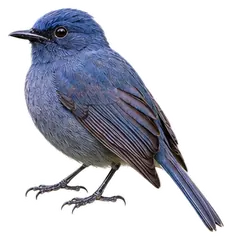 Nilgiri FlycatcherEumyias albicaudatus
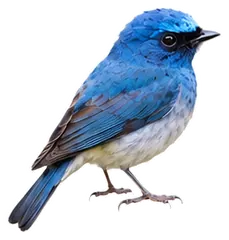 Indigo FlycatcherEumyias indigo
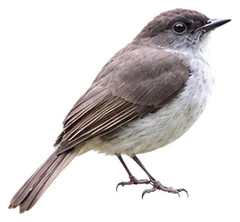 Buru Jungle FlycatcherEumyias additus
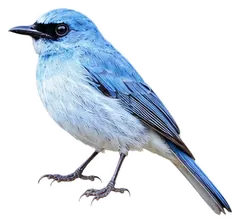 Turquoise FlycatcherEumyias panayensis
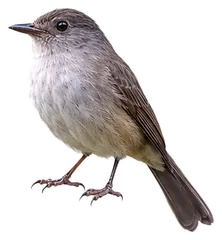 Matinan Blue FlycatcherEumyias sanfordi
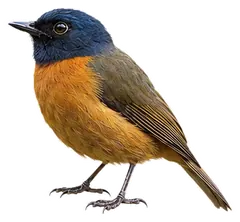 Blue-fronted Blue FlycatcherEumyias hoevelli
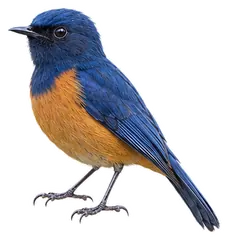 Timor Blue FlycatcherEumyias hyacinthinus
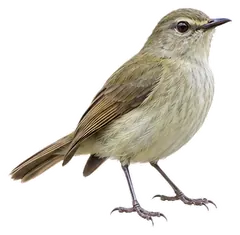 Flores Jungle FlycatcherEumyias oscillans
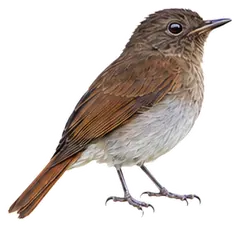 Sumba Jungle FlycatcherEumyias stresemanni
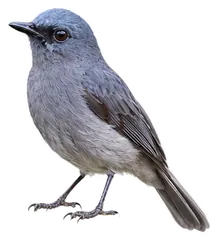 Dull-blue FlycatcherEumyias sordidus
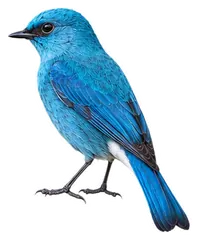
Download illustration
Free to use with credit: “Illustration: Bird Album (birdalbum.com)”. Drawn by AI from a reference photo by Sanjoykumar99. ↗

Heard it but can't see it? Mingji identifies birds by sound and photo, on your phone.
In other languages
- EnglishVerditer Flycatcher
- 简体中文铜蓝鹟
- 繁體中文銅藍鶲
- 日本語ロクショウヒタキ
- 한국어파랑딱새
- DeutschLazulischnäpper
- FrançaisGobemouche vert-de-gris
- EspañolPapamoscas verdín
- Portuguêspapa-moscas-verde-mar
- ItalianoPigliamosche azzurrino
- NederlandsAzuurvliegenvanger
- РусскийНебесная мухоловка
- Svenskaturkosflugsnappare
- DanskIrfluesnapper
- Polskimodrówka seledynowa