 Bird Album
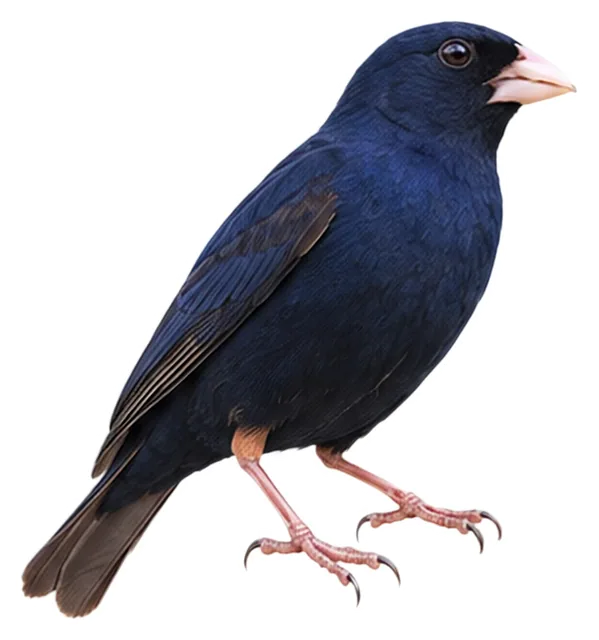
Village Indigobird
Vidua chalybeata (Müller, PLS, 1776)
≈11 cmLength12 gWeight
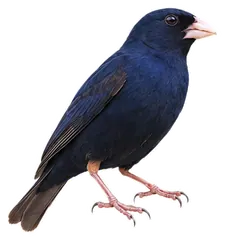
The adult male has blue-black or green-black breeding plumage and orange-red legs.
Most records: Kenya, South Africa, Tanzania
How to identify
Field marks
- Adult male has green-black or blue-black breeding plumage
- Adult male has orange-red legs
- Female has a yellowish bill and red legs
- Female has brown upperparts with streaks
Male, female and young
The female has brown upperparts with streaks, pale yellow underparts and a white supercilium; immatures are plainer and lack the white supercilium.
Voice
The male sings rapidly with trills and also mimics its host’s “chick-pea-pea-pea”.
Where and when it's recorded

Village Indigobird has been recorded at 388 of the 8,171 birding hotspots we track, in 34 countries and regions.
Records by month Southern Hemisphere
Where it's recorded most
- Campement de WassadouSenegal228 records
- Nairobi River @ National Museums of KenyaKenya225 records
- Zaagkuildrift RdSouth Africa223 records
More places
- Parc Urbain Bangr-WeoogoBurkina Faso198 records
- Mandegee FarmKenya139 records
- Nguuni Nature SanctuaryKenya129 records
- Kruger NP – Skukuza CampSouth Africa129 records
- Nairobi NPKenya118 records
- Ngor – Hotel Le CalaoSenegal111 records
- Lake Manyara NPTanzania95 records
Countries and regions with the most records
eBird records via GBIF up to 2024-12-31. A record means someone listed it; more records partly mean more birders, not more birds.
About
The village indigobird (Vidua chalybeata), also known as the steelblue widowfinch or (in U.S. aviculture) the Combassou finch, is a small songbird belonging to the family Viduidae.
Excerpt from Wikipedia, CC BY-SA 4.0 · authors · Read more on Wikipedia
Questions
How big is the Village Indigobird?
The Village Indigobird is about ≈11 cm long and weighs around 12 g.
Where does the Village Indigobird live?
Its breeding range: Africa: western, central, southeastern. It is most often recorded in Kenya, South Africa and Tanzania.
Is the Village Indigobird endangered?
The IUCN Red List classifies the Village Indigobird as Least Concern.
What does the Village Indigobird eat?
Main food: Seeds.
What family is the Village Indigobird in?
It belongs to the family Indigobirds, Whydahs (Viduidae), order Passerines (Passeriformes).
At a glance
- Length
- ≈11 cm
- Weight
- 12 g
- Habitat
- Shrubland
- Diet
- Seeds
- Lifestyle
- Active on the ground
- Migration
- Resident (barely migrates)
- Conservation
- Least Concern
More measurements
- Wing
- 64 mm
- Tail
- 40 mm
- Bill
- 10 mm
- Tarsus
- 13 mm
Averages from the AVONET dataset; length from field guides where available.
Range
Africa: western, central, southeastern
Breeding range, IOC World Bird List 15.2
Classification
- Order
- Passerines Passeriformes
- Family
- Indigobirds, Whydahs Viduidae
- Genus
- Vidua
Other birds in the genus Vidua
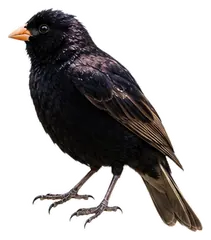 Purple IndigobirdVidua purpurascens
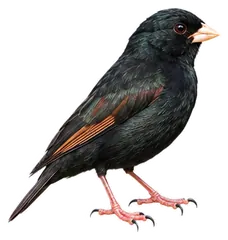 Jambandu IndigobirdVidua raricola
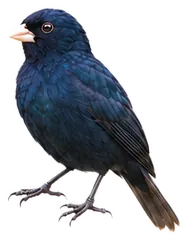 Barka IndigobirdVidua larvaticola
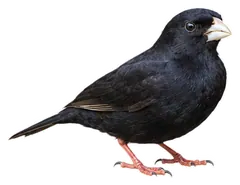 Dusky IndigobirdVidua funerea
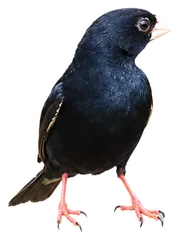 Zambezi IndigobirdVidua codringtoni
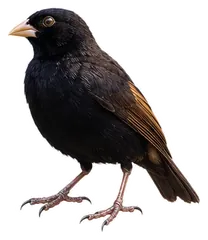 Wilson's IndigobirdVidua wilsoni
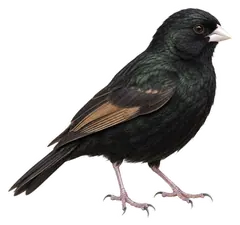 Quailfinch IndigobirdVidua nigeriae
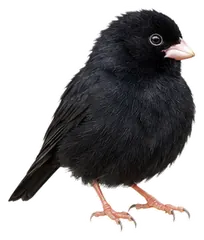 Jos Plateau IndigobirdVidua maryae
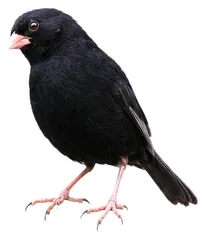 Cameroon IndigobirdVidua camerunensis
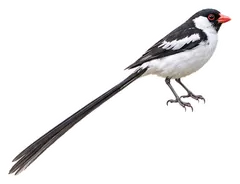 Pin-tailed WhydahVidua macroura
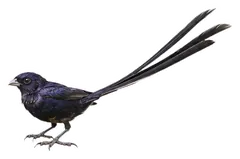 Steel-blue WhydahVidua hypocherina
 Straw-tailed WhydahVidua fischeri
Download illustration
Free to use with credit: “Illustration: Bird Album (birdalbum.com)”. Drawn by AI from a reference photo by mlanguy. ↗
Heard it but can't see it? Mingji identifies birds by sound and photo, on your phone.