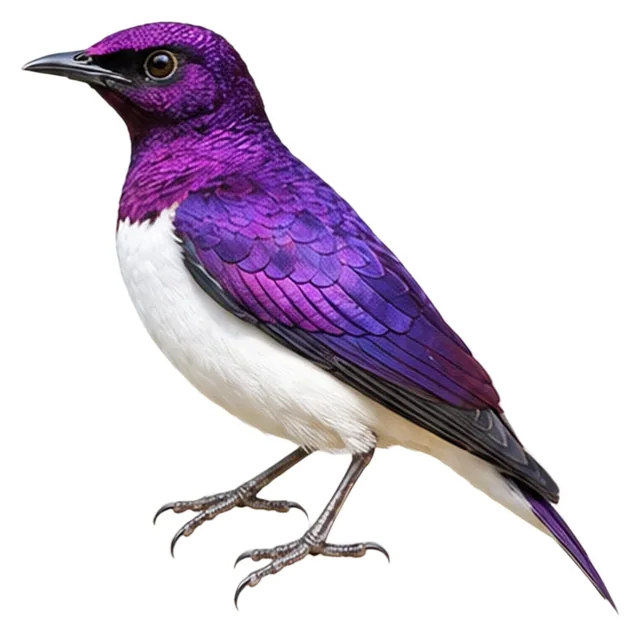
Violet-backed Starling
Cinnyricinclus leucogaster (Boddaert, 1783)
18 cmLength44 gWeight
The violet-backed starling (Cinnyricinclus leucogaster), also known as the plum-coloured starling or amethyst starling, or Ndambamukula in the Venda language, is a relatively small species (17 cm) of starling in the family Sturnidae.
Busiest months: November · Most records: South Africa, Kenya, Uganda
Where and when it's recorded
Busiest months: November · Most records: South Africa, Kenya, Uganda

Violet-backed Starling has been recorded at 417 of the 8,276 birding hotspots we track, in 34 countries and regions.
Records by month Southern Hemisphere
Where it's recorded most
- Kruger NP – Skukuza CampSouth Africa437 records
- Mkhuze GRSouth Africa409 records
- Kruger NP – Satara CampSouth Africa234 records
More places
- Nairobi NPKenya208 records
- Maasai Mara NRKenya197 records
- Nguuni Nature SanctuaryKenya192 records
- Lake Mburo NPUganda185 records
- Kibale NPUganda164 records
- Amurum Forest ReserveNigeria162 records
- Shai Hills Resource ReserveGhana156 records
Countries and regions with the most records
eBird records via GBIF up to 2024-12-31. A record means someone listed it; more records partly mean more birders, not more birds.
About
The violet-backed starling (Cinnyricinclus leucogaster), also known as the plum-coloured starling or amethyst starling, or Ndambamukula in the Venda language, is a relatively small species (17 cm) of starling in the family Sturnidae. It is the only member of the genus Cinnyricinclus. This strongly sexually dimorphic species is found widely in the woodlands and savannah forest edges of mainland sub-Saharan Africa.
Excerpt from Wikipedia, CC BY-SA 4.0 · authors · Read more on Wikipedia
Questions
How big is the Violet-backed Starling?
The Violet-backed Starling is about 18 cm long and weighs around 44 g.
Where does the Violet-backed Starling live?
Its breeding range: Africa: widespread, also southwestern Arabian Peninsula. It is most often recorded in South Africa, Kenya and Uganda.
When is the best time to see the Violet-backed Starling?
At the hotspots we track, it is recorded most in November (Southern Hemisphere).
Is the Violet-backed Starling endangered?
The IUCN Red List classifies the Violet-backed Starling as Least Concern.
What does the Violet-backed Starling eat?
Main food: Fruit.
What family is the Violet-backed Starling in?
It belongs to the family Starlings, Rhabdornises (Sturnidae), order Passerines (Passeriformes).
At a glance
- Length
- 18 cm
- Weight
- 44 g
- Habitat
- Forest
- Diet
- Fruit
- Lifestyle
- Perches in trees
- Migration
- Migratory
- Conservation
- Least Concern
More measurements
- Wing
- 105 mm
- Tail
- 61 mm
- Bill
- 19 mm
- Tarsus
- 21 mm
Averages from the AVONET dataset; length from field guides where available.
Range
Africa: widespread, also southwestern Arabian Peninsula
Breeding range, IOC World Bird List 15.2
Classification
- Order
- Passerines Passeriformes
- Family
- Starlings, Rhabdornises Sturnidae
- Genus
- Cinnyricinclus
More from the family Starlings, Rhabdornises
 Metallic StarlingAplonis metallica
 Yellow-eyed StarlingAplonis mystacea
 Singing StarlingAplonis cantoroides
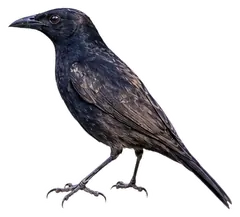 Tanimbar StarlingAplonis crassa
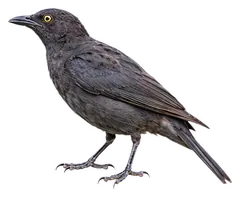 Atoll StarlingAplonis feadensis
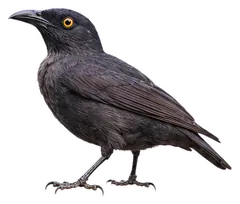 Rennell StarlingAplonis insularis
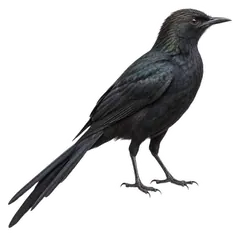 Long-tailed StarlingAplonis magna
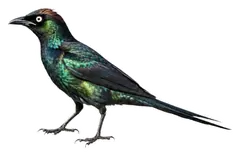 White-eyed StarlingAplonis brunneicapillus
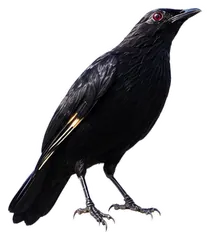 Brown-winged StarlingAplonis grandis
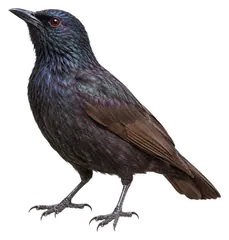 Makira StarlingAplonis dichroa
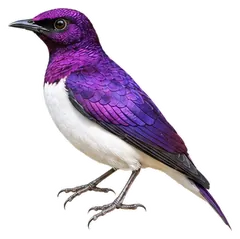
Download illustration
Free to use with credit: “Illustration: Bird Album (birdalbum.com)”. Drawn by AI from a reference photo by Derek Keats. ↗
Heard it but can't see it? Mingji identifies birds by sound and photo, on your phone.