 Bird Album
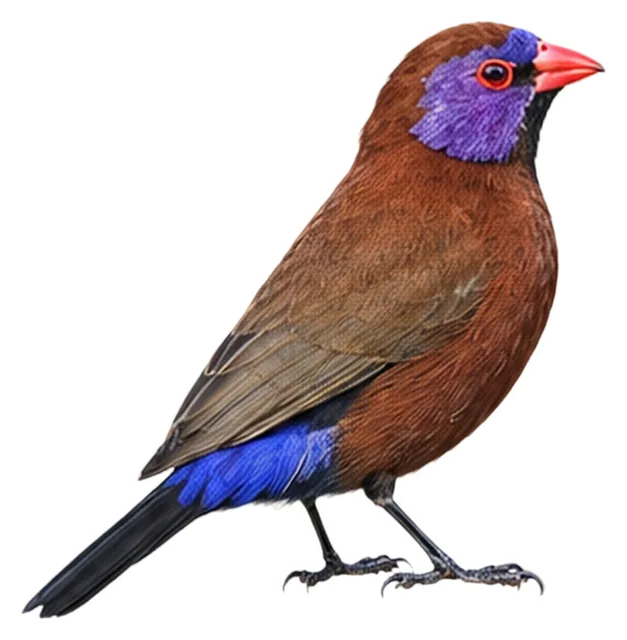
Violet-eared Waxbill
Granatina granatina (Linnaeus, 1766)
12 gWeight
The violet-eared waxbill or common grenadier (Granatina granatina) is a common species of estrildid finch found in drier land of Southern Africa.
Busiest months: August–November · Most records: Namibia, South Africa, Botswana
Where and when it's recorded

Violet-eared Waxbill has been recorded at 88 of the 8,171 birding hotspots we track, in 6 countries and regions.
Records by month Southern Hemisphere
Where it's recorded most
- Polokwane GRSouth Africa289 records
- Zaagkuildrift RdSouth Africa266 records
- Pilanesberg NPSouth Africa196 records
More places
- Daan Viljoen Game ReserveNamibia175 records
- Avis DamNamibia149 records
- Okonjima Nature ReserveNamibia142 records
- Bwabwata NP – Mahango riverside loopNamibia135 records
- Madikwe GRSouth Africa131 records
- Ondudu LodgeNamibia119 records
- Etosha NP – Halali CampNamibia118 records
Countries and regions with the most records
eBird records via GBIF up to 2024-12-31. A record means someone listed it; more records partly mean more birders, not more birds.
About
The violet-eared waxbill or common grenadier (Granatina granatina) is a common species of estrildid finch found in drier land of Southern Africa.
Excerpt from Wikipedia, CC BY-SA 4.0 · authors · Read more on Wikipedia
Questions
How big is the Violet-eared Waxbill?
The Violet-eared Waxbill weighs around 12 g.
Where does the Violet-eared Waxbill live?
Its breeding range: Africa: southern Angola and central Namibia to southwestern Zambia, Zimbabwe, southern Mozambique and northern, northeastern South Africa. It is most often recorded in Namibia, South Africa and Botswana.
When is the best time to see the Violet-eared Waxbill?
At the hotspots we track, it is recorded most in August, September, October and November (Southern Hemisphere).
Is the Violet-eared Waxbill endangered?
The IUCN Red List classifies the Violet-eared Waxbill as Least Concern.
What does the Violet-eared Waxbill eat?
Main food: Omnivore.
What family is the Violet-eared Waxbill in?
It belongs to the family Waxbills, Munias & Allies (Estrildidae), order Passerines (Passeriformes).
At a glance
- Weight
- 12 g
- Habitat
- Shrubland
- Diet
- Omnivore
- Lifestyle
- Active on the ground
- Migration
- Resident (barely migrates)
- Conservation
- Least Concern
More measurements
- Wing
- 56 mm
- Tail
- 65 mm
- Bill
- 10 mm
- Tarsus
- 16 mm
Averages from the AVONET dataset; length from field guides where available.
Range
Africa: southern Angola and central Namibia to southwestern Zambia, Zimbabwe, southern Mozambique and northern, northeastern South Africa
Breeding range, IOC World Bird List 15.2
Classification
- Order
- Passerines Passeriformes
- Family
- Waxbills, Munias & Allies Estrildidae
- Genus
- Granatina
Other birds in the genus Granatina
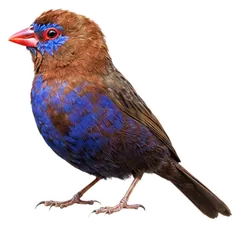 Purple GrenadierGranatina ianthinogaster
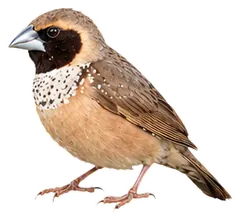 Pictorella MannikinHeteromunia pectoralis
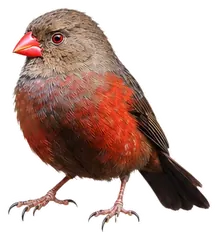 Mountain FiretailOreostruthus fuliginosus
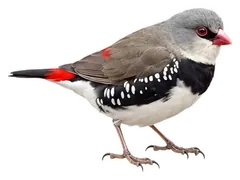 Diamond FiretailStagonopleura guttata
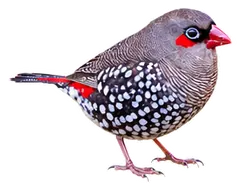 Red-eared FiretailStagonopleura oculata
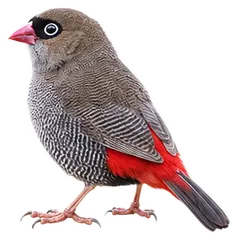 Beautiful FiretailStagonopleura bella
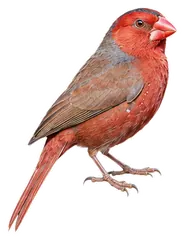 Crimson FinchNeochmia phaeton
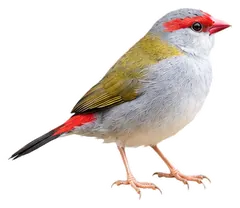 Red-browed FinchNeochmia temporalis
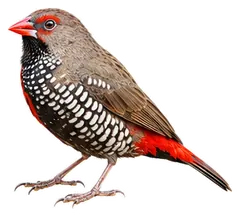 Painted FinchEmblema pictum
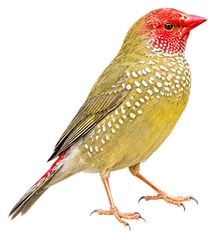 Star FinchEmblema ruficauda
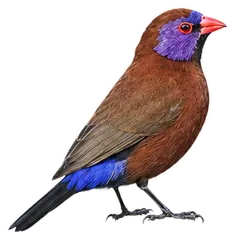
Download illustration
Free to use with credit: “Illustration: Bird Album (birdalbum.com)”. Drawn by AI from a reference photo by Rails and roadtrips. ↗
Heard it but can't see it? Mingji identifies birds by sound and photo, on your phone.