 Bird Album
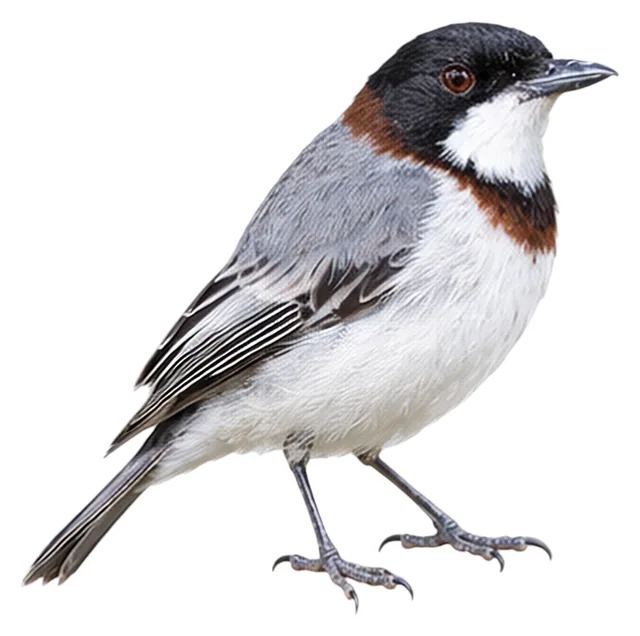
White-breasted Whistler
Pachycephala lanioides Gould, 1840
39 gWeight
The white-breasted whistler (Pachycephala lanioides) is a species of bird in the family Pachycephalidae.
Busiest months: August–October · Most records: Australia
Where and when it's recorded

White-breasted Whistler has been recorded at 7 of the 8,171 birding hotspots we track, in 1 country or region.
Records by month Southern Hemisphere
Where it's recorded most
- Crab Creek MangrovesAustralia1,576 records
- Broome Bird ObservatoryAustralia97 records
- East Point Mangrove BoardwalkAustralia21 records
More places
- Buffalo CreekAustralia16 records
- Roebuck Plains StationAustralia10 records
- East PointAustralia7 records
- Leanyer PondsAustralia4 records
Countries and regions with the most records
eBird records via GBIF up to 2024-12-31. A record means someone listed it; more records partly mean more birders, not more birds.
About
The white-breasted whistler (Pachycephala lanioides) is a species of bird in the family Pachycephalidae.
Excerpt from Wikipedia, CC BY-SA 4.0 · authors · Read more on Wikipedia
Questions
How big is the White-breasted Whistler?
The White-breasted Whistler weighs around 39 g.
Where does the White-breasted Whistler live?
Its breeding range: Australasia: coastal northwest to north-central Australia. It is most often recorded in Australia.
When is the best time to see the White-breasted Whistler?
At the hotspots we track, it is recorded most in August, September and October (Southern Hemisphere).
Is the White-breasted Whistler endangered?
The IUCN Red List classifies the White-breasted Whistler as Least Concern.
What does the White-breasted Whistler eat?
Main food: Insects & other invertebrates.
What family is the White-breasted Whistler in?
It belongs to the family Whistlers & Allies (Pachycephalidae), order Passerines (Passeriformes).
At a glance
- Weight
- 39 g
- Habitat
- Woodland
- Diet
- Insects & other invertebrates
- Lifestyle
- Varied
- Migration
- Resident (barely migrates)
- Conservation
- Least Concern
More measurements
- Wing
- 95 mm
- Tail
- 75 mm
- Bill
- 23 mm
- Tarsus
- 27 mm
Averages from the AVONET dataset; length from field guides where available.
Range
Australasia: coastal northwest to north-central Australia
Breeding range, IOC World Bird List 15.2
Classification
- Order
- Passerines Passeriformes
- Family
- Whistlers & Allies Pachycephalidae
- Genus
- Pachycephala
Other birds in the genus Pachycephala
 Olive WhistlerPachycephala olivacea
 Red-lored WhistlerPachycephala rufogularis
 Gilbert's WhistlerPachycephala inornata
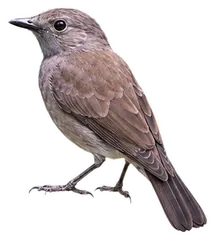 Mangrove WhistlerPachycephala cinerea
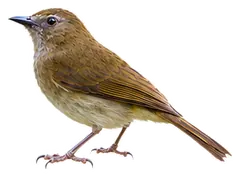 Green-backed WhistlerPachycephala albiventris
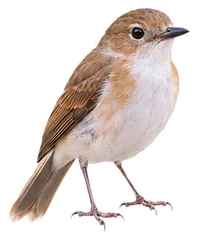 White-vented WhistlerPachycephala homeyeri
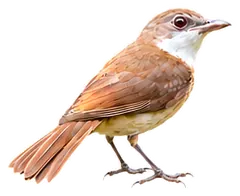 Island WhistlerPachycephala phaionota
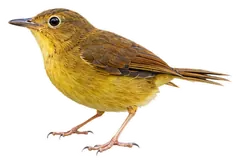 Biak WhistlerPachycephala melanorhyncha
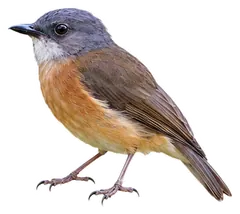 Rusty WhistlerPachycephala hyperythra
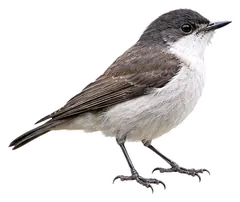 Brown-backed WhistlerPachycephala modesta
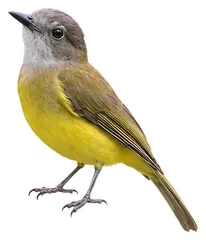 Yellow-bellied WhistlerPachycephala philippinensis
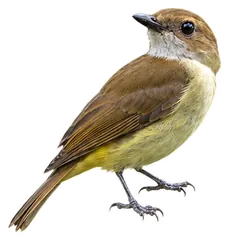 Sulphur-vented WhistlerPachycephala sulfuriventer
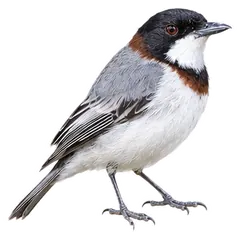
Download illustration
Free to use with credit: “Illustration: Bird Album (birdalbum.com)”. Drawn by AI from a reference photo by Alan Bell. ↗
Heard it but can't see it? Mingji identifies birds by sound and photo, on your phone.
In other languages
- EnglishWhite-breasted Whistler
- 简体中文白胸啸鹟
- 繁體中文白胸嘯鶲
- 日本語シロハラモズヒタキ
- DeutschBraunhals-Dickkopf
- FrançaisSiffleur à bavette blanche
- EspañolSilbador pechiblanco
- Portuguêsassobiadeira-caranguejeira
- ItalianoZufolatore pettobianco
- NederlandsKrabbenfluiter
- РусскийСорокопутовый свистун
- Svenskakrabbvisslare
- DanskKrabbefløjter
- Polskifletówka dzierzbowata