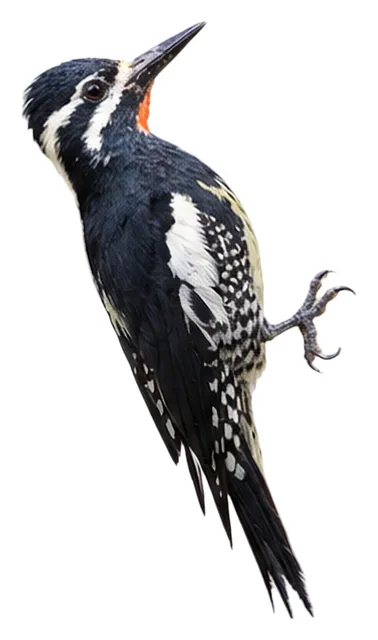
Williamson's Sapsucker
Sphyrapicus thyroideus (Cassin, 1852)
21–25 cmLength48 gWeight
Williamson's sapsucker (Sphyrapicus thyroideus) is a medium-sized woodpecker belonging to the genus Sphyrapicus (sapsuckers).
Busiest months: January and November · Most records: United States, Mexico
Where and when it's recorded
Busiest months: January and November · Most records: United States, Mexico

Williamson's Sapsucker has been recorded at 47 of the 8,276 birding hotspots we track, in 2 countries and regions.
Records by month Northern Hemisphere
Where it's recorded most
- Mt. Lemmon – Rose Canyon and LakeUnited States215 records
- Madera Canyon – Santa Rita LodgeUnited States172 records
- Paton Center for HummingbirdsUnited States112 records
More places
- Cave Creek Canyon – South ForkUnited States106 records
- Intermountain Bird Observatory at Lucky PeakUnited States100 records
- Boyce Thompson ArboretumUnited States92 records
- Ramsey Canyon PreserveUnited States80 records
- Malheur NWR – HeadquartersUnited States57 records
- Reserva de La Chara PintaMexico53 records
- Mt. Tabor ParkUnited States48 records
Countries and regions with the most records
eBird records via GBIF up to 2024-12-31. A record means someone listed it; more records partly mean more birders, not more birds.
About
Williamson's sapsucker (Sphyrapicus thyroideus) is a medium-sized woodpecker belonging to the genus Sphyrapicus (sapsuckers).
Excerpt from Wikipedia, CC BY-SA 4.0 · authors · Read more on Wikipedia
Questions
How big is the Williamson's Sapsucker?
The Williamson's Sapsucker is about 21–25 cm long and weighs around 48 g.
Where does the Williamson's Sapsucker live?
Its breeding range: North America, Middle America: southern British Colombia through western, west-central USA to northern Baja California (Mexico). It is most often recorded in United States and Mexico.
When is the best time to see the Williamson's Sapsucker?
At the hotspots we track, it is recorded most in January and November (Northern Hemisphere).
Is the Williamson's Sapsucker endangered?
The IUCN Red List classifies the Williamson's Sapsucker as Least Concern.
What does the Williamson's Sapsucker eat?
Main food: Insects & other invertebrates.
What family is the Williamson's Sapsucker in?
It belongs to the family Woodpeckers (Picidae), order Piciformes.
At a glance
- Length
- 21–25 cm
- Weight
- 48 g
- Habitat
- Forest
- Diet
- Insects & other invertebrates
- Lifestyle
- Perches in trees
- Migration
- Partial migrant
- Conservation
- Least Concern
More measurements
- Wing
- 136 mm
- Tail
- 90 mm
- Bill
- 25 mm
- Tarsus
- 20 mm
Averages from the AVONET dataset; length from field guides where available.
Range
North America, Middle America: southern British Colombia through western, west-central USA to northern Baja California (Mexico)
Breeding range, IOC World Bird List 15.2
Classification
- Order
- Piciformes
- Family
- Woodpeckers Picidae
- Genus
- Sphyrapicus
Other birds in the genus Sphyrapicus
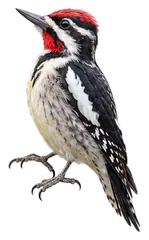 Yellow-bellied SapsuckerSphyrapicus varius
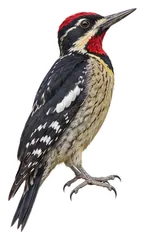 Red-naped SapsuckerSphyrapicus nuchalis
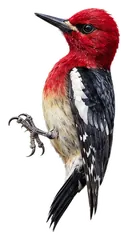 Red-breasted SapsuckerSphyrapicus ruber
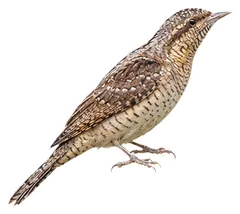 Eurasian WryneckJynx torquilla
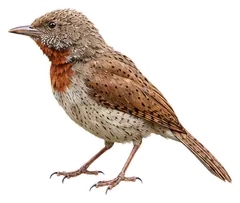 Red-throated WryneckJynx ruficollis
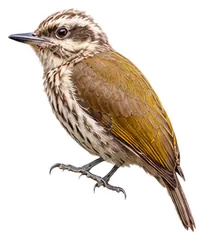 Speckled PiculetPicumnus innominatus
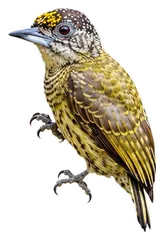 Bar-breasted PiculetPicumnus aurifrons
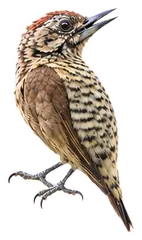 Lafresnaye's PiculetPicumnus lafresnayi
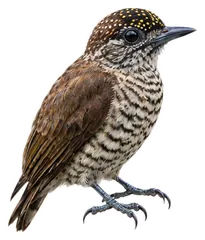 Orinoco PiculetPicumnus pumilus
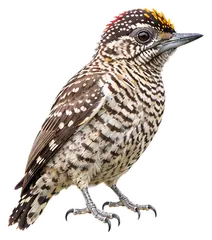 Golden-spangled PiculetPicumnus exilis
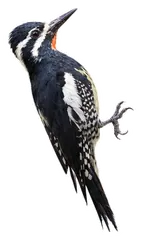
Download illustration
Free to use with credit: “Illustration: Bird Album (birdalbum.com)”. Drawn by AI from a reference photo by Dario Taraborelli. ↗
Heard it but can't see it? Mingji identifies birds by sound and photo, on your phone.
In other languages
- EnglishWilliamson's Sapsucker
- 简体中文威氏吸汁啄木鸟
- 繁體中文威廉氏吸汁啄木
- 日本語ズグロシルスイキツツキ
- DeutschKiefernsaftlecker
- FrançaisPic de Williamson
- EspañolChupasavia oscuro
- Portuguêspica-pau-escuro
- ItalianoPicchio di Williamson
- NederlandsBergsapspecht
- РусскийСосновый дятел-сокоед
- Svenskasvartryggig savspett
- DanskSortbrystet Saftspætte
- Polskioskomik ciemnogłowy