 Bird Album
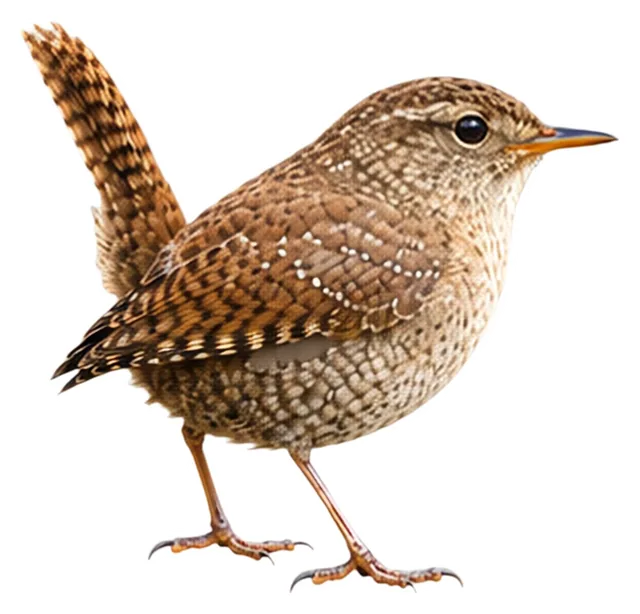
Winter Wren
Troglodytes hiemalis Vieillot, 1819
8–12 cmLength8.9 gWeight
The winter wren (Nannus hiemalis) is a very small North American bird and a member of the mainly New World wren family Troglodytidae.
Busiest months: October · Most records: United States, Canada, St. Pierre & Miquelon
Where and when it's recorded

Winter Wren has been recorded at 512 of the 8,171 birding hotspots we track, in 5 countries and regions.
Records by month Northern Hemisphere
Where it's recorded most
- RNF du Cap-TourmenteCanada5,937 records
- Montrose Point Bird Sanctuary, Lincoln Park, ChicagoUnited States4,004 records
- Point Pelee National ParkCanada3,691 records
More places
- Prospect ParkUnited States3,677 records
- Central ParkUnited States3,442 records
- Long Point – LPBO Old Cut Field StationCanada2,798 records
- Tommy Thompson ParkCanada2,725 records
- Hughes Hollow - McKee Beshers WMAUnited States2,674 records
- John Heinz NWR – impoundmentUnited States2,422 records
- Magee Marsh – BoardwalkUnited States2,363 records
Countries and regions with the most records
eBird records via GBIF up to 2024-12-31. A record means someone listed it; more records partly mean more birders, not more birds.
About
The winter wren (Nannus hiemalis) is a very small North American bird and a member of the mainly New World wren family Troglodytidae. The species was formerly often lumped together with Eurasian wren (Nannus troglodytes) of Eurasia and Pacific wren (Nannus pacificus) of western North America under the merged name of northern wren (with the scientific name troglodytes having priority), until they were split in 2010. Furthermore, although these three species were previously classified in the genus Troglodytes, they have been moved to the genus Nannus.
Excerpt from Wikipedia, CC BY-SA 4.0 · authors · Read more on Wikipedia
Questions
How big is the Winter Wren?
The Winter Wren is about 8–12 cm long and weighs around 8.9 g.
Where does the Winter Wren live?
Its breeding range: North America: British Columbia to eastern Canada south to Georgia. It is most often recorded in United States, Canada and St. Pierre & Miquelon.
When is the best time to see the Winter Wren?
At the hotspots we track, it is recorded most in October (Northern Hemisphere).
Is the Winter Wren endangered?
The IUCN Red List classifies the Winter Wren as Least Concern.
What does the Winter Wren eat?
Main food: Insects & other invertebrates.
What family is the Winter Wren in?
It belongs to the family Wrens (Troglodytidae), order Passerines (Passeriformes).
At a glance
- Length
- 8–12 cm
- Weight
- 8.9 g
- Habitat
- Forest
- Diet
- Insects & other invertebrates
- Lifestyle
- Perches in trees
- Migration
- Migratory
- Conservation
- Least Concern
More measurements
- Wing
- 46 mm
- Tail
- 28 mm
- Bill
- 12 mm
- Tarsus
- 18 mm
Averages from the AVONET dataset; length from field guides where available.
Range
North America: British Columbia to eastern Canada south to Georgia
Breeding range, IOC World Bird List 15.2
Classification
- Order
- Passerines Passeriformes
- Family
- Wrens Troglodytidae
- Genus
- Troglodytes
Other birds in the genus Troglodytes
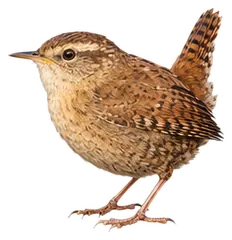 Eurasian WrenTroglodytes troglodytes
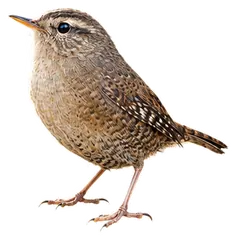 Pacific WrenTroglodytes pacificus
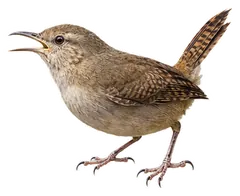 Clarion WrenTroglodytes tanneri
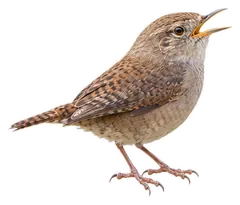 Northern House WrenTroglodytes aedon
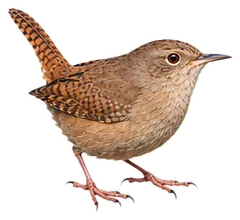 Southern House WrenTroglodytes musculus
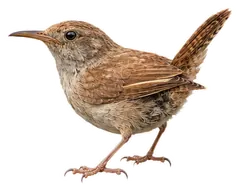 Cozumel WrenTroglodytes beani
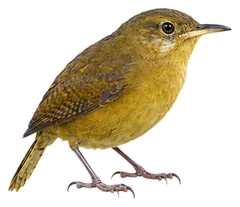 Kalinago WrenTroglodytes martinicensis
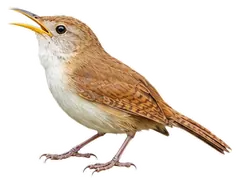 St. Lucia WrenTroglodytes mesoleucus
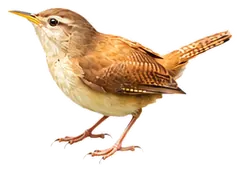 St. Vincent WrenTroglodytes musicus
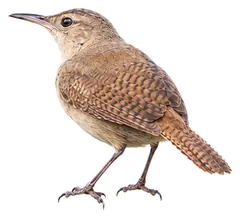 Grenada WrenTroglodytes grenadensis
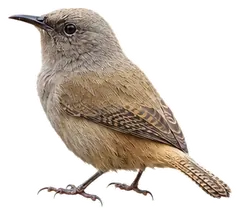 Cobb's WrenTroglodytes cobbi
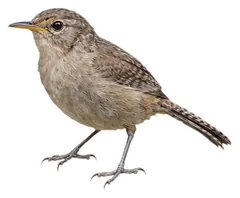 Socorro WrenTroglodytes sissonii
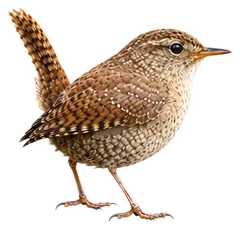
Download illustration
Free to use with credit: “Illustration: Bird Album (birdalbum.com)”. Drawn by AI from a reference photo by Derek Spencer. ↗
Heard it but can't see it? Mingji identifies birds by sound and photo, on your phone.