 Bird Album
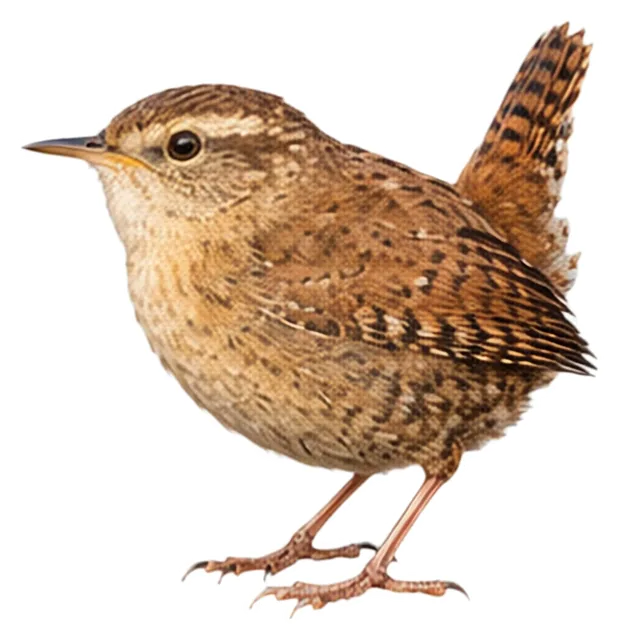
Eurasian Wren
Troglodytes troglodytes (Linnaeus, 1758)
9–10 cmLength15 cmWingspan9.7 gWeight
This round little bird has a short, cocked tail, reddish-brown upperparts and a cream supercilium.
Busiest months: April–May and October · Most records: United Kingdom, Spain, Portugal
How to identify
Field marks
- Very short tail, often upturned
- Reddish-brown upperparts and paler yellowish-brown underparts
- Cream supercilium
- Short neck and a rather long, slender bill
Male, female and young
Sexes look similar; juvenile has less distinct barring and a mottled belly.
Voice
A sharp, continuous “tic-tic-tic”; when excited, this lengthens into a “churr”, like clockwork running down.
Where and when it's recorded
Busiest months: April–May and October · Most records: United Kingdom, Spain, Portugal

Eurasian Wren has been recorded at 1,787 of the 8,276 birding hotspots we track, in 77 countries and regions.
Records by month Northern Hemisphere
Where it's recorded most
- Amwell HMWT NRUnited Kingdom6,393 records
- Titchwell Marsh RSPB ReserveUnited Kingdom5,528 records
- Minsmere RSPB ReserveUnited Kingdom4,390 records
More places
- Beddington FarmlandsUnited Kingdom3,854 records
- Spurn Bird Observatory Recording AreaUnited Kingdom3,351 records
- Walthamstow WetlandsUnited Kingdom3,229 records
- Txingudi – PlaiaundiSpain3,177 records
- Rutland WaterUnited Kingdom3,082 records
- South Downs NP – Pulborough Brooks RSPB ReserveUnited Kingdom3,021 records
- Rainham Marshes RSPB Reserve, SSSI and LNRUnited Kingdom2,693 records
Countries and regions with the most records
eBird records via GBIF up to 2024-12-31. A record means someone listed it; more records partly mean more birders, not more birds.
About
The Eurasian wren (Nannus troglodytes) is a very small insectivorous bird and the only member of the wren family found in the Old World, specifically in Eurasia and Africa (Maghreb). In Anglophone Europe, it is commonly known simply as the wren. It has a very short tail which is often held erect, a short neck and a relatively long thin bill.
Excerpt from Wikipedia, CC BY-SA 4.0 · authors · Read more on Wikipedia
Questions
How big is the Eurasian Wren?
The Eurasian Wren is about 9–10 cm long, with a wingspan of 15 cm and weighs around 9.7 g.
Where does the Eurasian Wren live?
Its breeding range: Palearctic: widespread. It is most often recorded in United Kingdom, Spain and Portugal.
When is the best time to see the Eurasian Wren?
At the hotspots we track, it is recorded most in April, May and October (Northern Hemisphere).
Is the Eurasian Wren endangered?
The IUCN Red List classifies the Eurasian Wren as Least Concern.
What does the Eurasian Wren eat?
Main food: Insects & other invertebrates.
What family is the Eurasian Wren in?
It belongs to the family Wrens (Troglodytidae), order Passerines (Passeriformes).
At a glance
- Length
- 9–10 cm
- Wingspan
- 15 cm
- Weight
- 9.7 g
- Habitat
- Forest
- Diet
- Insects & other invertebrates
- Lifestyle
- Perches in trees
- Migration
- Migratory
- Conservation
- Least Concern
More measurements
- Wing
- 48 mm
- Tail
- 30 mm
- Bill
- 14 mm
- Tarsus
- 18 mm
Averages from the AVONET dataset; length from field guides where available.
Range
Palearctic: widespread
Breeding range, IOC World Bird List 15.2
Subspecies · 5
- Troglodytes troglodytes idius nc China
- Troglodytes troglodytes szetschuanus wc China
- Troglodytes troglodytes talifuensis s China and ne Myanmar
- Troglodytes troglodytes dauricus se Siberia, ne China, Korea and Tsushima (sw Japan)
- Troglodytes troglodytes taivanus Taiwan (China)
Classification
- Order
- Passerines Passeriformes
- Family
- Wrens Troglodytidae
- Genus
- Troglodytes
Other birds in the genus Troglodytes
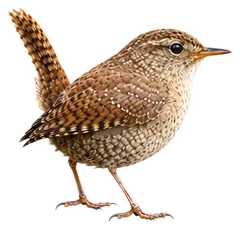 Winter WrenTroglodytes hiemalis
 Pacific WrenTroglodytes pacificus
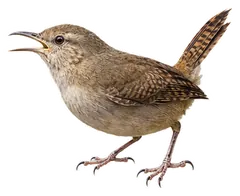 Clarion WrenTroglodytes tanneri
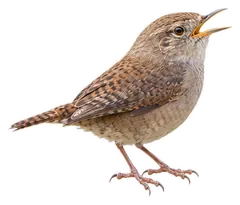 Northern House WrenTroglodytes aedon
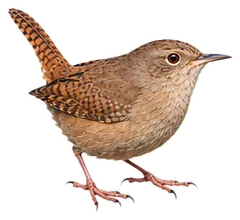 Southern House WrenTroglodytes musculus
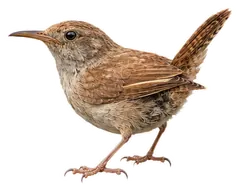 Cozumel WrenTroglodytes beani
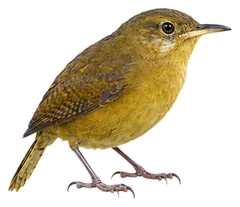 Kalinago WrenTroglodytes martinicensis
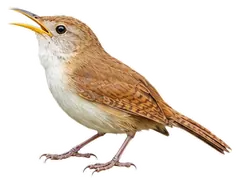 St. Lucia WrenTroglodytes mesoleucus
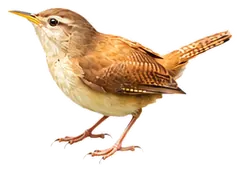 St. Vincent WrenTroglodytes musicus
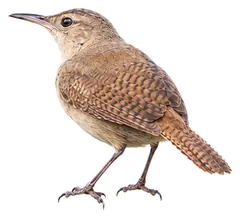 Grenada WrenTroglodytes grenadensis
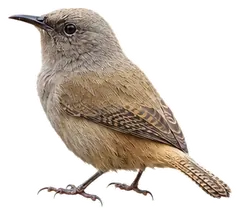 Cobb's WrenTroglodytes cobbi
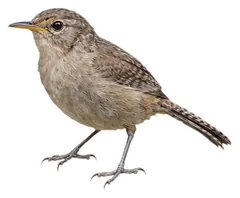 Socorro WrenTroglodytes sissonii
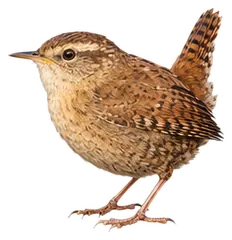
Download illustration
Free to use with credit: “Illustration: Bird Album (birdalbum.com)”. Drawn by AI from a reference photo by Alexis Lours. ↗

Heard it but can't see it? Mingji identifies birds by sound and photo, on your phone.