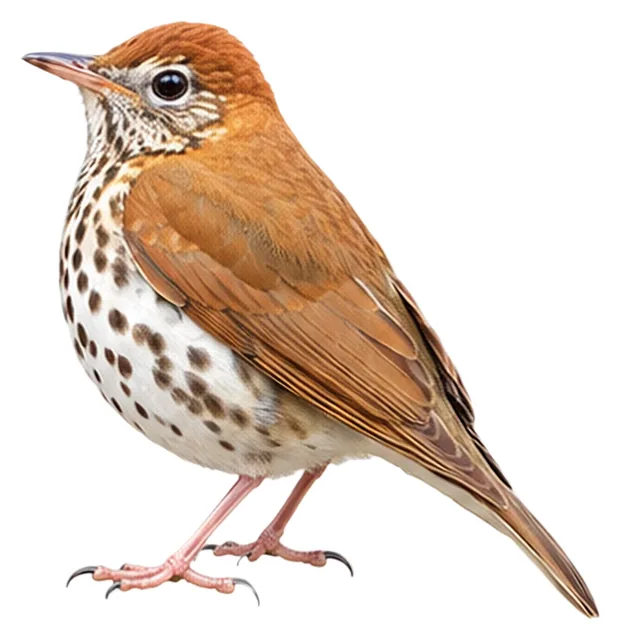
Wood Thrush
Hylocichla mustelina (Gmelin, JF, 1789)
50 gWeight
The wood thrush (Hylocichla mustelina) is a North American passerine bird in the family Turdidae and is the only species placed in the genus Hylocichla.
Busiest months: May · Most records: United States, Canada, Costa Rica
Where and when it's recorded
Busiest months: May · Most records: United States, Canada, Costa Rica

Wood Thrush has been recorded at 773 of the 8,276 birding hotspots we track, in 20 countries and regions.
Records by month Northern Hemisphere
Where it's recorded most
- Point Pelee National ParkCanada10,385 records
- Central ParkUnited States7,039 records
- Sabine WoodsUnited States6,066 records
More places
- High Island – Boy Scout WoodsUnited States5,663 records
- High Island – Smith Oaks SanctuaryUnited States5,531 records
- Magee Marsh – BoardwalkUnited States5,528 records
- Prospect ParkUnited States4,917 records
- Central Park – The RambleUnited States4,185 records
- Rondeau Provincial ParkCanada3,929 records
- Garret Mountain ReservationUnited States3,794 records
Countries and regions with the most records
eBird records via GBIF up to 2024-12-31. A record means someone listed it; more records partly mean more birders, not more birds.
About
The wood thrush (Hylocichla mustelina) is a North American passerine bird in the family Turdidae and is the only species placed in the genus Hylocichla. It is closely related to other thrushes such as the American robin and is widely distributed across North America, wintering in Central America and southern Mexico. The wood thrush is the official bird of the District of Columbia.
Excerpt from Wikipedia, CC BY-SA 4.0 · authors · Read more on Wikipedia
Questions
How big is the Wood Thrush?
The Wood Thrush weighs around 50 g.
Where does the Wood Thrush live?
Its breeding range: North America: central, eastern USA and southeastern Canada. It is most often recorded in United States, Canada and Costa Rica.
When is the best time to see the Wood Thrush?
At the hotspots we track, it is recorded most in May (Northern Hemisphere).
Is the Wood Thrush endangered?
The IUCN Red List classifies the Wood Thrush as Least Concern.
What does the Wood Thrush eat?
Main food: Insects & other invertebrates.
What family is the Wood Thrush in?
It belongs to the family Thrushes (Turdidae), order Passerines (Passeriformes).
At a glance
- Weight
- 50 g
- Habitat
- Forest
- Diet
- Insects & other invertebrates
- Lifestyle
- Varied
- Migration
- Migratory
- Conservation
- Least Concern
More measurements
- Wing
- 106 mm
- Tail
- 71 mm
- Bill
- 19 mm
- Tarsus
- 32 mm
Averages from the AVONET dataset; length from field guides where available.
Range
North America: central, eastern USA and southeastern Canada
Breeding range, IOC World Bird List 15.2
Classification
- Order
- Passerines Passeriformes
- Family
- Thrushes Turdidae
- Genus
- Hylocichla
More from the family Thrushes
 GrandalaGrandala coelicolor
 Mountain BluebirdSialia currucoides
 Western BluebirdSialia mexicana
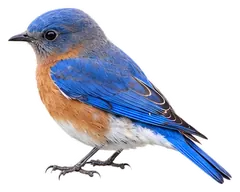 Eastern BluebirdSialia sialis
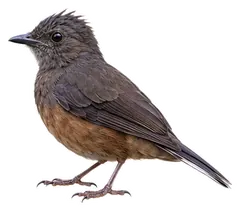 Finsch's Rufous ThrushStizorhina finschi
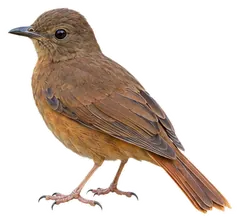 Fraser's Rufous ThrushStizorhina fraseri
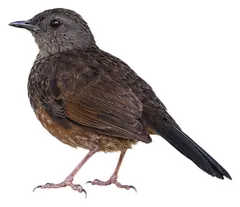 White-tailed Ant ThrushNeocossyphus poensis
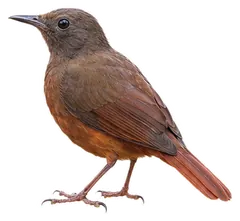 Red-tailed Ant ThrushNeocossyphus rufus
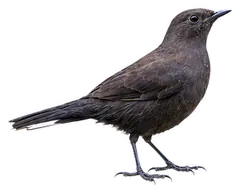 Boulder ChatPinarornis plumosus
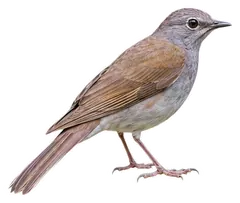 Brown-backed SolitaireMyadestes occidentalis
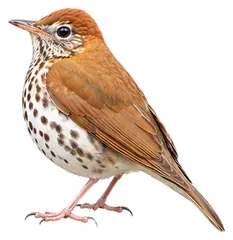
Download illustration
Free to use with credit: “Illustration: Bird Album (birdalbum.com)”. Drawn by AI from a reference photo by Anna Hess. ↗
Heard it but can't see it? Mingji identifies birds by sound and photo, on your phone.